Youth sports pressure most often comes from loving parents rather than harsh coaches, and it usually shows up as a focus on outcomes: the score, playing time, the next tryout. The counter-intuitive part is that easing off tends to keep kids playing longer. The American Academy of Pediatrics now advises families to judge success by effort and participation, because burnout is a leading reason young athletes quit.
Key Takeaways
- The AAP reports that about 70% of kids drop out of organized sports by age 13, and it names burnout as one of the primary reasons for that attrition.
- Youth sports pressure is mostly about what a child perceives: in a study of 723 young athletes, those who felt more parental pressure reported less enjoyment and more loss of motivation.
- The drive home is a high-stakes moment; letting emotions settle and asking your child what they want from the ride lowers the temperature fast.
Picture a ten-year-old buckling into the back seat after a loss. A parent, still replaying the second half, starts with, “So what happened out there?” Nothing about the question is cruel. But the child hears a verdict, looks out the window, and says, “I don’t know.”
Most parents who push do it out of love and hope, sometimes with real money and time on the line. This guide explains where pressure comes from, why it backfires, what pediatric guidance actually says, and how to keep your enthusiasm without turning the sport into a job.
What does youth sports pressure actually look like?
Youth sports pressure is any signal, spoken or not, that a child’s worth or a parent’s happiness rides on performance. It rarely looks like screaming from the bleachers. Far more often it is quiet and well-meant.
- Post-game reviews that start with mistakes, even when phrased as “coaching.”
- Paying for private lessons and travel teams, then mentioning the cost when effort dips.
- Talking about scholarships or varsity spots with an eight-year-old.
- Visible disappointment, such as a tight jaw or long silence, after a bad game.
- Deciding for the child that they will play year-round, or that quitting is not allowed.
The research lens that explains why this matters is self-determination theory. It holds that people stay motivated when three needs are met: autonomy (I chose this), competence (I’m getting better), and relatedness (I belong here). Pressure chips at all three. The sport starts to feel like something done to the child, every mistake feels like a threat, and the relationship with the parent starts to depend on results.
Why do kids quit sports? What the dropout research shows
Kids quit mainly because the sport stops being fun, not because they lack talent. A systematic review by Crane and Temple in the European Physical Education Review pulled together 43 studies on dropout from organized youth sport. The factors that came up again and again were lack of enjoyment, low perceived competence, social pressures, competing priorities, and physical issues such as injuries and maturation.
Youth sports pressure from parents touches several of those categories at once. A study of 723 youth athletes and their parents in team sports found that parental support was linked to more enjoyment and less amotivation, while players who perceived more pressure from parents showed the reverse pattern: less enjoyment and more amotivation. The design was cross-sectional, so it shows an association rather than proof of cause, but the direction is consistent with other work.
What do kids say makes sport fun? In the Fun Integration Theory study, researchers asked 142 youth soccer players plus 57 parents and 37 coaches to generate and rank the ingredients of fun. The three highest-rated dimensions were being a good sport, trying hard, and positive coaching. Winning made the list, but it was one of 81 items and not the center of gravity. Children were telling adults, in effect, that effort and belonging matter more to them than the scoreboard.

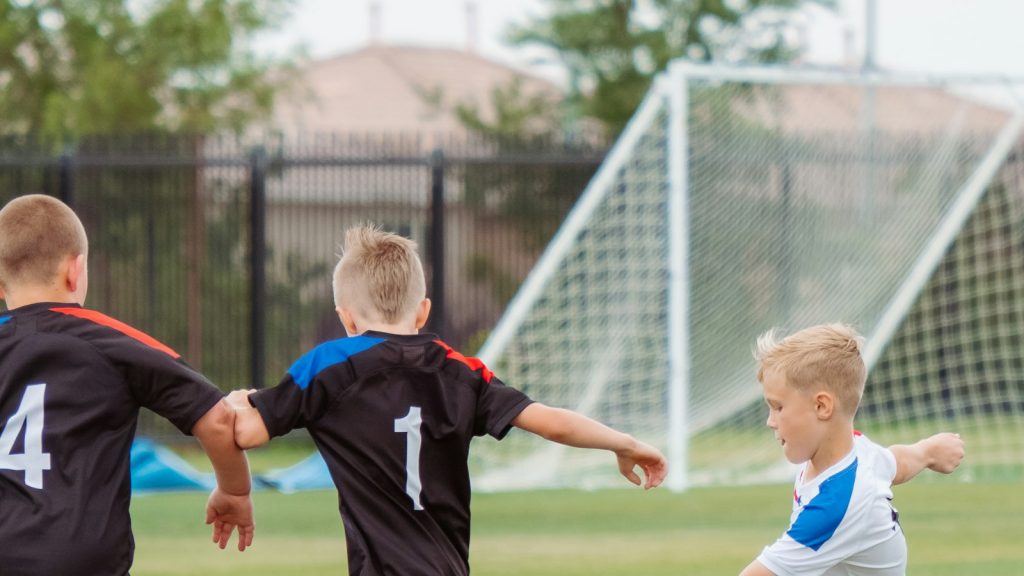
Kids rate effort, friends, and good coaching above winning. Photo: Bill Stephan / Unsplash.
How does early specialization add to youth sports pressure?
Early single-sport specialization concentrates the stakes on one activity, which raises both injury risk and the emotional weight of every game. The AAP’s 2016 clinical report on sports specialization recommends delaying specialization until at least age 15 or 16 for most sports, taking one to two days off per week, and taking at least three months off a year from the main sport, in one-month blocks.
The same report noted that about 27% of the roughly 60 million US kids in organized sports played only one sport.
The injury data behind that advice is worth knowing. In a case-control study of 1,190 athletes aged 7 to 18 published in the American Journal of Sports Medicine, Jayanthi and colleagues found that kids who trained more hours per week than their age in years had about double the odds of a serious overuse injury. Specialization itself was an independent risk factor even after accounting for age and training hours.
None of this means a child who loves one sport must quit it. It means the decision should be the child’s, the schedule should include real rest, and parents should watch for the moment when a passion starts to look like an obligation.
Why is the car ride home such a flashpoint?
The car ride home concentrates youth sports pressure: fresh emotion, a captive audience, and no one else to soften the conversation. University of Toronto researcher Katherine Tamminen and colleagues interviewed 27 athletes aged 11 to 16 and one parent of each about these drives. As the university’s summary of the study describes, the side-by-side seating and privacy can make the car a good place for honest talk, but the same privacy lets conversations get more heated than they would in public.
Athletes in the study described ways of escaping: headphones, staring out the window, pretending to sleep. Both parents and kids tended to treat post-game feedback as normal and useful, which is part of the problem. When feedback is the default, kids can’t opt out of it.

The drive home can be a cool-down or a debrief; let your child help decide which. Photo: Tim Mossholder / Unsplash.
A simple fix is to ask, on a calm day, what your child wants from the ride. Some want to vent. Some want silence and a snack. Some want to talk tomorrow. Agreeing on this in advance removes the guesswork, and it gives your child a small piece of control in a setting where they usually have none.
5 calm habits that lower youth sports pressure
Lowering youth sports pressure doesn’t mean you stop caring. You need to move your attention from results to the experience. These five habits draw on the AAP guidance and the research above.
- Lead with one line of love. Try “I love watching you play.” It is short, true, and unconditional, and it doesn’t grade the performance.
- Wait for them to raise the game. If your child wants to talk about a play, follow their lead. If they don’t, talk about dinner. Feedback is the coach’s job unless your child asks for yours.
- Praise effort and choices, not outcomes. “You kept chasing that ball when you were tired” builds competence. “You should have scored” builds dread.
- Protect free play and rest. Unstructured play counts. The Jayanthi data suggest that schedules dominated by organized training carry more overuse risk, and the AAP recommends regular days and months off.
- Hand over real choices. Let your child weigh in on which sport, which team, and whether to play next season. Autonomy is one of the strongest protections against burnout.
If you notice you’re more upset after a loss than your child is, treat that as information about you, not them. Many parents find it helps to name their own goals out loud, then ask whether those goals match their child’s.
Is it burnout or just a bad season?
A bad season is temporary disappointment; burnout is a lasting loss of interest plus exhaustion. The AAP’s 2024 clinical report on overuse, overtraining, and burnout defines burnout as physical or mental exhaustion with a reduced sense of accomplishment that leads a young athlete to devalue the sport. It also describes overtraining, which can show up as persistent fatigue, poor sleep, and mood changes alongside declining performance.
Signs that youth sports pressure has tipped into burnout include:
- Dreading practice for weeks, not just after one rough game.
- Frequent aches, illness, or injuries that keep returning.
- Irritability, sleep trouble, or falling grades during the season.
- Statements like “I only play because you want me to.”
The AAP advises changing the factors that drive the problem, such as training load and scheduling, and involving a mental health professional when needed. Start with your pediatrician, who can rule out medical causes and help you decide on rest. If your child ever talks about hopelessness or self-harm, call or text 988, the Suicide & Crisis Lifeline.
Frequently asked questions
How do I know if I’m the source of youth sports pressure?
Ask your child directly and calmly, and believe the answer. Other clues: your child looks at you after mistakes, avoids talking about games, or seems relieved when you can’t attend. Those reactions suggest your presence carries weight you may not intend.
Should I let my child quit a sport mid-season?
Finishing a season can teach commitment to teammates, but it isn’t a rule worth enforcing at any cost. Find out why they want to stop first. Bullying, a harmful coach, injury, or signs of burnout justify leaving; ordinary frustration often passes with support.
Is youth sports pressure worse on travel and elite teams?
The stakes tend to rise with cost, travel, and year-round schedules, so the risk is higher there. Still, pressure is mostly about what the child perceives at home. A recreational player can feel crushed and a select player can feel free, depending on how adults talk about results.
What should I say after a bad game?
Very little. “That looked tough. I’m proud of how you kept going,” and then an offer of food or quiet is enough. Save any analysis for later, and only if your child invites it.
The scoreboard that matters most
Youth sports pressure is not a character flaw in parents; it is what happens when love, money, and hope all land on a child’s performance. The fix is not to care less but to care differently. Watch for the moments when your child’s joy and your goals separate, and side with the joy.
If you want more on the parenting skills underneath this, read our guides to autonomy-supportive parenting, how to praise your child in ways that build effort, emotion coaching for the hard moments after a loss, and why snowplow parenting can backfire. The game will end in a few years. The relationship you build on those drives home will last much longer.
This article is for general education and is not a substitute for advice from your child’s pediatrician or a licensed mental health professional. If your child is in crisis, call or text 988 (Suicide & Crisis Lifeline).
Written by
Elena Rostova
Elena Rostova is the byline used for articles published by Relationship 99. It is a pen name, not a licensed clinician. Articles here are built from published research in relationship science - including work by John Gottman, Arthur Aron and researchers in attachment theory - with the studies named in the text so readers can check them. How we research, source and review our articles is set out in full at relationship-99.com/editorial-standards. Relationship 99 is not a therapy service, and nothing here replaces advice from a qualified professional.