How to praise your child well comes down to describing what they actually did, how they did it, and what they might try next, instead of announcing how amazing they are. The counter-intuitive part: big, gushing praise tends to backfire most on the kids who seem to need it most. In experiments, children with low self-esteem who heard “incredible!” were more likely to avoid challenges.
Key Takeaways
- In a 2014 Psychological Science study, adults gave children with low self-esteem about twice as much inflated praise, and in a 240-child experiment, inflated praise made those same children more likely to pick the easy task.
- Learning how to praise your child is less about praising more or less and more about switching from verdicts (“You’re so smart”) to descriptions of effort, strategy, and choices.
- Growth-mindset research supports process praise, but large meta-analyses find small average effects, so specific, sincere feedback matters more than any magic phrase.
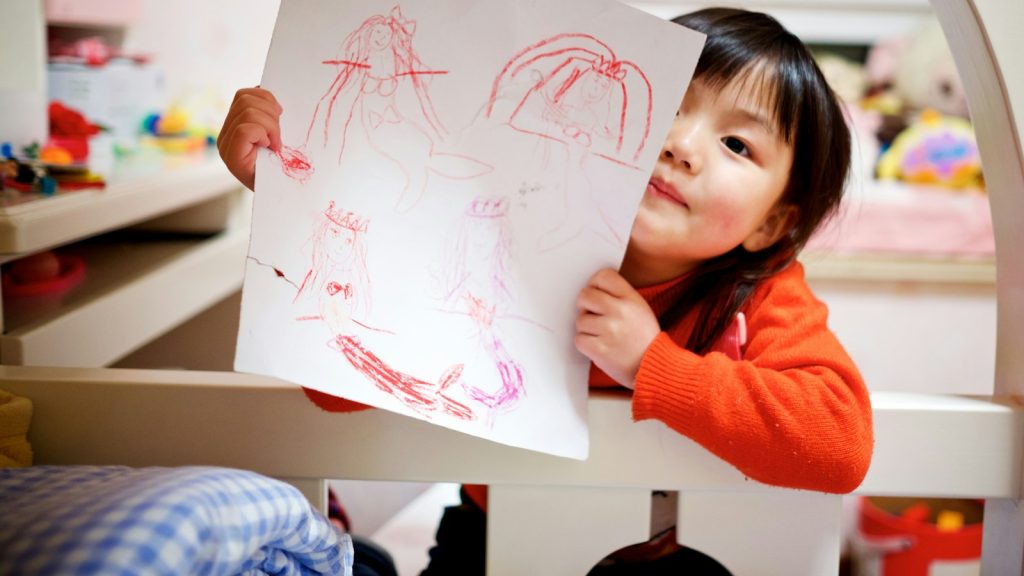
Consider a family like this one, offered purely as an illustration. Maya is nine, quiet, and quick to call herself “bad at art.” Her dad, wanting to lift her up, greets every drawing with “That’s the most beautiful thing I’ve ever seen!” Over a few months, Maya draws less. When her art teacher suggests a harder project, she says she’d rather color in a printed sheet. Her dad is baffled. Why is she shrinking?
The research behind that puzzle changes how to praise your child in everyday moments.
Why Does Big Praise Backfire on Kids With Low Self-Esteem?
Inflated praise sets a bar that an insecure child feels they now have to clear every time, which is why how to praise your child matters most for the kids who doubt themselves. Developmental psychologist Eddie Brummelman and colleagues tested this directly in a three-part study published in Psychological Science (2014), titled “That’s not just beautiful, that’s incredibly beautiful!”
In the first study, according to Ohio State University’s summary, adults gave roughly twice as much inflated praise to children with low self-esteem. In the naturalistic study, 114 parents were videotaped while their children did timed math exercises; about a quarter of their praise was coded as inflated, and it went disproportionately to the kids with lower self-esteem.
The third study should make every parent pause. About 240 children copied a Van Gogh painting and then heard inflated praise (“You made an incredibly beautiful drawing!”), non-inflated praise (“You made a beautiful drawing!”), or no praise. Then they chose between easy pictures to copy and harder ones they could learn more from.
Children with low self-esteem who got inflated praise chose the easy pictures. Children with high self-esteem who got the same inflated praise went for the harder ones. Same words, opposite effects. The researchers’ reading: “incredible” tells a shaky child “this is the standard now,” and the safest way to protect it is to stop taking risks.
One honest limit: this was a single lab session with Dutch children, measuring one choice. It shows a mechanism, not a lifetime outcome.
Does Overpraising Children Make Them Narcissistic?
Praise alone doesn’t, but one pattern matters. In a 2015 PNAS study, Brummelman’s team followed 565 children aged 7 to 12 and their parents across four waves, six months apart. They measured parental overvaluation (believing your child is more special and more gifted than other children) and parental warmth.
Overvaluation predicted later narcissism. Warmth did not protect against it, but warmth did predict healthy self-esteem, while overvaluation did not. Telling a child they are superior seems to feed entitlement; making them feel loved feeds self-worth.
Be careful with the takeaway. This was correlational, conducted in the Netherlands, and narcissism scores in children are not clinical diagnoses. It does not mean any single “You’re the best!” causes harm. It suggests that how to praise your child is really about the steady message underneath, not any one sentence.

Describing what a child did tells them more than any superlative. Photo: Vika Fleysher / Unsplash.
Person Praise vs. Process Praise: What the Research Shows
The best-known study here is Claudia Mueller and Carol Dweck’s 1998 paper in the Journal of Personality and Social Psychology. Across six studies with fifth graders, children praised for intelligence (“You must be smart at this”) cared more about looking good than learning. After a setback, they persisted less, enjoyed the task less, blamed low ability, and performed worse than children praised for effort.
Elizabeth Gunderson and colleagues recorded everyday parent talk with toddlers and published the results in Child Development (2013). Parents’ praise of effort and actions at 14 to 38 months predicted children’s belief, at ages 7 to 8, that abilities can grow. The sample was small (53 families), and, interestingly, praise for inherent traits was not linked to fixed beliefs later.
Be honest about the size of the effect
Growth-mindset ideas have been tested at scale, and the results are modest. A pair of meta-analyses by Sisk and colleagues (2018) covering more than 365,000 students found weak links between mindset and grades, and mindset interventions had a very small average effect on achievement (about d = 0.08), with somewhat larger benefits for academically at-risk and lower-income students.
So process praise is not a magic switch. When you think about how to praise your child, treat it as a sensible, low-cost habit that points kids toward things they control, not a way to transform a report card.
How to Praise Your Child Without Pressure: Informational vs. Controlling Praise
Self-determination theory, developed by Edward Deci and Richard Ryan, offers a useful lens. It holds that kids thrive when three needs are met: autonomy, competence, and connection. Praise can support those needs or undercut them, depending on whether it feels informational or controlling.
Controlling praise sounds like a lever: “Good girl, you did exactly what I wanted.” Informational praise sounds like a mirror: “You kept trying different ways to balance that tower until one worked.” The first teaches performing for approval; the second gives real information about competence.
Jennifer Henderlong and Mark Lepper’s 2002 review in Psychological Bulletin is still the best summary of how to praise your child for lasting motivation. Praise tends to help motivation when it is sincere, credits things a child controls, supports autonomy, avoids leaning on comparisons with others, and conveys standards a child can actually reach. Inflated praise breaks that last rule. If this framework resonates, our guide to autonomy-supportive parenting goes deeper into how choice and control shape motivation.
What Is “False Growth Mindset” Praise?
Dweck herself has warned about a watered-down version of her work, which she calls a “false growth mindset.” The most common form is praising effort alone, even when the effort isn’t working. “Great try!” after the fifth identical failure sounds like a consolation prize.
Effort is only one ingredient. The better target is effort plus strategy plus progress. When effort isn’t paying off, the useful move is to get curious about the approach: “That way didn’t work. What else could you try?” or “Who could you ask?”
Why Comparison Praise Quietly Hurts
“You were the best one out there” feels generous, but it ties a child’s worth to beating others. Henderlong and Lepper flag social-comparison praise as a motivational risk, since it only works while the child keeps winning.
Comparison praise is the everyday language of “you are more special than other kids.” A better approach to how to praise your child is comparing them only to their own past: “Last month you couldn’t do the monkey bars at all. Today you crossed half.”

Praise that names the strategy helps a child know what to do next time. Photo: Annie Spratt / Unsplash.
Noticing vs. Evaluating: The Simplest Shift
If you only remember one thing about how to praise your child, make it this: notice instead of judging. Evaluating (“That’s amazing!”) hands down a verdict. Noticing (“You used three shades of blue in the sky”) shows you really looked. Noticing is also nearly impossible to inflate, which makes it safer for sensitive or insecure kids.
Noticing pairs naturally with declarative language, the practice of sharing observations rather than issuing commands or quizzes. And it often invites the child to evaluate their own work: “What part are you proudest of?” That builds their own internal yardstick.
For children who feel things intensely, this low-key style is often gentler. Our piece on raising a highly sensitive child covers why calm, specific feedback helps them feel safe to try.
What to Say Instead: A Practical Guide on How to Praise Your Child
You don’t need a script. The table shows common phrases, sturdier alternatives, and the research behind each swap.
| Instead of… | Try… | Why it works |
|---|---|---|
| “That’s incredibly beautiful!” | “You added so much detail to the trees. Tell me about this part.” | Avoids inflated standards that pushed low self-esteem kids toward easy tasks (Brummelman 2014). |
| “You’re so smart.” | “You checked your work and caught that mistake yourself.” | Process praise supported persistence after failure; trait praise undercut it (Mueller & Dweck 1998). |
| “Great effort!” (when stuck) | “You’ve worked hard. Want to try a different way to solve it?” | Pairs effort with strategy, avoiding “false growth mindset.” |
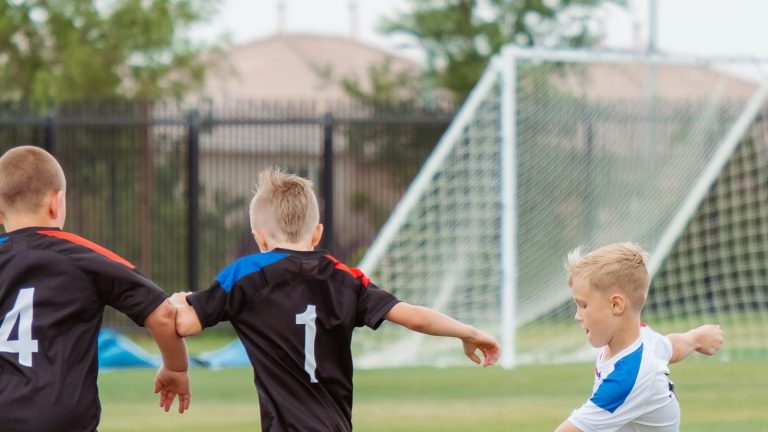
| “You’re the best player on the team.” | “Your passing has gotten so much quicker since spring.” | Self-comparison over social comparison; avoids feeding overvaluation (Brummelman 2015). |
| “Good job listening to me.” | “You put your shoes away without a reminder. That made our morning easier.” | Informational, not controlling; shows impact rather than obedience (Henderlong & Lepper 2002). |
| “Amazing!” (for everything) | “What part are you proudest of?” | Builds the child’s own judgment and keeps praise sincere and believable. |
A few guardrails for how to praise your child day to day. Keep it proportionate: a tidied room doesn’t need fireworks. Keep it honest: kids, especially older ones, detect flattery fast, and Henderlong and Lepper note that praise only helps when it feels sincere. And when your child is upset about a failure, acknowledge the feeling before offering any feedback. That’s the core of emotion coaching, and it makes whatever you say next easier to hear.
Frequently Asked Questions About How to Praise Your Child
Is it bad to tell my child I’m proud of them?
No. Expressing pride and love is warmth, and warmth is what predicted healthy self-esteem in Brummelman’s 2015 study. The risk is not affection; it’s inflated ratings and comparisons. “I’m proud of how you stuck with it” is a strong combination of warmth and specifics.
How to praise your child if they have low self-esteem?
Go smaller and more specific, not bigger. Describe exactly what they did and how they did it, and avoid superlatives like “incredible” or “perfect.” In the 2014 experiment, it was the inflated version of praise that led low self-esteem children to avoid harder tasks.
Should I praise effort even when my child fails?
Praise effort when it’s paired with a useful strategy or real progress. If effort alone keeps failing, shift to problem-solving together: what else could they try? Praising effort without strategy can feel hollow and is what Dweck calls a false growth mindset.
Does age change how to praise your child?
Somewhat. With toddlers, simple descriptions of actions fit well, and Gunderson’s 2013 study linked that kind of praise to later beliefs that abilities can grow. Henderlong and Lepper note that age changes how praise is received, and older kids are quicker to spot insincere praise, so keep it specific and understated.
Bringing It Back to Maya
Picture Maya’s dad trying something different. Instead of “most beautiful thing ever,” he sits down and says, “You made the cat’s fur look fuzzy. How did you do that?” Maya explains her trick with the side of the pencil. He listens. Nothing about that moment asks her to be extraordinary. It simply tells her she was seen.
That’s the quiet heart of how to praise your child. The goal isn’t to make kids feel amazing for a minute. It’s to help them feel safe enough to try hard things, notice their own growth, and know they’re loved whether or not the drawing turns out.
This article is for educational purposes and is not a substitute for advice from a licensed therapist, pediatrician, or child psychologist. If you’re worried about your child’s self-esteem, mood, or behavior, consider talking with a qualified professional.
Written by
Elena Rostova
Elena Rostova is the byline used for articles published by Relationship 99. It is a pen name, not a licensed clinician. Articles here are built from published research in relationship science - including work by John Gottman, Arthur Aron and researchers in attachment theory - with the studies named in the text so readers can check them. How we research, source and review our articles is set out in full at relationship-99.com/editorial-standards. Relationship 99 is not a therapy service, and nothing here replaces advice from a qualified professional.