The marshmallow test is probably the most famous parenting study ever run — and much of what parents think it proved turns out to be wrong. The original idea was simple and seductive: a preschooler who could resist eating one marshmallow now, in order to get two later, was showing willpower that would predict success for the rest of their life. Here is what newer research actually found: a child’s ability to wait says far more about the household they come from than about some inborn strength of character — and it is not the destiny-shaping trait it was sold as. That distinction changes how thoughtful parents should read their own child’s self-control.
If you have ever worried that your kid grabbing the treat means they lack the discipline to succeed, this is the reframe you need.
What was the original marshmallow test?
The marshmallow test was a series of studies begun by Stanford psychologist Walter Mischel in the late 1960s and early 1970s. Young children were left alone in a room with a single treat — a marshmallow, cookie, or pretzel — and told that if they could wait about 15 minutes without eating it, they would get a second one. Some kids caved immediately; others distracted themselves and held out. The famous part came later: follow-up work led by Mischel, Yuichi Shoda, and Philip Peake in 1990 reported that the children who had waited longer went on to score higher on the SAT and showed better outcomes as teenagers.
The story that spread from this was irresistible: self-control is a fixed superpower you either have or lack, and it determines your future. It launched countless books, school programs, and anxious dinner-table experiments. But the original samples were small and drawn from a narrow, privileged slice of families — children of Stanford faculty and staff — which is exactly the crack that later research pried open.

The classic test asked children to wait for a second treat — but waiting depended on far more than willpower. Photo: Kiran CK / Unsplash.
What did the 2018 marshmallow test replication find?
In 2018, researchers Tyler Watts, Greg Duncan, and Haonan Quan ran a much larger, more diverse replication — and the willpower story largely fell apart. Their sample of roughly 900 children was far more representative of the general population by race, ethnicity, and parental education than Mischel’s original. When they looked at whether early delay of gratification predicted later achievement, they found the link was real but roughly half the size originally reported — and it shrank by about two-thirds once they accounted for the child’s family background, home environment, and early cognitive ability.
In other words, most of what looked like the magic of willpower was actually the fingerprint of the child’s circumstances. Whether a four-year-old waited had a lot to do with how much stability and resource surrounded them — and those same factors, not the waiting itself, drove much of the later success. A child from a home with reliable meals and low financial stress has good reason to trust that a promised second marshmallow will actually appear. A child for whom promises have often fallen through has good reason to take the sure thing now. The behavior is rational either way.
Why does a child’s environment affect self-control?
A child’s willingness to wait is shaped heavily by whether their world has taught them that waiting pays off. Researchers have shown this directly. In one well-known experiment, children who had just experienced an adult breaking a promise waited far less time in the marshmallow task than children who had experienced that same adult keeping their word. The kids were not more or less disciplined — they were responding intelligently to how trustworthy their environment had proven to be.

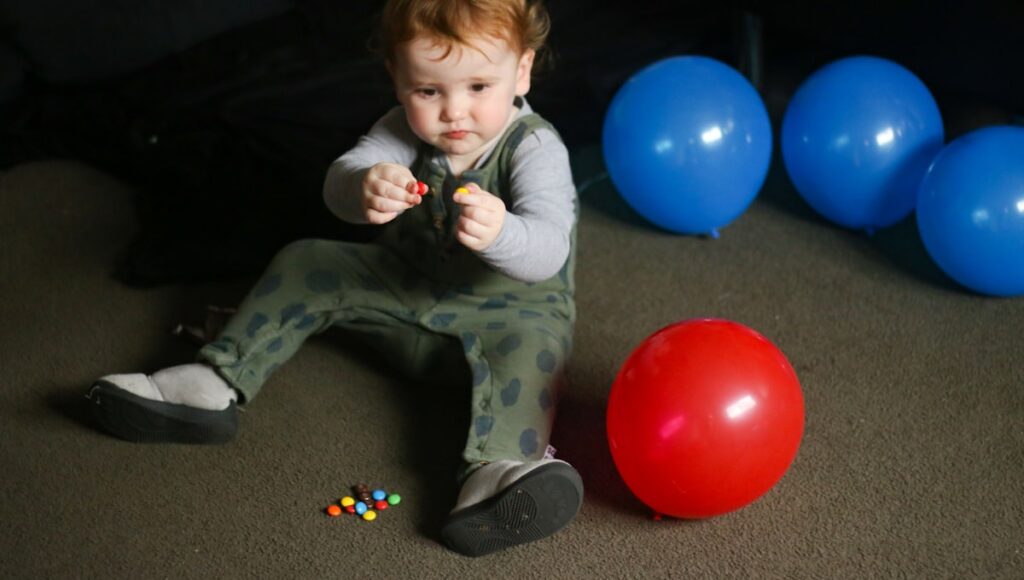
A child who has learned that promises hold is far more willing to wait. Photo: Helena Lopes / Unsplash.
This reframes self-control as something closer to a learned expectation than a fixed trait. Scarcity, unpredictability, and stress all reasonably push a child toward taking the certain reward now. Stability, consistency, and follow-through teach a child that the future is worth betting on. Seen this way, “impulsivity” in a young child is often not a flaw to be corrected but information about what their environment has modeled — and that is far more actionable than labeling a preschooler as low in willpower.
What should parents actually take from the marshmallow test?
The practical lesson is encouraging: you do not build a child’s self-control by drilling them on resisting treats, and a kid who grabs the marshmallow is not doomed. What genuinely supports the development of patience and self-regulation is a reliable, predictable environment — the everyday experience of promises kept and needs consistently met. When a child learns that the world is trustworthy, waiting starts to make sense to them, and the capacity grows from there.
So keep your small promises, maintain predictable routines, and let your child practice patience inside a relationship that has proven dependable. Avoid reading a single impulsive moment as a fixed verdict on their character; self-control develops over years and is deeply tied to felt security, not innate grit. And go easy on the pressure — the anxious pursuit of raising a “disciplined” child can quietly tip into parental burnout. Much like the research on how we praise kids, the marshmallow story is a reminder that what looks like a lesson about the child is often a lesson about the environment we build around them.
Frequently asked questions about the marshmallow test
Does the marshmallow test actually predict success?
Only weakly, and mostly indirectly. The 2018 replication by Watts, Duncan, and Quan found the link between early delay of gratification and later achievement was about half the original size and shrank by roughly two-thirds after accounting for family background. Much of what looked like willpower predicting success was really the child’s environment predicting both.
Is self-control something kids are born with?
Not primarily. Research suggests a child’s willingness to wait reflects learned expectations about whether their environment is reliable and whether promises tend to be kept, far more than an inborn trait. Self-control develops over time and is strongly shaped by stability, consistency, and trust at home.
Should I test my own child with a marshmallow?
There is no real benefit to it, and reading too much into the result can cause needless worry. A child grabbing the treat is not a sign of a flawed character or a bleak future. Your energy is far better spent building the predictable, trustworthy environment that actually helps self-regulation grow.
How can I help my child develop patience?
Focus on reliability rather than drills. Keep small promises, maintain consistent routines, and meet needs predictably so your child learns that waiting genuinely pays off. Practicing patience in low-stakes everyday moments, inside a dependable relationship, builds the capacity far better than testing their willpower under pressure.
The marshmallow test endures as a great story, but the science underneath it tells a kinder, more useful truth: children’s self-control grows out of the security we provide, not some fixed measure of grit they are stuck with. Build a trustworthy world for your child, and patience tends to follow. For more research-based parenting, explore our Family Life & Parenting archive.
What the marshmallow test means for parents today
The marshmallow test is best read as a study of environments and trust, not of character. For the underlying research, see the American Psychological Association.
Written by
Elena Rostova
Elena Rostova is the byline used for articles published by Relationship 99. It is a pen name, not a licensed clinician. Articles here are built from published research in relationship science - including work by John Gottman, Arthur Aron and researchers in attachment theory - with the studies named in the text so readers can check them. How we research, source and review our articles is set out in full at relationship-99.com/editorial-standards. Relationship 99 is not a therapy service, and nothing here replaces advice from a qualified professional.