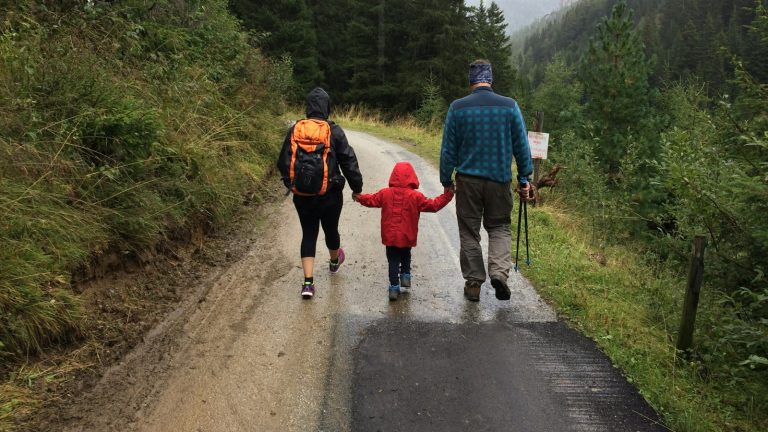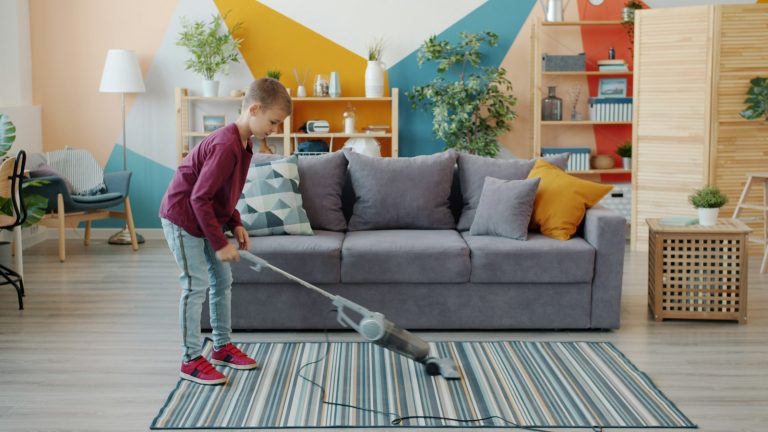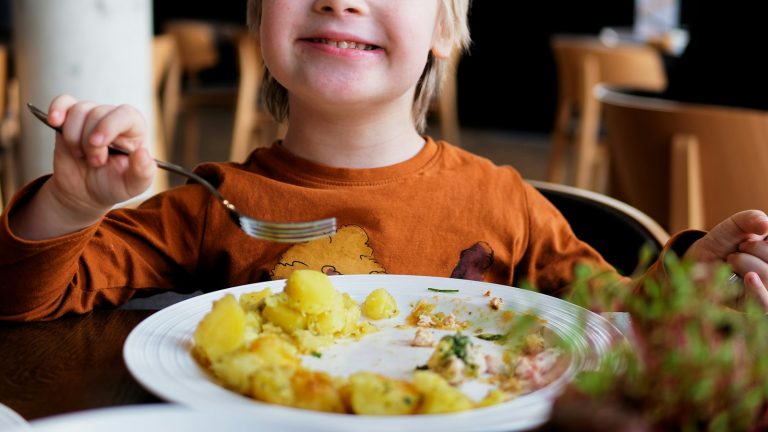
Parental burnout is not the ordinary tiredness every mom and dad knows. It’s a distinct syndrome — one that researchers now measure, study across dozens of countries, and treat as its own condition. In short, parental burnout is a state of overwhelming exhaustion tied specifically to your role as a parent, accompanied by emotional distancing from your children and a painful sense that you’ve become a shell of the parent you used to be. If you’ve felt hollowed out by parenting in a way that a good night’s sleep doesn’t touch, this article is about naming what’s happening — and what actually helps.
What is parental burnout?
Parental burnout is a chronic condition that develops when the demands of parenting outweigh the resources a parent has to meet them, over a long stretch of time. The concept was defined and refined by psychologists Isabelle Roskam and Moïra Mikolajczak, whose work established it as separate from general stress, work burnout, or depression. Their research identifies a specific cluster of symptoms: an exhaustion so deep it feels physical, an emotional detachment from your kids where you go through the motions without warmth, a loss of pleasure and fulfillment in the parenting role, and a jarring contrast between the parent you are now and the one you believe you should be.
That last piece — the contrast with your former self — is part of what makes parental burnout so painful. It isn’t only exhaustion. It’s grief. You remember enjoying your children, and you can’t find that feeling, and you blame yourself for its absence.
Parental burnout is more common than parents admit
Because parenting is culturally framed as a joy you should be grateful for, burned-out parents often suffer in shame and silence. But the numbers say they’re far from alone. In a cross-cultural study spanning 42 countries, Mikolajczak, Roskam, and colleagues found the prevalence of parental burnout varied widely by nation — and the United States ranked at the very top, with roughly 8% of parents affected. Researchers have linked that high rate partly to individualistic cultures, where parents are expected to shoulder the whole load privately, with little communal support.
The takeaway isn’t that American parents are failing. It’s that the conditions many parents are asked to parent under — isolated, unsupported, and held to impossibly high standards — are a recipe for burnout regardless of how much you love your kids.

Parental burnout is an exhaustion that sleep doesn’t cure, because its source is chronic imbalance, not one bad night. Photo: Kinga Howard / Unsplash.
Why some parents burn out and others don’t: the balance model
The most useful framework for understanding parental burnout is Mikolajczak and Roskam’s Balance between Risks and Resources model, often shortened to BR2. Its central insight is deceptively simple: burnout isn’t caused by stress alone, but by a chronic imbalance between the pressures pulling on a parent and the supports available to offset them.
On one side of the scale sit the risks — a colicky baby, a child with high needs, financial strain, perfectionism, a lack of childcare, marital conflict, no time for yourself. On the other side sit the resources — a supportive partner, help from family, financial cushion, coping skills, breaks, community. Two parents can face the exact same stressor and land in completely different places, because one has resources stacked on the other side of the scale and one doesn’t. This is why comparison is so useless in parenting: you’re never seeing the whole scale.
The model is also hopeful, because it points directly at the solution. You recover from parental burnout not by loving your kids more or trying harder, but by changing the balance — reducing risks where you can and, crucially, adding resources back.
How parental burnout is different from depression
This distinction matters, because the two are often confused and the treatments differ. Depression tends to color your entire life gray — work, friendships, hobbies, everything. Parental burnout is specific to the parenting role. A burned-out parent may feel competent and even happy at their job or with friends, then feel the exhaustion and detachment descend the moment they walk back into the role of mom or dad. Roskam and Mikolajczak’s research found parental burnout has consequences that depression doesn’t fully explain — including escape ideation and, at its most severe, neglectful or harsh behavior toward children. If your struggle blankets all of life, it’s worth screening for depression with a professional; if it lifts when you step outside parenting, burnout is the more likely lens.
How to recover from parental burnout
Recovery follows the logic of the balance model: subtract risks, add resources. None of this requires being a different person — just tilting the scale back toward sustainable.
Add resources before you add discipline to yourself. The instinct of a burned-out parent is to demand more of themselves. The research points the other way. A regular break that’s actually yours, an hour of childcare, a standing call with a friend who gets it — resources on the scale do more than willpower ever will.
Lower the bar on purpose. Perfectionism is one of the biggest internal risk factors for parental burnout. The “good enough” parent that pediatrician Donald Winnicott described decades ago wasn’t settling — he found that ordinary, imperfect, responsive parenting is exactly what children need. Frozen waffles and a shorter bedtime routine are not failures; they’re resource management.
Share the load and name it out loud. Burnout thrives in isolation. Redistributing tasks with a partner — including the invisible planning work, not just the doing — directly reduces risk. Our guide to the mental load explains why the thinking behind the chores is often the heaviest part to carry.
Reconnect with your kids in low-stakes moments. Emotional distancing is a symptom, not a character verdict. Small, pressure-free moments of warmth — a few minutes of play with nothing to accomplish — can begin rebuilding the bond burnout eroded, without demanding you fake feelings you don’t have yet.

Recovery isn’t about loving your kids more — it’s about rebalancing the scale of risks and resources. Photo: Tien Vu Ngoc / Unsplash.
Protecting the relationship underneath the parenting
Parental burnout rarely stays contained to the kids. Exhausted, detached parents have less left over for each other, and couples can drift into roommate mode without noticing. Protecting your partnership — even in tiny ways — is part of protecting your capacity to parent. When conflict does flare under the strain, learning to recover well matters more than avoiding every fight; our piece on repairing after a fight is a practical place to start. For more on the realities of raising kids together, explore the Family Life & Parenting section.
Because burnout erodes the parent-child bond, recovery also means tending the relationships around you; the Gottman Institute offers research-based tools that help couples support each other through parental burnout.
Frequently asked questions
Is parental burnout a real medical diagnosis?
Parental burnout is a well-researched syndrome with validated measurement tools, though it is not yet listed as a formal standalone diagnosis in the major diagnostic manuals. Researchers including Roskam and Mikolajczak have established it as distinct from depression and work burnout, and clinicians increasingly recognize and treat it.
How do I know if I have parental burnout or am just tired?
Ordinary tiredness improves with rest; parental burnout doesn’t, and it comes with emotional detachment from your children and a sense of being a diminished version of yourself. If those feelings persist for weeks and are specific to your parenting role, it’s likely more than fatigue.
Does parental burnout go away on its own?
It rarely resolves without changing the underlying balance of demands and support. Because burnout is driven by chronic imbalance, recovery usually requires actively adding resources and reducing pressures rather than simply waiting it out.
Can fathers get parental burnout too?
Yes. While much early attention focused on mothers, research shows fathers experience parental burnout as well, especially when they carry heavy demands without adequate support. The balance of risks and resources, not gender, is what determines the risk.
If you’re experiencing thoughts of escaping your family, of harming yourself, or urges to be harsh with your children, please treat that as a signal to reach out now — to a doctor, a mental health professional, or a confidential helpline. Parental burnout is common and treatable, and asking for help is a sign of strength, not failure.
Written by
Elena Rostova
Elena Rostova is the byline used for articles published by Relationship 99. It is a pen name, not a licensed clinician. Articles here are built from published research in relationship science - including work by John Gottman, Arthur Aron and researchers in attachment theory - with the studies named in the text so readers can check them. How we research, source and review our articles is set out in full at relationship-99.com/editorial-standards. Relationship 99 is not a therapy service, and nothing here replaces advice from a qualified professional.