When it comes to praising kids, the most natural thing to say — “You’re so smart!” — may be quietly working against your child. Decades of research suggest that praising a child’s fixed ability teaches them to protect an image of being smart rather than to embrace challenge, while praising the process they used builds the exact resilience most parents are hoping for. The words are small; the downstream effect on motivation is not.
The short answer: praise what a child did, not what they are. “You worked really hard on that” and “You tried three different strategies” build persistence; “You’re a natural” and “You’re so smart” quietly teach kids that struggle means they are not talented after all. Here is where that finding comes from, why it works the way it does, and how to put it into practice without overthinking every sentence.
Why does praising kids for being smart backfire?
The foundational evidence comes from psychologist Carol Dweck and Claudia Mueller, whose 1998 studies remain among the most cited in this area. Across six experiments with fifth graders, children who were praised for their intelligence after an initial success later showed less persistence, enjoyed the task less, and actually performed worse after they hit a hard problem — compared with children praised for their effort. The effort-praised kids leaned into difficulty; the intelligence-praised kids folded.
The mechanism is about self-image. When a child is told they succeeded because they are smart, they learn that success is evidence of a fixed trait — and, by implication, that struggling or failing is evidence they lack that trait. So they start avoiding challenges that might expose them. Dweck calls this a fixed mindset, as opposed to a growth mindset, in which ability is seen as something that develops through effort and strategy. Children praised for intelligence in the studies were also more likely to describe intelligence as a fixed thing you either have or you don’t.
What is the difference between person praise and process praise?
Researchers draw a clean line between two kinds of praise. Person praise targets the child’s stable qualities: “You’re so talented,” “You’re a math whiz,” “Good girl.” Process praise targets what the child actually did: the effort, the strategy, the focus, the choice to keep going. “You kept trying different ways until it worked” is process praise; “You’re brilliant” is person praise.
This distinction is not just a lab curiosity. In a well-known longitudinal study, Elizabeth Gunderson, Dweck, and colleagues recorded parents praising their toddlers at home and found that the proportion of process praise a child heard between ages one and three predicted that child’s motivational framework five years later. Everyday language, repeated across thousands of small moments, appears to shape how kids interpret their own successes and setbacks.

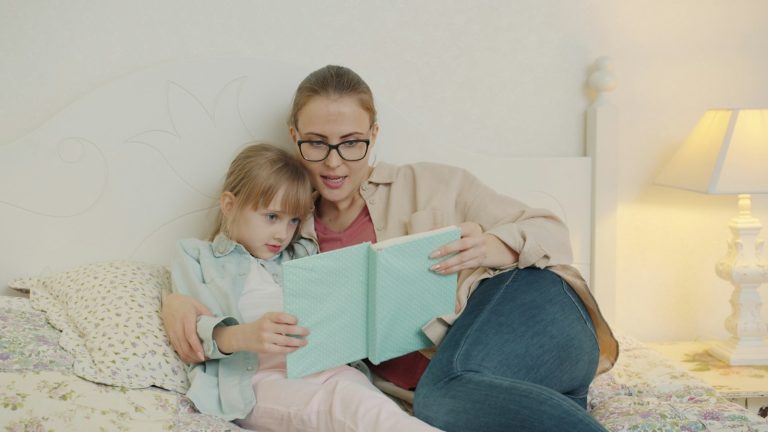
Naming the strategy a child used—not their “smarts”—is what builds willingness to tackle the next hard thing. Photo via Unsplash.
What should you actually say when praising kids?
The aim is to make your feedback point at things a child can control and repeat. A few practical shifts cover most situations.
Describe what you see instead of labeling. Swap “You’re so smart” for “You figured out that tricky part by breaking it into steps.” Description gives the child concrete information about what worked; a label just hands them a reputation to defend.
Praise the strategy, not just the effort. This is the subtle part the popular version often misses. Cheering “You tried so hard!” after a child fails and keeps failing can ring hollow, or even signal that trying hard is what you do when you lack ability. Better to name the specific approach: “That didn’t work, so what’s another way we could try?” Effort matters most when it is tied to a strategy, not offered as a consolation prize.
Let struggle be normal, and even valuable. When a child hits something hard, resist the urge to rescue them or reassure them that it’s easy. Naming difficulty as part of learning — “This is the good kind of hard; your brain is building something” — keeps them in the challenge instead of fleeing it. This is the opposite instinct from snowplow parenting, which clears every obstacle before a child can wrestle with it.
Go easy on the constant “good job.” Praise that is automatic and evaluative — a “good job” for every small act — loses meaning and can make kids performance-focused, always glancing up for approval. Specific, occasional, genuine feedback carries far more weight than a running commentary of applause.

Specific, occasional feedback outperforms a constant stream of “good job.” Photo via Unsplash.
Should you praise results, like grades and trophies?
Outcomes are the trickiest category, because kids obviously care about the A and the win — and pretending you don’t notice rings false. The move is not to ignore results but to connect them back to the process that produced them. Instead of “An A, you’re so smart,” try “An A — all that reviewing you did on the hard chapters paid off.” The grade still gets acknowledged, but the credit lands on something the child can repeat next time.
The deeper risk with results praise is that it can quietly attach a child’s sense of worth to performance, so that a bad grade or a lost game feels like a verdict on their value rather than a piece of information. Kids who learn that love and approval track their achievements often become anxious, perfectionistic, and risk-averse — the opposite of resilient. Keep the praise pointed at the controllable work behind the outcome, and let your warmth toward the child stay obviously unconditional, win or lose.
Is the growth-mindset advice oversold?
It is worth being honest here, because the science has matured. The idea of praising process over person is well supported, but the broader “growth mindset” movement has at times been oversimplified into a slogan. Large replication efforts have found that quick mindset interventions in schools tend to produce modest effects, concentrated among lower-achieving or at-risk students, rather than the transformative gains early enthusiasm promised.
None of that undercuts the core parenting takeaway. You do not need to run a formal intervention or recite mantras. You simply need to point your everyday praise at effort and strategy rather than fixed traits, treat struggle as ordinary, and model the same growth-minded attitude toward your own mistakes. The goal is not to manufacture relentless positivity; it is to help a child build a durable, accurate story about how ability actually grows. That kind of steady, attuned feedback is part of the larger work of helping kids regulate their own frustration, and of repairing warmly when you slip and blurt out “you’re a genius” anyway — which every parent does.
Frequently asked questions about praising kids
Is it ever okay to tell my kid they’re smart?
An occasional “you’re smart” will not harm a child; the concern is about the dominant pattern. If most of your feedback points at effort, strategy, and choices, a stray bit of person praise is harmless. Problems arise when ability praise is the default and struggle is treated as a sign the child has run out of talent.
What’s wrong with saying “good job”?
Nothing catastrophic, but a reflexive “good job” for everything is vague and can train kids to seek constant approval. Specific feedback — naming exactly what the child did well — is more useful and more motivating than a generic verbal sticker.
How do I praise effort when my child failed anyway?
Focus on strategy and next steps rather than praising effort as a consolation. Try, “That approach didn’t work — what could we try differently?” This keeps the child oriented toward problem-solving instead of concluding that hard work is pointless.
At what age does this start mattering?
Earlier than most parents expect. Research recording parents with toddlers found that process praise in the one-to-three age range predicted a child’s motivational style years later. The habits of how you praise are worth building from the start, and they are never too late to adjust.
A simple script for praising kids day to day
Praising kids for effort, strategy and choices keeps them willing to try hard things. For the underlying research, see the American Psychological Association.
Written by
Elena Rostova
Elena Rostova is the byline used for articles published by Relationship 99. It is a pen name, not a licensed clinician. Articles here are built from published research in relationship science - including work by John Gottman, Arthur Aron and researchers in attachment theory - with the studies named in the text so readers can check them. How we research, source and review our articles is set out in full at relationship-99.com/editorial-standards. Relationship 99 is not a therapy service, and nothing here replaces advice from a qualified professional.