Dating with anxiety is far more common than it feels: the National Institute of Mental Health estimates about 19% of U.S. adults have an anxiety disorder in a given year. The less obvious problem is not the nerves themselves. Research suggests anxiety strains new relationships through hiding, holding back personal details to avoid judgment. Sharing gradually, at a pace you choose, usually helps more than waiting to feel calm first.
Key Takeaways
- An estimated 19.1% of U.S. adults had an anxiety disorder in the past year, according to NIMH survey data, so many of the people you date have been there too.
- Dating with anxiety often leads to self-protective habits like revealing little about yourself, which studies link to lower support and closeness in romantic relationships.
- You do not owe anyone a diagnosis on a first date; a short, calm explanation once anxiety affects plans or closeness is usually enough.
You have rehearsed the first question three times in the car. You checked whether your text sounded too eager, then whether the next one sounded too cold. Halfway through dinner, you realize you have spent more time monitoring yourself than listening to the person across the table.
If that sounds familiar, you are not broken. Dating with anxiety simply means dating with a nervous system that works overtime to protect you from rejection. The goal is not to switch that system off, which rarely works, but to keep it from making all your choices.
How common is dating with anxiety?
Very common. According to NIMH statistics on any anxiety disorder, an estimated 19.1% of U.S. adults had an anxiety disorder in the past year and 31.1% will experience one at some point in life. Rates were higher among women (23.4%) than men (14.3%), and highest in the main dating years, from 18 to 44.
Social anxiety, the type most tied to dating, is a large slice of that picture. NIMH data on social anxiety disorder put past-year prevalence at 7.1% of adults and lifetime prevalence at 12.1%.
One caveat: these figures come from the National Comorbidity Survey Replication, collected from 2001 to 2003. It is still the source NIMH uses for these estimates, but it predates dating apps entirely. Treat the numbers as a floor for how normal this is, not a precise current count.
Is it an anxiety disorder or anxious attachment?
These two get blended online, but they are different ideas. An anxiety disorder is a clinical condition, diagnosed by a licensed professional, in which worry or fear is persistent and interferes with daily life. Anxious attachment is a relationship pattern from attachment theory, which psychologists Cindy Hazan and Phillip Shaver applied to adult romance in a widely cited 1987 paper.
Someone with anxious attachment may feel secure at work and among friends yet crave reassurance and fear abandonment with a partner. Someone with social anxiety may feel calm once a relationship is established but dread first meetings. Many people have some of both. If attachment patterns sound more like you, our guide to attachment styles in dating goes deeper. If your worry centers on obsessive doubt about whether your partner is “right,” read about relationship OCD.
This article cannot diagnose anything. If anxiety is affecting your sleep, work or friendships, a licensed mental health professional can help sort out what is going on.
How does anxiety show up in early dating?
The obvious signs are racing thoughts, a dry mouth and replaying the conversation afterward. When dating with anxiety, the quieter signs are what clinicians call safety behaviors: things you do to feel less exposed that end up limiting connection. Common ones include:
- Asking lots of questions so you never have to answer any.
- Drinking more than you planned, to take the edge off.
- Over-preparing topics, or rereading texts many times before sending.
- Canceling at the last minute when anticipation peaks.
- Keeping opinions and personal stories vague so nothing can be judged.
That last habit matters most. In a community study of over 300 adults, Cuming and Rapee (2010) found that women with higher social anxiety disclosed less in their romantic relationships, and that lower disclosure helped explain lower relationship quality, especially lower support. The pattern did not appear for men in that sample.
A study of 163 undergraduates and their partners in the Journal of Clinical Psychology found that, for both sexes, higher social anxiety was linked to seeing intimacy as riskier and the relationship as less emotionally close. And in a follow-up study of 343 student couples, Porter and Chambless (2017) found that men’s social anxiety predicted higher breakup rates a year later.
These are student and community samples, and correlation is not destiny. The useful message for anyone dating with anxiety is that hiding, not anxiety itself, appears to do much of the damage, and hiding is something you can practice changing.

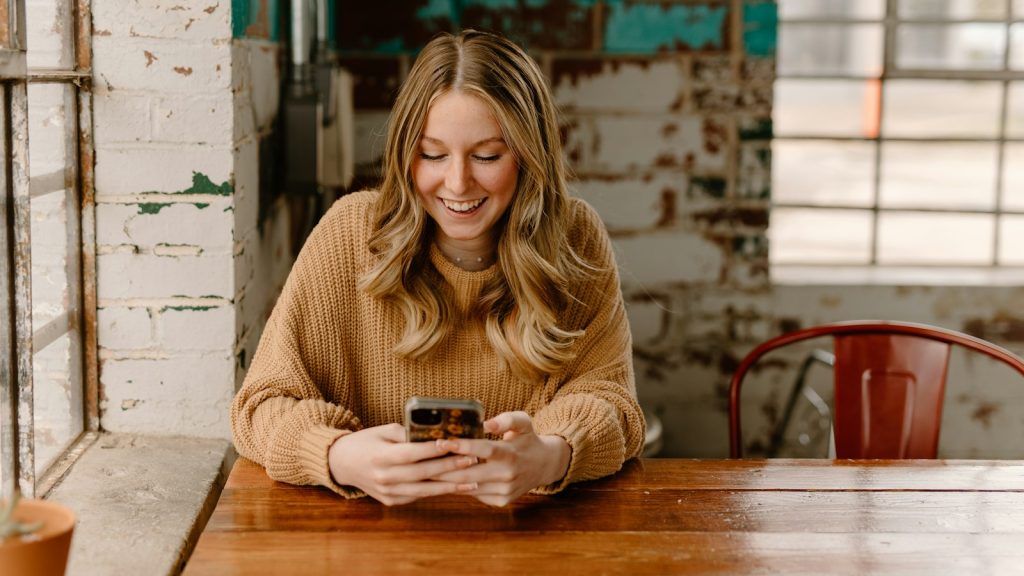
Small, steady disclosures tend to build closeness faster than perfect first impressions. Photo: Madeline Liu / Unsplash.
When should you tell someone you are dating about your anxiety?
There is no research-backed rule for when to disclose while dating with anxiety. A more useful test is relevance: share when your anxiety starts to affect plans, communication or closeness, and before it becomes the unspoken explanation for something your date has noticed.
In practice, many people find these moments natural:
- When you need to adjust plans, such as picking a quieter place or leaving a party early.
- When the relationship is moving toward exclusivity, and you are sharing other important parts of your life.
- When your date has misread a symptom, such as taking a slow reply or a withdrawn mood as disinterest.
You never owe a diagnosis, a history or details about treatment. Disclosure is about giving someone enough context to understand you, not handing over your medical file. If you overshare and feel exposed afterward, that wave of regret has a name, and our piece on the vulnerability hangover explains why it usually passes.
Three calm steps for sharing it
Keeping it short makes disclosure feel lighter for both of you. A simple structure:
- Name it plainly. “I deal with anxiety, mostly in new social situations.”
- Say how it shows up with them. “Sometimes I go quiet in big groups, or I need a minute before I answer something important. It is not about you.”
- Offer one way they can help. “If I seem off, just asking whether I want a break really helps.”
Then stop and let them respond. Pay attention to how they react. Curiosity and kindness are good signs. Mockery, dismissiveness or using it against you later are real red flags, and that information is worth having early when dating with anxiety.
What helps on the date itself?
When dating with anxiety, small adjustments can lower the load without turning the date into a performance of calm:
- Choose structure. A walk, a museum or a cooking class gives you something to look at and talk about besides each other.
- Set a natural end time. Knowing a coffee date lasts about an hour can make it easier to say yes.
- Drop one safety behavior per date. Share one real opinion or story instead of asking another question.
- Shift attention outward. When you notice self-monitoring, get curious about a detail your date mentioned.
- Slow the pace. Fewer, more intentional dates are often easier on an anxious system. Our guide to slow dating explains the approach.

A short reset before or after a date can help your nervous system settle. Photo: Artem Kovalev / Unsplash.
When is it time to get professional support?
Dating with anxiety does not require therapy, but consider talking with a licensed therapist if anxiety leads you to avoid dating altogether, if panic attacks happen around dates, or if worry about a relationship takes up hours of your day. Cognitive behavioral therapy, including gradual exposure to feared situations, is among the most studied treatments for anxiety disorders, and a professional can help you decide whether therapy, medication or both make sense for you.
If anxiety ever comes with thoughts of harming yourself, or you feel unable to stay safe, call or text 988 to reach the 988 Suicide and Crisis Lifeline any time.
Dating with anxiety: common questions
Should I wait to date until my anxiety is gone?
Not necessarily. Waiting for anxiety to disappear can turn into long-term avoidance, which tends to make fear stronger. Many people date successfully while managing anxiety, especially with support. If symptoms are severe, it can help to start treatment first.
Is it a red flag if the person I am dating has anxiety?
No. Anxiety is common and treatable, and someone who can talk about it openly is showing self-awareness. What matters is how they handle it, such as whether they take responsibility for their reactions and treat you with respect.
Can dating with anxiety make my symptoms worse?
Early dating is uncertain, and uncertainty can raise anxiety for a while. Over time, gentle, repeated exposure often makes situations easier. If your symptoms keep escalating, take a pause and talk to a professional.
How do I stop overthinking texts?
Set a simple rule, such as rereading a message once and then sending it. Remind yourself that a slow reply has many ordinary explanations. If the urge to seek reassurance becomes constant, that is worth exploring with a therapist.
Let anxiety ride along without letting it steer
Anxiety is common, it is not a character flaw, and it does not disqualify you from a good relationship. The research points to a clear lever: the more you can let someone see you, at a pace that feels manageable, the more room there is for real closeness. Share in small doses, notice how people respond, and get support when anxiety starts making decisions for you. Dating with anxiety is a skill you can build, one honest conversation at a time.
This article is for general education and is not a substitute for advice from a licensed mental health professional. If you are in crisis or thinking about harming yourself, call or text 988 to reach the 988 Suicide and Crisis Lifeline.
Written by
Elena Rostova
Elena Rostova is the byline used for articles published by Relationship 99. It is a pen name, not a licensed clinician. Articles here are built from published research in relationship science - including work by John Gottman, Arthur Aron and researchers in attachment theory - with the studies named in the text so readers can check them. How we research, source and review our articles is set out in full at relationship-99.com/editorial-standards. Relationship 99 is not a therapy service, and nothing here replaces advice from a qualified professional.