Attachment styles in dating explain something that can feel almost supernatural: why you keep ending up in the same painful situation with different people. The partner who seemed perfect until they got close and then pulled away. The connection that made you anxious and obsessive in a way you don’t recognize in the rest of your life. The relationships that felt thrilling precisely because they were unstable. These aren’t random misfortunes or proof that “all the good ones are taken.” Very often they’re the predictable output of how you learned, very early, to seek and manage closeness — your attachment style.
The framework comes from decades of psychological research, beginning with John Bowlby and Mary Ainsworth’s work on how infants bond with caregivers, later extended to adult romantic relationships. The core finding is that most of us carry one of a few patterns into our love lives, and that two of those patterns, paired together, create one of the most common and most painful traps in modern dating.

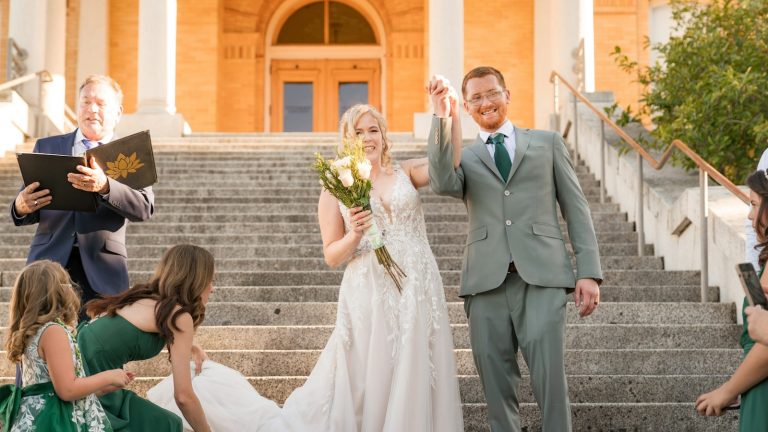
Attachment styles in dating explain why the same patterns keep repeating. Photo: Vitaly Gariev / Unsplash.
The attachment styles in dating, briefly
Researchers generally describe three or four patterns. People with a secure attachment — by most estimates around half of the population — are comfortable with closeness and with independence; they can express needs directly, trust fairly easily, and don’t fall apart at the first sign of distance. People with an anxious (or preoccupied) attachment crave closeness but live with a low hum of fear that their partner will leave; they’re sensitive to any sign of distance and can become preoccupied, seeking constant reassurance. People with an avoidant (dismissive) attachment prize independence and feel suffocated by too much closeness; they tend to pull back when a relationship deepens, valuing self-sufficiency over intimacy. (A fourth, disorganized or fearful-avoidant pattern, combines a longing for closeness with a fear of it.)
None of these is a life sentence or a character flaw. They’re strategies a younger version of you developed to get needs met, and they made sense in the environment that formed them. But in adult dating, some pairings are far harder than others.
The anxious–avoidant trap
The cruelest pairing is also one of the most common: an anxious partner and an avoidant one. At first the chemistry can be electric, because each confirms the other’s deepest expectation. The anxious partner, primed to fear distance, is activated by the avoidant partner’s unavailability — the intermittent warmth feels like love precisely because it has to be chased. The avoidant partner, primed to fear engulfment, feels the anxious partner’s need for closeness as pressure, and responds by withdrawing. So the anxious partner pursues, the avoidant partner retreats, and each move triggers the other more intensely. It’s the same pursue-withdraw loop we describe in stonewalling — only here it’s baked into the attraction itself.
What makes the trap so sticky is that it feels like passion. The highs are high, the lows are devastating, and the instability gets misread as intensity of love. In reality, both people are usually miserable: the anxious partner never feels secure, and the avoidant partner never feels free. Recognizing the pattern is the first step out of it.

Dating toward security feels calmer — and that calm is the point. Photo: Elijah Pilchard / Unsplash.
Dating toward security
The encouraging news from the research is that attachment styles aren’t fixed. Psychologists talk about “earned security” — the capacity to move toward a secure style through self-awareness, healthier relationships, and sometimes therapy. A few shifts help. First, learn your own pattern honestly, and notice it in real time: if you’re anxious, recognize that the urge to send the fifth text or to read catastrophe into a slow reply is your attachment system firing, not objective reality. If you’re avoidant, notice the urge to find fault and create distance the moment things get close, and ask whether the flaw is real or just proximity.
Second — and this is the big one — pay attention to how a relationship makes you feel, not how intensely. Many people who’ve been in the anxious–avoidant trap find secure partners “boring” at first, because calm doesn’t trigger the familiar rollercoaster. Learning to value steadiness over drama is the heart of dating toward security. A secure connection should feel safe, not like an emergency. That steadiness is built through small, reliable responsiveness over time, the kind we describe in bids for connection, and it rests on the trust that grows when a partner consistently shows up. The Dating & Engaged section has more.
A few honest caveats
Attachment theory is genuinely useful, but it’s a lens, not a horoscope. People are more complex than four boxes, your style can vary across relationships, and labeling a partner “an avoidant” to dismiss them is its own kind of trap. The point isn’t to diagnose and discard people — it’s to understand your own patterns well enough to stop repeating them, and to choose partners and behaviors that move you toward security. If your patterns feel deeply stuck, or trace back to early experiences that still hurt, a therapist who works with attachment can help more than any article. This piece is general information, not personalized advice.
Still, simply seeing the pattern changes things. Once you recognize the anxious–avoidant trap for what it is, the chase loses some of its spell — and you can start looking for the kind of love that feels less like a rollercoaster and more like solid ground.
Frequently asked questions about attachment styles in dating
What are the attachment styles in dating?
The main adult attachment styles are secure, anxious (preoccupied), and avoidant (dismissive), plus a fearful-avoidant pattern — they shape how we seek and handle closeness.
What is the anxious-avoidant trap?
It is the painful pairing where an anxious partner chases closeness and an avoidant partner withdraws, each triggering the other. The drama can feel like passion but leaves both unhappy.
Can you change your attachment style?
Yes. Through self-awareness, healthier relationships, and sometimes therapy, people can move toward earned security and learn to value steadiness over intensity.
Written by
Elena Rostova
Elena Rostova is the byline used for articles published by Relationship 99. It is a pen name, not a licensed clinician. Articles here are built from published research in relationship science - including work by John Gottman, Arthur Aron and researchers in attachment theory - with the studies named in the text so readers can check them. How we research, source and review our articles is set out in full at relationship-99.com/editorial-standards. Relationship 99 is not a therapy service, and nothing here replaces advice from a qualified professional.