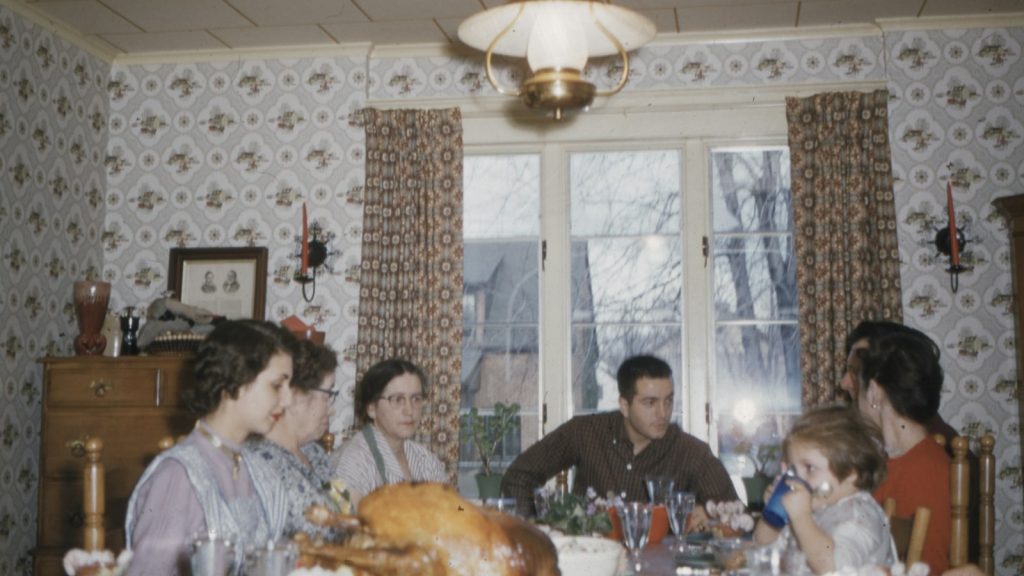
Co-parenting holiday schedule decisions should start with one question: how does this plan keep our child out of the middle? Splitting every holiday to the hour feels fair, but research ties children’s distress more to the conflict they witness than to exact time splits. Kids still benefit from time with both parents, so protect that time and keep tension away from handoffs.
Key Takeaways
- A 2020 meta-analysis of 169 studies in Psychological Bulletin found that conflict between parents, including child-related conflict, is consistently associated with children’s emotional and behavioral problems.
- The best co-parenting holiday schedule is judged by how calm the handoffs are, not by whether each parent gets an identical number of hours.
- Fewer, simpler, predictable exchanges usually beat complicated same-day splits, especially when parents still argue easily.
Consider a family like this illustrative one. Two parents, separated since spring, agree to split Christmas Day at 2 p.m. On paper it is perfectly even. In practice, the morning is rushed so presents can be opened before the drive, the exchange in a cold driveway turns into a short argument about a forgotten coat, and a seven-year-old spends the car ride wondering whether she caused it. Both parents got their “fair” half. The child got the part nobody planned.
That moment, not the clock, is what a good co-parenting holiday schedule is designed around. In early October, you still have time to plan Thanksgiving and December that way.
Why Does Conflict Matter More Than a Perfect 50/50 Split?
The most useful lens here is emotional security theory, first proposed by psychologists Patrick Davies and E. Mark Cummings in a 1994 Psychological Bulletin paper. The idea is simple: children constantly monitor whether the family is a safe base. When parents fight, kids feel it as a threat to their own security and try to manage it by watching, worrying, intervening, or withdrawing.
Three decades of research have largely supported that model. A large meta-analysis by van Eldik and colleagues (2020), which pooled 169 studies on child maladjustment and 61 studies on children’s responses to conflict, found that hostile conflict was most strongly tied to children’s acting-out behavior and emotional reactions. Disengaged, cold, and unresolved conflict carried similar risks in other areas. Most associations held up over time.
Two honest caveats: most of those studies looked at children in general, not only children of divorce, and the findings are correlational. Still, the authors conclude that helping children means focusing on the relationship between parents. Holidays concentrate that relationship into a few high-stakes handoffs.
Does Time With Both Parents Still Matter?
Yes, and precision matters here. A study by William Fabricius and Linda Luecken (2007) surveyed 266 university students whose parents had divorced before they turned 16. More time living with their father after divorce predicted better father-child relationships, independent of conflict. More exposure to parental conflict predicted worse father-child relationships and more lingering distress about the divorce, independent of time.
Crucially, the two effects did not cancel each other out. More time helped in both high- and low-conflict families, and more conflict hurt at every level of parenting time. The sample was college students recalling their childhoods, so it is not the final word. But the lesson for any co-parenting holiday schedule is clear: don’t trade your child’s time with the other parent for peace, and don’t trade peace for time. Design the plan so they get both.

Kids remember the mood of the holiday more than the exact hours in each home. Photo: Taylor Heery / Unsplash.
Comparing Co-Parenting Holiday Schedule Types
No single format is best for every family. The right co-parenting holiday schedule depends on distance between homes, your children’s ages, and, most of all, how reliably the two of you can stay civil at a doorstep. Here is how the four most common approaches compare from a child’s point of view.
| Schedule type | How it works | Best for | Watch-outs for kids |
|---|---|---|---|
| Alternating years | One parent has Thanksgiving in even years, the other in odd years; same for Christmas or other holidays. | Higher-conflict parents, long distances, families who want one exchange or none on the day itself. | A full year without a holiday with one parent; plan a brief call or a second celebration so the gap doesn’t feel like a loss. |
| Splitting the day | Morning with one parent, afternoon and evening with the other, with a midday exchange. | Parents who live close and can exchange calmly; children who would miss either parent sharply. | Rushed meals, travel fatigue, and a handoff on the most emotional day of the year. Risky if exchanges tend to get tense. |
| Fixed holidays | Each parent keeps the same holidays every year (for example, one always has Thanksgiving, the other always has Christmas Eve). | Families with different traditions, religious calendars, or extended-family events tied to one side. | Feels lopsided if one holiday matters more to the child; revisit as kids grow and their own preferences form. |
| Doubling up (celebrating twice) | Each home holds its own full celebration on different days, such as Christmas on the 25th in one house and the 27th in the other. | Younger children, parents who want to avoid same-day exchanges entirely. | Gift and sugar overload, or a sense of competition between homes. Agree on rough gift limits in advance. |
The formats that reduce same-day exchanges give tension fewer chances to spill over. Splitting the day maximizes holiday contact with both parents, but it is the least forgiving co-parenting holiday schedule if you still clash.
What Does Research Say About Shared Time When Conflict Stays High?
This question matters when picking a co-parenting holiday schedule after a bitter split. A 2018 review by Mahrer, O’Hara, Sandler, and Wolchik examined 11 empirical studies on parenting time, parenting quality, and child adjustment in high-conflict families. In samples where conflict was still high many years after the divorce, more shared parenting was linked to poorer child adjustment. That pattern did not show up when conflict was measured during the separation itself or within the first two to three years.
The review also found that strong parenting from at least one parent was associated with better outcomes amid conflict, and that effects differed by child gender. The evidence base is small, so treat it as a caution, not a rule. The practical takeaway: if you are years out and conflict hasn’t cooled, a lower-contact co-parenting holiday schedule may serve your child better than a tightly shared one.
A related study by Amato, Kane, and James (2011), using data on 944 families, sorted post-divorce parenting into cooperative co-parenting, parallel parenting, and single parenting. Children in the cooperative group had the fewest behavior problems and closest ties to their fathers, but they did not score significantly better on 10 other outcomes. In other words, you don’t need a warm, joint holiday dinner to protect your kids. A structured, low-contact approach like parallel parenting can still give children stable holidays in both homes.
How Should You Adjust the Schedule for Your Child’s Age?
Babies and toddlers
Very young children rely on routine, and long drives and late exchanges are hard on them. For this age, a co-parenting holiday schedule built on shorter, more frequent contact, or doubling up on separate days, often works better than one long holiday away. Keep the comfort object and bedtime routine consistent between homes.
School-age children
Kids from about six to eleven notice everything, including the tone at the door, and they care about traditions. Ask what matters most to them, but make clear the adults decide. Asking a nine-year-old to choose between parents puts them exactly where emotional security theory says they shouldn’t be.
Teenagers
Teens have jobs, friends, and their own plans, and a rigid co-parenting holiday schedule can breed resentment. Give their preferences real weight and don’t treat a wish to see friends as a verdict on either parent. The same principle applies if a new partner will be at a holiday gathering. Teens in particular may need it handled gradually, as covered in our guide to introducing kids to a new partner after divorce.

Predictable, low-drama handoffs protect the part of the day children care about. Photo: omer faruq khan / Unsplash.
Planning the First Holiday After Separation
The first season is usually the hardest. Old traditions feel loaded, and kids are still learning how two households work. A few principles help your first co-parenting holiday schedule land gently:
- Decide early and in writing. Settle Thanksgiving and December plans by early November so children aren’t absorbing last-minute negotiations.
- Tell the kids together, if you can. A short, shared explanation signals that the adults are handling it.
- Keep one familiar thing in each home. Continuity is more reassuring than spectacle.
- Start one small new tradition. It gives the new household its own meaning instead of feeling like a reduced copy of the old one.
If your children are still settling into the rhythm of two households, these ideas for helping kids adjust to two homes pair well with holiday planning.
How to Script the Handoff So Kids Stay Out of the Middle
The handoff is where your co-parenting holiday schedule succeeds or fails. Treat it like a short, rehearsed routine rather than a conversation.
- Choose a neutral spot or natural transition. School or a grandparent’s home avoids doorstep standoffs.
- Keep it under two minutes. “Hi. Here’s her bag and the medicine schedule. Have a great time, sweetheart. Love you.” Then leave.
- No logistics, money, or grievances in front of the kids. Handle those by text or a co-parenting app, later.
- Send them off warmly. Saying “I hope you have the best time at Mom’s” gives your child permission to enjoy the other home.
If a disagreement does happen in front of your child, repair matters. Our piece on arguing in front of your kids explains how to close the loop so the child knows it wasn’t their fault.
Let gifts travel between homes
Telling a child a new gift must stay at one house can make them feel that they, too, belong to one parent. Unless it’s impractical, let gifts travel. It tells kids both homes are theirs.
Coping With the Empty House on Your Off Year
Every co-parenting holiday schedule leaves one parent alone at some point, and that day can hit hard. Plan for it: book time with friends or family, volunteer, or pick an activity you enjoy. Some parents hold their own celebration on a nearby date so the official day feels less like the only one.
Resist calling your kids repeatedly. One warm, pre-arranged call, written into your co-parenting holiday schedule, is plenty. Your child should feel free to enjoy the day without worrying about you, which is emotional security theory working in your family’s favor.
Frequently Asked Questions About Co-Parenting Holiday Schedules
What is the most common co-parenting holiday schedule?
Alternating major holidays by year is a common format because it is simple, predictable, and limits same-day exchanges. Many plans pair it with fixed holidays like Mother’s Day and Father’s Day. Defaults vary by state, so check your parenting plan.
Should my child choose where to spend the holidays?
Younger children should not be asked to choose, because it places them between their parents. Teenagers’ preferences deserve real weight, and some courts consider a mature child’s wishes. Even then, the parents should own the final decision so the teen isn’t carrying it.
Is splitting Christmas Day a bad idea?
Not necessarily. If you live close together and your exchanges are reliably calm, a split day lets children see both parents on the holiday. If exchanges tend to get tense, alternating years or celebrating twice usually protects your child better.
Can we change a co-parenting holiday schedule that’s in a court order?
Parents can often agree informally to a one-year change, but the court order typically remains the enforceable default. To change it permanently, you generally need a written agreement or a modification approved by the court. Rules differ by state, so talk with a family law attorney or mediator. This article is not legal advice.
The Calmest Plan Is the Kindest One
When you map out the season, picture the handoff, not the spreadsheet. Ask which arrangement your child will remember as warm and predictable. Equal hours are worth something, and time with both parents genuinely matters. But a child who moves between two calm homes, carrying gifts and permission to enjoy both, has received the best thing either parent can offer this year.
This article is educational and not a substitute for advice from a licensed therapist or family law attorney; custody rules vary by state. If you are dealing with abuse or have safety concerns about exchanges, work with an advocate on a safety plan, use supervised or public exchange sites, and contact the National Domestic Violence Hotline at 1-800-799-7233 (or text START to 88788). If you or someone in your family is in crisis, call or text the 988 Suicide & Crisis Lifeline.
Written by
Elena Rostova
Elena Rostova is the byline used for articles published by Relationship 99. It is a pen name, not a licensed clinician. Articles here are built from published research in relationship science - including work by John Gottman, Arthur Aron and researchers in attachment theory - with the studies named in the text so readers can check them. How we research, source and review our articles is set out in full at relationship-99.com/editorial-standards. Relationship 99 is not a therapy service, and nothing here replaces advice from a qualified professional.