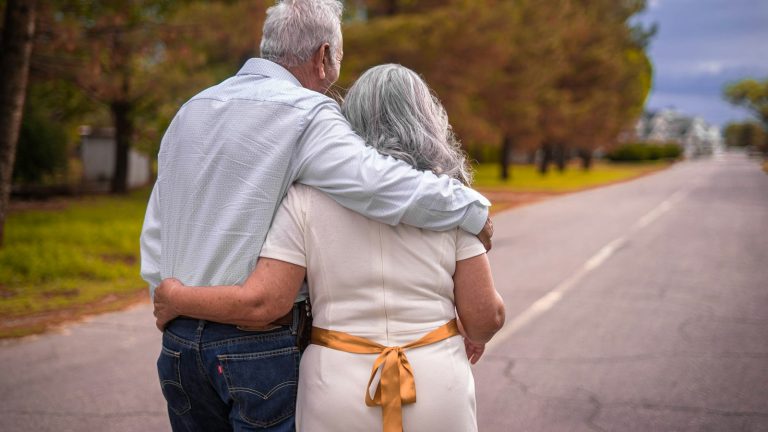
Alone time in marriage is not a sign that something is wrong; it is one of the ways healthy adults regulate stress and stay themselves inside a shared life. Research on solitude finds the benefit depends on choice: chosen time alone calms people down, while withdrawal driven by avoidance tends to isolate. The fix is rarely less space. It is asking for space clearly and coming back reliably.
Key Takeaways
- Chosen alone time in marriage is linked to lower stress: in a 21-day diary study of 178 adults, days with more solitude brought less stress and a stronger sense of autonomy.
- The same hours alone can feel lonely when they are not chosen, so the way a couple frames the request matters as much as the amount of time.
- Needing alone time in marriage is about self-regulation, not rejection. What hurts partners is unexplained absence, not the space itself.
Picture a familiar Thursday evening. One partner gets home, drops the bag, and heads straight for the garage, the bath, or a pair of headphones. The other partner, who has been waiting all day to talk, reads the closed door as a verdict on the relationship. Nobody says anything. By Sunday, both of them are quietly keeping score.
That scene plays out in a lot of homes, and it is rarely about love running out. It is usually about two nervous systems with different ways of coming down from a long day, and no shared language for the difference. This guide looks at what the research on solitude actually shows, why the need for alone time in marriage is so often misread, and how to talk about it so space brings you closer instead of further apart.
Why Does a Spouse Need Alone Time in Marriage?
The most useful research here comes from self-determination theory, a well-tested model of motivation developed by psychologists Edward Deci and Richard Ryan. In a set of four experiments, Nguyen, Ryan and Deci (2018) had people sit alone for just 15 minutes without phones. In the first study (114 participants), high-arousal feelings, both the excited kind and the angry or anxious kind, dropped only in the solitude group, not in the group that spent the time in conversation.
In other words, solitude works like a dimmer switch. It turns down intensity. That is exactly what many people need after a day of meetings, children, commuting, or caregiving. Their request for alone time in marriage is not about escaping a spouse; it is about arriving back at baseline so they have something left to give.
The same paper found a catch. In a two-week diary study, people who spent 15 minutes alone each day without really wanting to showed costs to their mood and higher stress. Solitude helped most when it was autonomously chosen. The authors worked mostly with university students, so the findings are a starting point rather than the final word on couples, but the pattern shows up again in adult samples.

A short solo walk can reset a stressful day. Photo: Harsh Gupta / Unsplash.
Is Wanting Alone Time in Marriage a Red Flag?
Usually not. The more important question is why someone is seeking solitude. A larger diary study by Weinstein and colleagues (2023) followed 178 adults aged 35 and older across 21 days and nearly 3,000 daily reports. On days with more time alone, people felt less stressed and more autonomous. They also felt somewhat lonelier, but those costs were reduced or erased when the solitude was a personal choice.
Two findings from that study are worth holding onto:
- There was no magic number. The researchers found no ideal amount of daily solitude. Some people thrive on an hour; others need far less.
- Motivation changed the outcome. Time alone chosen for rest or reflection helped. Time alone driven by feeling pushed out or wanting to escape did not.
So the red flag is not the request itself. It is solitude that functions as a hiding place: alone time that grows while conversation shrinks, or that appears every time a hard topic comes up.
How Much Alone Time Do Married People Actually Get?
Less than many partners assume. Federal time-use data from the U.S. Bureau of Labor Statistics show how waking hours alone shift with household type. In 2019, adults living with a spouse or partner and no children spent about 5.6 waking hours a day alone, and adults living with children under 18 averaged only about 4.7 hours. Much of that “alone” time is commuting, chores, or work, not restful solitude.
For parents in particular, the hours that count as “alone” are often the drive to work or folding laundry after bedtime. That is why one partner can feel starved for space while the other feels like they never see each other. Both can be accurate at once.
What Self-Determination Theory Says About Space and Closeness
Self-determination theory holds that people have three basic psychological needs: autonomy (feeling your actions are your own), competence, and relatedness (feeling connected). A common fear is that honoring one partner’s autonomy must cost the couple some relatedness. The data point the other way.
In a three-part study, Patrick, Knee, Canevello and Lonsbary (2007) found that when these needs were met within a relationship, individual and relationship well-being both rose. In a sample of 66 couples, each partner’s need fulfillment uniquely predicted their own relationship functioning. In a 10-day diary of 908 disagreements, people whose needs were met felt more satisfied and committed after conflicts. Relatedness was the strongest single predictor, which is a useful reminder: space works when it sits inside connection, not instead of it.
Put simply, healthy alone time in marriage protects the “I” so the “we” doesn’t have to carry every emotional load. Couples who swing too far toward fusion often drift into enmeshment in marriage, where any separateness feels like a threat.
How to Ask for Alone Time in Marriage Without It Landing as Rejection
Most hurt around solitude comes from how it is requested, or from not requesting it at all. A closed door with no explanation invites the other partner to fill the silence with their worst guess. Try a four-part ask:
- Name the need, not the escape. “I need thirty minutes to decompress before I can be present” lands very differently from “I need a break from everything.”
- Give a time frame. Open-ended withdrawal is what triggers anxiety. A clear window (“until 7:30”) makes the space feel safe.
- Promise the return, then keep it. The reconnection is the part that builds trust. Come back and ask about their day.
- Offer the same in return. Alone time in marriage works best as a shared policy, not a privilege one person claims.
If you are the partner who notices the closed door, respond to the request as a bid for connection in its own right. Saying “Take your time, I’ll be in the kitchen” tells your spouse that needing space is allowed, which ironically makes them more likely to come back sooner.

The reconnection after space is where trust is built. Photo: Priscilla Du Preez / Unsplash.
When One Partner Wants More Alone Time in Marriage Than the Other
Different needs for solitude are normal and often tied to temperament or workload. The mismatch becomes painful when each partner interprets the other’s preference as a character flaw: “clingy” on one side, “cold” on the other.
Attachment theory helps explain why. A partner with a more anxious attachment style may experience unannounced distance as a threat, while a partner with a more avoidant style may experience constant closeness as pressure. Neither is wrong. A few practical adjustments help:
- Build predictable solo blocks into the week so they stop feeling like sudden withdrawals.
- Pair solitude with a ritual of reconnection, such as a ten-minute check-in after.
- Trade off evenings when you have young children, so each parent gets real rest rather than “alone” time spent on chores.
- Keep the conversation about the need, not about who is more reasonable.
When Alone Time in Marriage Turns Into Avoidance
Solitude becomes a problem when it replaces engagement rather than refueling it. Signs include alone time that expands every time conflict appears, more private hours paired with less honest conversation, or a partner who seems relieved to be anywhere but home. That pattern often overlaps with feeling married but lonely, and it deserves a direct, kind conversation, or support from a licensed couples therapist.
The healthy version looks the opposite way: alone time in marriage that leaves both partners more patient, more curious, and more willing to talk.
Frequently Asked Questions About Alone Time in Marriage
How much alone time in marriage is normal?
There is no research-based ideal number. A 2023 diary study found no “right” amount of daily solitude; what mattered was whether it was chosen. Many couples do well with short daily windows plus a longer solo block each week.
Is it selfish to want time away from my spouse?
No. Wanting time to recharge is a normal regulation need, not a lack of love. It becomes a problem only if it is used to avoid the relationship or is taken without any communication.
What if my partner never wants alone time?
Some people recharge through company, and that is fine too. Alone time in marriage does not have to be symmetrical to be fair. The goal is not identical needs but a shared agreement that respects both styles.
Can alone time improve intimacy?
It can. When solitude lowers stress and partners return reliably, many couples find they are more present and less reactive with each other.
Space That Brings You Back
The most protective thing a couple can do is stop treating alone time in marriage as a referendum on the relationship. Chosen space calms the body, protects each partner’s sense of self, and gives both of you more to bring back to the table. Ask for it clearly, put a time on it, and make the return as reliable as the departure.
This article is for general education and is not a substitute for advice from a licensed mental health professional.
Written by
Elena Rostova
Elena Rostova is the byline used for articles published by Relationship 99. It is a pen name, not a licensed clinician. Articles here are built from published research in relationship science - including work by John Gottman, Arthur Aron and researchers in attachment theory - with the studies named in the text so readers can check them. How we research, source and review our articles is set out in full at relationship-99.com/editorial-standards. Relationship 99 is not a therapy service, and nothing here replaces advice from a qualified professional.