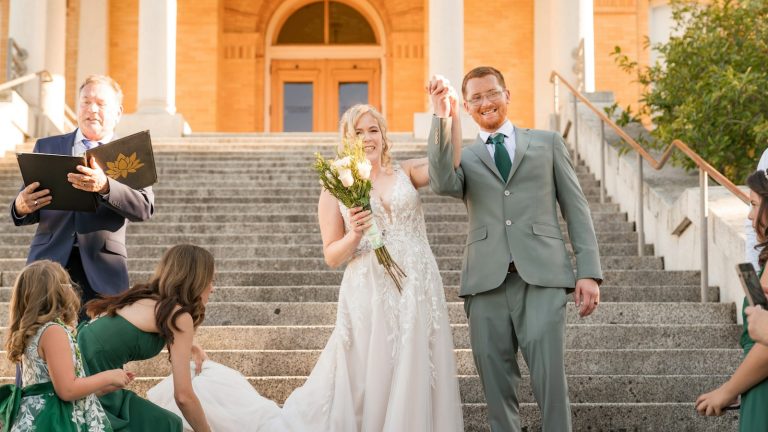
Intercultural relationships tend to succeed or struggle less over dramatic culture clashes than over everyday expectations about family, gender roles and how directly people speak. One study of Chinese, Western and mixed couples found partners differed more on family obligations than on what they wanted emotionally from each other. Couples who name those expectations early and build blended traditions usually handle the differences well.
Key Takeaways
- In 2015, 17% of U.S. newlyweds married someone of a different race or ethnicity, up from 3% in 1967, according to Pew Research Center.
- In intercultural relationships, the biggest gaps often involve extended family, harmony and roles rather than the basics of love and intimacy.
- A large U.S. study found no evidence that interracial marriage in itself raises divorce risk once couples’ other characteristics were taken into account.
Picture the first holiday you spend with your partner’s family. The food is unfamiliar, the jokes land differently, and everyone seems to know an unspoken rule about who serves whom. Later, your partner says, “That went great,” and you are not sure you were at the same dinner.
Moments like that are normal, and they are useful. They point to the specific expectations each of you grew up with, which is where most of the real work in a cross-cultural couple happens.
How common are intercultural relationships?
More common every decade, though they are hard to count precisely because “culture” covers nationality, language, religion, ethnicity and region. The best national figures track race and religion. A Pew Research Center analysis of Census Bureau data found that 17% of U.S. newlyweds in 2015 married someone of a different race or ethnicity, and about 10% of all married people were intermarried.
Religious differences are even more common. Pew’s Religious Landscape Study found that 39% of Americans married since 2010 had a spouse from a different religious group, compared with 19% of those married before 1960. Many of those recent pairings were between Christians and religiously unaffiliated partners.
Neither figure captures every intercultural couple. Two people of the same race can grow up in very different cultures, such as a first-generation immigrant and a fourth-generation American. The numbers are a floor, not a full count.
Where do intercultural couples actually differ?
Often not where people expect. Psychologists at the University of Queensland compared relationship standards among Chinese, Western and intercultural Chinese-Western couples living in Australia. In their 2015 study in the Journal of Cross-Cultural Psychology, cultural differences were smaller for “couple bond” standards, like intimacy and showing love, and larger for “family responsibility” standards: relations with extended family, harmony, saving face and traditional gender roles. Intercultural couples fell between the two groups.
That finding is a useful map. Most partners in intercultural relationships agree that they want closeness, affection and loyalty. The friction tends to show up in questions like: How often do we see your parents? Do we send money home? Who decides about the children’s schooling? Is it rude to disagree with an elder at the table? These questions are easier to raise before engagement than after, and our list of questions to ask before getting engaged is a good starting point for intercultural relationships.
Family systems theory explains why these questions carry so much weight. Each partner arrives as part of a larger family system, with rules about loyalty and roles that feel like common sense from the inside. When two systems meet, neither set of rules is wrong, but both need to be renegotiated.
How do family expectations shape intercultural relationships?
In intercultural relationships, family is usually the first and biggest pressure point. Common tensions include how involved parents should be in decisions, whether aging parents will live with you, financial support for relatives, and how much time holidays and visits require.
A few practices help:
- Each partner handles their own family. Delivering a hard message to your own parents usually goes better than having your partner do it.
- Agree privately, then present a united front. Disagree with each other at home, not in front of relatives.
- Translate the meaning, not just the words. Explain to your partner what a parent’s request signals in your culture, such as respect or worry, so it is not misread as control.
- Plan for the long term. Talk about elder care and where you might live in twenty years, not just next Thanksgiving.

Many intercultural couples balance relationships with family far away. Photo: Vitaly Gariev / Unsplash.
Why do communication styles get misread?
Anthropologist Edward T. Hall described cultures as leaning toward “high-context” communication, where much of the meaning lives in tone, timing and relationships, or “low-context” communication, where meaning is spelled out in words. Partners from different ends of that spectrum can misread each other constantly. One hears directness as rudeness; the other hears indirectness as evasiveness.
Research suggests these differences can even confuse the experts. In a 2016 Journal of Family Psychology study, researchers coded conversations among 123 Chinese, Western and intercultural couples. Couples with Chinese female partners showed fewer positive and more negative behaviors as classified by existing Western coding systems. That qualifier matters, because what counts as “negative” may itself be culturally shaped. Across all groups, though, less negativity and more positive behavior went with higher satisfaction.
The practical takeaway for intercultural relationships is to talk about how you talk. Ask, “When you went quiet, what did that mean?” before assuming. Agree on signals for “I need a break” or “this matters to me,” since you may not share defaults.
How should intercultural couples handle holidays and traditions?
Holidays concentrate everything: family, religion, food, money and memory. Rather than letting each season become a negotiation, many couples find it easier to make some decisions once and revisit them yearly.
- Alternate major holidays between families, or split the day.
- Keep one or two traditions from each side that matter most to each partner, rather than trying to keep everything.
- Create at least one new ritual that belongs only to your household.
- If you have or plan to have children, discuss language, religion and naming early.
Some differences will never fully resolve. John Gottman’s research describes many couple disagreements as “perpetual problems” rooted in lasting differences in values or personality. Our guide to perpetual problems in marriage explains how couples keep talking about these issues without gridlock.

Shared meals are often where cultural expectations become visible. Photo: Annie Spratt / Unsplash.
What helps intercultural relationships last?
The fear that cross-cultural marriages are doomed is not well supported. Using data on 23,139 married couples, Zhang and Van Hook (2009) found interracial marriages looked less stable at first glance, but after accounting for couple characteristics, their risk resembled that of the more divorce-prone group of origin. The authors found no evidence that interracial marriage in itself raised the risk of divorce or separation.
On what helps, a small qualitative study of five intercultural couples by Bustamante and colleagues (2011) identified six coping strategies they used:
- Flexibility about gender roles.
- Humor about cultural differences.
- Deferring to one partner’s culture in certain areas.
- Focusing on similarities.
- Cultural reframing, or building blended values and expectations.
- A general appreciation for other cultures.
Five couples is a tiny sample, so treat this as a list of ideas rather than proven rules. Many of them overlap with what helps any couple: curiosity, humor and deep knowledge of your partner’s inner world, which Gottman calls love maps.
When does outside pressure need more support?
Some partners in intercultural relationships face family rejection, discrimination or pressure to end the relationship. A therapist with experience in multicultural couples can help you set boundaries and stay on the same team. If family pressure ever involves threats, control over your movements or money, or pressure to marry, the National Domestic Violence Hotline (1-800-799-7233) offers confidential support.
Intercultural relationships: common questions
Do intercultural relationships have higher divorce rates?
The evidence is mixed and depends on which groups are involved. In a large U.S. study of interracial couples, the higher risk largely disappeared once couple characteristics were considered. Shared expectations and communication matter more than background alone.
How do we decide how to raise children in two cultures?
Start before children arrive. Discuss language, religion, holidays and extended family roles, and agree on which traditions are non-negotiable for each of you. Many couples raise children with both heritages rather than choosing one.
What if my parents do not accept my partner?
Listen for the specific fear, set clear boundaries about respect, and give relationships time when it is safe to do so. Your first loyalty is to your partner, and a couples or family therapist can help. Our piece on dating someone with different politics covers similar conversations about deeply held differences.
Should I learn my partner’s language?
It is not required, but even partial effort often signals respect to your partner and their family. It also helps you catch meaning that does not translate.
Build a third culture together
The research on intercultural relationships points to a hopeful conclusion. Most couples share the core of what they want from love; the differences live in family expectations, communication habits and traditions. Those are things you can talk about, negotiate and blend. The couples who thrive are often the ones who stop asking whose way is right and start building a shared culture of their own.
This article is for general education and is not a substitute for advice from a licensed mental health professional. If family pressure involves threats or control, contact the National Domestic Violence Hotline at 1-800-799-7233.
Written by
Elena Rostova
Elena Rostova is the byline used for articles published by Relationship 99. It is a pen name, not a licensed clinician. Articles here are built from published research in relationship science - including work by John Gottman, Arthur Aron and researchers in attachment theory - with the studies named in the text so readers can check them. How we research, source and review our articles is set out in full at relationship-99.com/editorial-standards. Relationship 99 is not a therapy service, and nothing here replaces advice from a qualified professional.