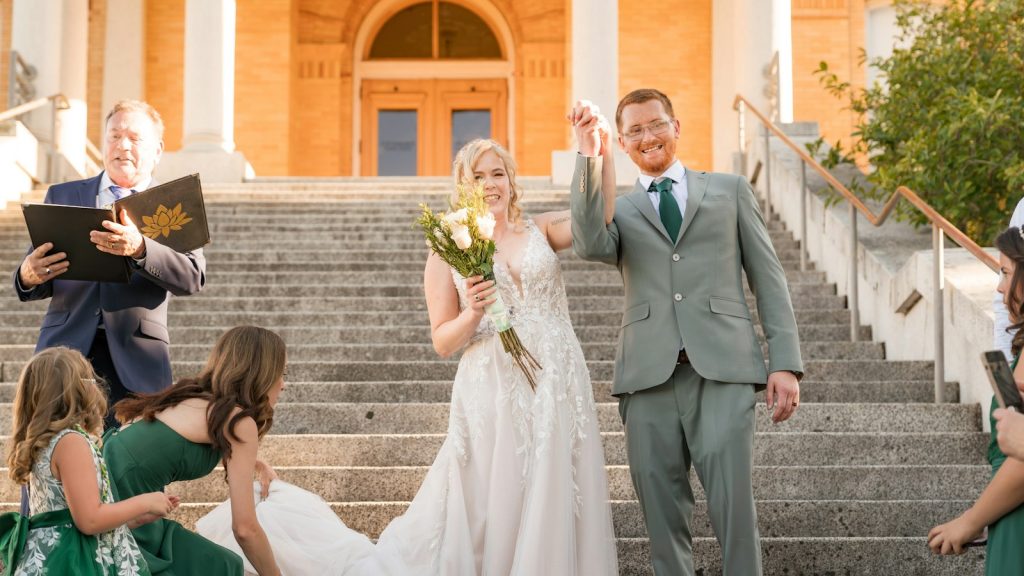
Getting married young does carry higher divorce risk, but the steepest risk is concentrated in teen marriages, not among people who marry in their early to mid-20s. In CDC survey data, women who married before 20 had a 54% chance of their first marriage lasting 10 years, versus 69% for those who married at 20 to 24. Much of the gap reflects education, money and readiness, which couples can partly address.
Key Takeaways
- The median age at first marriage in 2025 was 30.8 for men and 28.4 for women, according to the Census Bureau, so getting married young now often means marrying years before your friends.
- In CDC data, a first marriage that began before age 20 was much less likely to reach 10 years than one that began at 25 or older (54% vs 78% for women).
- Age is partly a stand-in for other factors, and premarital education, financial planning and conflict skills are linked to stronger marriages at any age.
Picture a 23-year-old announcing her engagement at a family dinner. Her grandmother, who married at 19, is delighted. Her aunt asks, a little too quickly, whether she has “thought about waiting.” Her friends are happy for her, and also mostly downloading dating apps.
If you are in that position, you will hear plenty of opinions and very few numbers. This guide sorts out what the data actually say, where the real risks are, and what tends to protect couples who marry earlier than their peers.
How young is “young” for marriage today?
The definition has shifted a lot. According to the Census Bureau’s 2025 families and living arrangements release, the median age at first marriage was 30.8 for men and 28.4 for women, up from 23.5 and 21.1 in 1975.
That means a 24-year-old marrying today is roughly where a typical bride or groom was two generations ago, yet now sits years below the median. Some of the pushback young couples hear is about risk. Some of it is simply that getting married young has become unusual, and unusual choices draw questions.
It helps to separate those two things. Being early relative to your peers is a social experience. Being at higher risk of divorce is a statistical one, and the data are more specific than most warnings suggest.
Does getting married young really raise divorce risk?
Yes, but mainly at the youngest ages. The best national data come from the CDC’s National Survey of Family Growth. A National Health Statistics Report on first marriages estimated how likely first marriages were to remain intact over time, based on interviews conducted from 2006 to 2010.
The pattern is clear. For women, the chance of a first marriage reaching 10 years was 54% when they married before 20, 69% at 20 to 24, and 78% at 25 or older. For men, the figures were 48%, 70% and 76%. Looking further out, about 37% of women’s first marriages that began before age 20 lasted 20 years, compared with 55% of those begun at 20 to 24.
A few honest caveats apply. These are probabilities for marriages formed by people aged 15 to 44 at the time of the survey, not lifetime predictions. The data are now more than a decade old. And they describe averages across very different couples, which means they cannot tell you how your own marriage will go.
Why does age matter so much?
Age itself is rarely the whole story behind the risks of getting married young. People who marry very young differ on average in ways that also affect marital stability, and the same NCHS report shows some of these factors clearly. Women with at least a bachelor’s degree had a 78% probability of their first marriage lasting 20 years, compared with 41% among women with a high school diploma.
Researchers have tried to untangle how much is age and how much is everything that travels with it. Economist Dana Rotz, writing in the Journal of Human Resources, used three national data sets and concluded that women’s rising age at marriage was the main proximate cause of falling divorce rates for couples marrying after 1980. At the other end of the age range, a Demographic Research study by Lehrer and Chen of 3,184 non-Hispanic white women found that women who married late had very stable marriages overall.
Developmental theory offers one explanation. Psychologist Erik Erikson described identity formation as a core task of early adulthood, ideally settling before the work of building lasting intimacy. When two people marry while still figuring out who they are, they may grow in different directions. That is a risk to manage, not a sentence, and many couples grow up side by side.

Couples who marry early often grow up together, which takes intention. Photo: Carrie Borden / Unsplash.
Five things that protect couples getting married young
If you are getting married young, you cannot change your age, but several of the factors linked to marital stability are within reach. These five have the strongest grounding:
- Take premarital education seriously. In a large random survey across four states, Stanley and colleagues (2006) found premarital education was associated with higher satisfaction and commitment, lower conflict and reduced odds of divorce, across income and education levels. The survey design cannot prove cause and effect, but the signal was consistent. Our look at whether premarital counseling is worth it covers your options.
- Decide, do not slide. Know why you are marrying now rather than drifting into it because it feels like the next step. Our guide on how long to date before getting engaged looks at what time together actually buys you.
- Make a money plan early. Young couples often start with lower incomes and student debt. Agree on budgets, debt payoff and how you will handle a job loss before it happens. These money conversations before marriage are a good starting point.
- Protect each person’s growth. Given the education data, keeping school and career plans alive for both partners is one of the most practical things you can do. Avoid letting one person’s goals quietly become optional.
- Learn to fight well. Research associated with John Gottman links harsh starts to arguments, contempt and stonewalling with poorer outcomes, and successful repair attempts with stability. These are learnable skills, and learning them in your 20s pays off for decades.
What should you ask yourselves before getting married young?
When it comes to getting married young, questions are more useful than age cutoffs. Try answering these separately, then comparing:
- Have we seen each other handle stress, illness, money trouble or family conflict?
- Do we agree on big questions such as children, where to live, religion and careers?
- Are we marrying partly to escape something, such as a hard home life, loneliness or family pressure?
- Can each of us support ourselves, or do we have a realistic plan for getting there?
- Who are the people around us who will support this marriage when it gets hard?
If any answer makes you uneasy, that is not necessarily a reason to call things off. It may be a reason to slow down, get premarital counseling, or set a longer engagement.

Shared plans about money, school and careers matter more than the date on the license. Photo: Vitaly Gariev / Unsplash.
What if family or friends disapprove?
Listen for the specific worry under the general disapproval. “You are too young” sometimes means “I am worried you will drop out of school” or “I do not trust how he treats you.” Those are worth hearing. Other times, it reflects the older norm that marriage comes after everything else is in place.
You do not need everyone’s approval, but you do benefit from a support network. Couples who feel isolated from family and friends lose a key buffer during hard seasons, so try to keep those relationships intact even when you disagree. If anyone is pressuring you into marriage, or you feel unsafe, the National Domestic Violence Hotline (1-800-799-7233) offers confidential help.
Getting married young: common questions
Is 22 too young to get married?
Not by itself. In CDC data, marriages begun at 20 to 24 were far more likely to last than teen marriages, though somewhat less likely than those begun at 25 or older. Readiness, shared goals and conflict skills tell you more than the number alone.
Is getting married young a mistake if we are still in college?
Not necessarily, but plan carefully. Education is strongly linked to marital stability, so make sure marriage does not derail either partner’s degree, and talk through finances such as financial aid and housing.
Does waiting until 30 guarantee a marriage will last?
No. Later marriage is linked to lower divorce risk on average, but plenty of later marriages end and plenty of young ones last. Age shifts the odds; it does not decide them.
What is the biggest risk for couples getting married young?
Growing in different directions without talking about it. Regular check-ins about goals, money and the relationship help you change together rather than apart. Our guide to the first year of marriage covers early habits that help.
Treat age as a risk factor, not a verdict
The data are clear that teen marriages face steep odds and that marrying later is linked to more stability on average. They are just as clear that much of the difference comes from education, money and preparation. Getting married young asks more of you up front: more planning, more honest conversations and more support. Couples who invest in those things give themselves a much better chance than any statistic can predict.
This article is for general education and is not a substitute for advice from a licensed mental health professional or attorney. If you feel pressured or unsafe in a relationship, contact the National Domestic Violence Hotline at 1-800-799-7233.
Written by
Elena Rostova
Elena Rostova is the byline used for articles published by Relationship 99. It is a pen name, not a licensed clinician. Articles here are built from published research in relationship science - including work by John Gottman, Arthur Aron and researchers in attachment theory - with the studies named in the text so readers can check them. How we research, source and review our articles is set out in full at relationship-99.com/editorial-standards. Relationship 99 is not a therapy service, and nothing here replaces advice from a qualified professional.