The questions to ask before getting engaged are almost never the ones couples actually ask. We interrogate the ring, the venue, the timing, the proposal story — and quietly assume that because we’re in love and we get along, the big stuff will work itself out. But “we love each other and rarely fight” is not the same as “we’ve agreed on how to build a life.” The most important pre-engagement conversations are unromantic by design, and the couples who have them on purpose are far less likely to discover an irreconcilable difference after the wedding, when it’s far more expensive to learn.
This isn’t about killing the magic with a spreadsheet. It’s about making sure the two of you are marrying the same marriage — not two private, unspoken versions of it. Here are the conversations worth having before the proposal, not after.

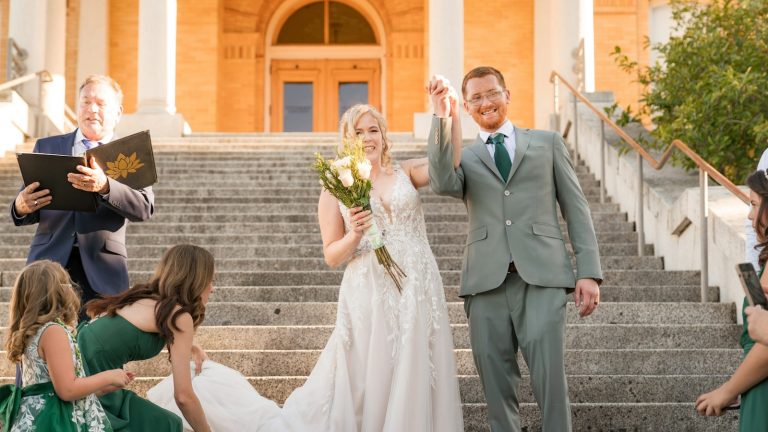
The questions to ask before getting engaged are unglamorous but decisive. Photo: Natali Hordiiuk / Unsplash.
The questions to ask before getting engaged about money
Money is one of the leading sources of marital conflict, and it’s astonishing how many couples reach engagement without ever comparing their actual financial realities. Before the ring, you each deserve an honest picture: How much debt are you carrying — student loans, credit cards, anything? What’s your income, and how do you each think about saving versus spending? Do you want joint accounts, separate, or a hybrid? How will you handle it if one of you earns far more, or stops earning to raise children? None of this is romantic, but financial secrecy and mismatched money values quietly wreck marriages. If even imagining this conversation feels tense, that tension is information, and our piece on financial conflict in marriage is worth reading together.

Compare debt, income, and money values before the ring, not after. Photo: Vitaly Gariev / Unsplash.
Children, and what “family” means to each of you
This is the one assumption couples most dangerously leave unspoken. Do you both want children? If yes, roughly how many, and how soon? If one of you is unsure or doesn’t want kids, that’s a conversation to have fully now — not a difference to bury and hope changes. Equally important is how you’d parent: discipline styles, religion and how children would be raised in it, whose career flexes when a child is sick, and how you’ll divide the relentless logistics of family life. The unequal distribution of that load sinks many marriages; our guide to the mental load explains the trap before you fall into it.
Values, faith, and the shape of a life
Beyond kids, you’re agreeing to a direction. Where do you want to live — same city forever, or open to moving for a job? How central is religion or spirituality, and whose traditions take priority? How do you each define a good life: ambitious and busy, or slow and rooted? What role will each set of in-laws play, and how will you set boundaries with family? These questions surface the quiet deal-breakers. It’s far better to find a serious mismatch now, while the decision is still open, than to spend years hoping your partner becomes someone they never agreed to be.
How you handle conflict — and intimacy
Two more areas couples skip because they feel awkward. First, conflict: every couple fights, and what predicts a strong marriage isn’t the absence of conflict but the way you repair afterward. Pay attention to how you two argue now. Can you disagree without contempt? Do you both come back and reconnect, or does one of you stonewall and the other pursue? If repair already feels hard, it’s a skill you can build — our guide to repairing after a fight is a good place to start, and it’s better practiced before the stakes rise.
Second, intimacy and sex. Couples rarely discuss their actual expectations here, then are blindsided when desire and frequency don’t match. Talk honestly about what intimacy means to each of you and how you’ll keep it alive through stress, distance, and the years. It feels vulnerable, which is exactly why it matters: a marriage where these things can be discussed openly is far sturdier than one where they’re taboo.
Consider getting help with the conversation
Many couples find a structured premarital course or a few sessions with a counselor invaluable — not because something is wrong, but because a good framework surfaces questions you wouldn’t think to ask. Research on premarital education generally associates it with higher marital satisfaction and a lower risk of divorce. Going in with eyes open is a gift to your future selves, and it’s part of building the kind of trust a marriage runs on. The Dating & Engaged section has more.
If the answers worry you
One honest caveat: the point of these conversations isn’t to manufacture doubt, and a single disagreement isn’t a reason to call things off. Healthy couples differ on plenty and build a life anyway. But if these talks reveal a fundamental, values-level mismatch — on children, on faith, on whether you even want the same kind of life — take that seriously rather than assuming love will dissolve it. Getting engaged is not a fix for an unresolved difference; it’s a commitment to build on whatever foundation you actually have. Better to know what that foundation is while the question is still yours to answer.
Frequently asked questions about questions to ask before getting engaged
What should you discuss before getting engaged?
Cover money (debt, income, spending styles), whether and how you want children, where you will live, religion and values, careers, and how you each handle conflict — before the ring, not after.
What are good questions to ask before getting engaged?
Ask about finances and debt, kids and parenting, faith and values, career and location plans, in-law boundaries, and how you will resolve disagreements.
Does premarital counseling help?
Yes — research generally links premarital education to higher marital satisfaction and lower divorce risk by surfacing important conversations early.
Written by
Elena Rostova
Elena Rostova is the byline used for articles published by Relationship 99. It is a pen name, not a licensed clinician. Articles here are built from published research in relationship science - including work by John Gottman, Arthur Aron and researchers in attachment theory - with the studies named in the text so readers can check them. How we research, source and review our articles is set out in full at relationship-99.com/editorial-standards. Relationship 99 is not a therapy service, and nothing here replaces advice from a qualified professional.