Telling kids about divorce is the conversation parents rehearse a hundred times in their heads and still dread saying out loud. There’s a reason it feels so heavy: you’re not just sharing news, you’re reshaping a child’s understanding of their own home. But decades of research on children and divorce point to a hopeful finding — it is rarely the divorce itself that does lasting harm to kids. It’s the conflict around it, the instability, and the feeling of being caught in the middle. How you have this conversation, and the hundred conversations after it, matters more than the fact of the separation.
That means this talk is not a single dreaded event you survive. It’s the first move in a long process of helping your children feel safe in a changing world. Done with care, it can become proof to them that even hard things can be handled with love.

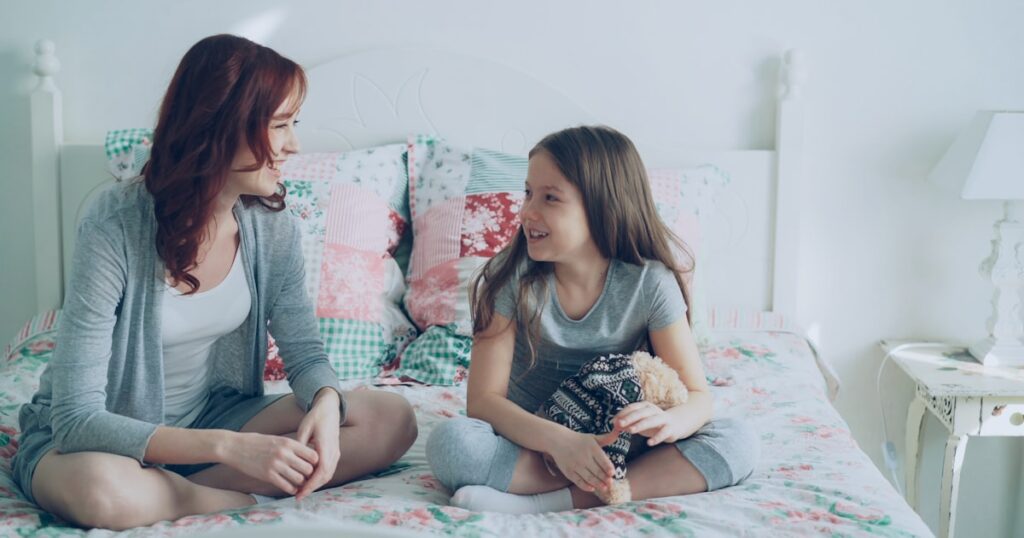
Telling kids about divorce works best as a calm, united conversation. Photo: Vitaly Gariev / Unsplash.
Telling kids about divorce: do it together, and plan it
Whenever it’s safe and possible, both parents should deliver the news together. A united front — even between two people who are separating — sends the single most reassuring message a child can receive: we are still your parents, and we are still a team where you’re concerned. Plan what you’ll say in advance. Agree on a simple, shared explanation, choose a calm time without an immediate deadline (not right before school or bed), and make sure there’s space afterward to just be together. Tell siblings at the same time if you can, so no child carries the secret or hears it secondhand.
Keep the explanation short and age-appropriate. Young children need concrete simplicity: “Mom and Dad have decided to live in two different houses. We both love you very much, and that will never change.” Older children and teens can handle a little more, but they still don’t need the adult details — the grievances, the finances, the fault. What every child of every age needs to hear, explicitly and more than once, is three things: this is not your fault, both of us still love you, and you are not going to lose either of us.
Answer the question they’re really asking
Beneath a child’s questions is almost always one underlying fear: what happens to me? So as much as you can, answer in the currency of their daily life. Where will I sleep? Will I still see my friends, my school, my dog? Who will take me to practice? Children feel safe through routine and specifics, not reassurance in the abstract. The more concretely you can describe what will stay the same, the more solid the ground feels under them. Building those predictable two-home routines is its own ongoing task, and our guide to co-parenting after divorce walks through it.
What not to say
A few things can quietly do real damage, even when said by a loving parent in pain. Don’t blame the other parent or assign fault — “your father left us,” “your mother broke this family.” A child is made of both of you; hearing one parent condemned teaches them to feel that something in themselves is bad, and it forces a loyalty bind no kid should be in. Don’t over-share adult reasons; details about affairs, money, or betrayal are not a child’s to hold. Don’t make your child your confidant or your messenger between households. And resist the urge to ask them to choose, comfort you, or take sides. They need to be allowed to love both parents freely.
It also helps to give them permission for whatever they feel. Some kids cry; some go quiet; some get angry; some seem strangely unaffected and bring it up weeks later. All of that is normal. Rather than rushing to fix their feelings, you can simply say, “It’s okay to be sad or mad or confused. You can talk to us about any of it, anytime.” Then keep proving that’s true.

Shielding kids from adult conflict protects them more than the marriage staying intact. Photo: Vitaly Gariev / Unsplash.
The conversation continues
The first talk is just the opening. Children process big change in layers, returning to it as they grow and understand more. Expect follow-up questions for months, even years, and welcome them rather than treating the subject as closed. Keep their world as stable as you can — same bedtime rituals, same school where possible, same access to both parents. Above all, shield them from adult conflict: research consistently shows that ongoing, visible parental conflict is more damaging to children than the divorce itself. Keeping your disagreements away from their ears is one of the most protective things you can do, and it’s part of the slow work of rebuilding trust and security in their lives. The Family Life & Parenting and Separation & Divorce sections have more.
A note on hard situations
This guidance assumes two parents who can cooperate, at least about the children. That isn’t every family. If there’s abuse, addiction, or safety concerns, telling kids “together” and presenting a united front may not be appropriate, and your priority shifts to your children’s safety and your own. In those cases, a family therapist, your attorney, or a domestic abuse service can help you find language and a plan suited to your situation. This article offers general guidance and isn’t a substitute for advice tailored to your family.
However you have to do it, remember the core finding underneath all of this: kids are remarkably resilient when they feel loved by both parents and protected from the conflict between them. You can’t make the divorce painless. You can make it survivable — and that is enough.
Frequently asked questions about telling kids about divorce
How do you tell kids about divorce?
When possible, tell them together and calmly with a simple shared explanation. Reassure them it is not their fault, that both parents still love them, and explain what will change day to day.
What should you not say when telling kids about divorce?
Do not blame the other parent, share adult details, or make a child your confidant or messenger — and never ask them to take sides.
How does divorce affect children?
Research shows it is usually ongoing parental conflict, not the divorce itself, that harms kids most. Children do well when they feel loved by both parents and shielded from conflict.
Written by
Elena Rostova
Elena Rostova is the byline used for articles published by Relationship 99. It is a pen name, not a licensed clinician. Articles here are built from published research in relationship science - including work by John Gottman, Arthur Aron and researchers in attachment theory - with the studies named in the text so readers can check them. How we research, source and review our articles is set out in full at relationship-99.com/editorial-standards. Relationship 99 is not a therapy service, and nothing here replaces advice from a qualified professional.