Parentification is what happens when a child quietly takes over a job that belongs to an adult — and the most consequential version of it has nothing to do with chores. It is the nine-year-old who can tell from the sound of the garage door what kind of evening the family is about to have, and who adjusts accordingly.
The definition, briefly. Parentification is a role reversal in which a child provides practical or emotional caregiving that a parent would normally provide. Family therapists distinguish two kinds: instrumental parentification, where a child takes on tasks — cooking, childcare, translating, paying bills — and emotional parentification, where a child becomes a parent’s confidant, mediator, or mood regulator. The instrumental kind is often survivable and sometimes even strengthening. The emotional kind is the one consistently linked to trouble later.

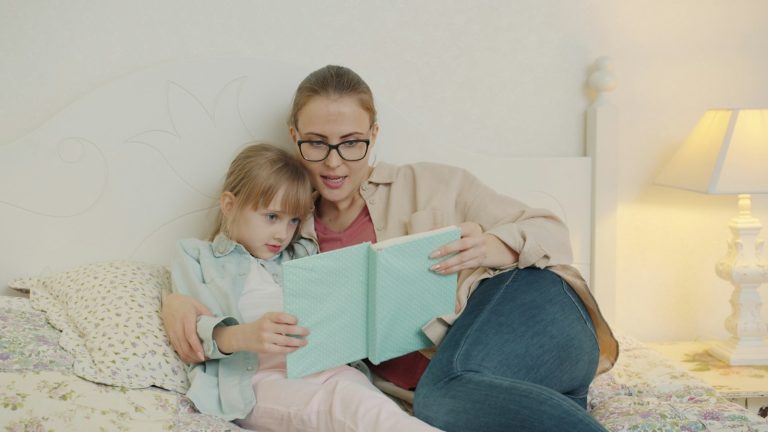
Helping is not the problem. Being needed is. Photo: Annie Spratt / Unsplash.
Where does the idea of parentification come from?
The term was introduced by psychiatrist Ivan Boszormenyi-Nagy and Geraldine Spark in their 1973 book Invisible Loyalties, which was concerned with the ledger of obligation that runs invisibly through families across generations. Around the same period, Salvador Minuchin described the “parental child” in his structural family therapy work — a child pulled up into the parental subsystem, usually because the adult one had a hole in it.
The most useful modern framework comes from psychologist Gregory Jurkovic, whose 1997 book Lost Childhoods separated adaptive parentification from what he called destructive parentification. Three features mark the destructive version: the role is developmentally inappropriate, it is not acknowledged, and it is not reciprocal. That middle item does an enormous amount of work. A great deal of the harm in parentification is not the labor. It is the labor being invisible.
What does emotional parentification actually look like?
It does not look like a struggling family. It usually looks like an unusually easy child.
- A parent who processes their marriage, their finances, or their loneliness out loud with a child, and describes it as “we’re just really close.”
- A child who is used as a go-between — carrying messages, softening one parent to the other, reporting back.
- A child who has learned to scan a room for a parent’s mood before deciding what they need themselves.
- A child praised, constantly, for being mature, easy, no trouble, the one I don’t have to worry about.
- A child who does not bring problems home, because home has no capacity left.
That last one is worth sitting with. Parentified kids frequently look like the healthiest child in the house, because the outward signs of distress have been outsourced elsewhere or suppressed entirely. Research by Lisa Hooper and colleagues on parentification and adult outcomes has linked the emotional variety with elevated anxiety, depression, and shame in adulthood — and the shame is often the most durable piece, because the child concluded early that their own needs were an imposition.
Is instrumental parentification always harmful?
No, and the research is clearer on this than the internet is.
Marjorie Faulstich Orellana’s work on “language brokering” — children of immigrant families who translate for their parents at banks, clinics, and parent-teacher conferences — found that these children often develop real competence and pride from the role, particularly when the family names it as a contribution rather than treating it as invisible. Similar findings show up in studies of older siblings in large families and children of parents with chronic illness.
The moderating variables are consistent: whether the load is age-appropriate, whether it is acknowledged, whether the child is still allowed to be a child in other domains, and whether anyone is caring for the caregiver. Jurkovic’s three criteria again. A twelve-year-old who makes dinner twice a week in a family that says thank you is in a different situation than a twelve-year-old who makes dinner because no one has noticed that dinner is happening.
Why divorce and grief are the common entry points
Parentification tends to begin at a moment when an adult’s capacity drops abruptly — a separation, a death, a job loss, a mental health crisis, a new baby. The child steps into the gap, which is a decent and loving thing to do. The problem is that gaps have a way of becoming arrangements.
The divorce version is specific and extremely common: a parent, genuinely alone and genuinely hurting, starts talking to their child about the other parent. It rarely presents as badmouthing. It presents as honesty. “I’m not going to lie to you about what happened.” But a child who is told the truth about their parents’ marriage is being handed a burden with no capacity to set it down — they cannot advise, cannot fix it, and cannot leave. If this is your season, our guide on how to tell kids about divorce covers what belongs to them and what does not.

The easiest child in the house is not always the one doing best. Photo: Tanaphong Toochinda / Unsplash.
How do you hand the job back?
The instinct is to apologize and then keep doing it. Something more concrete works better.
Name it out loud, once, in plain language. “I’ve been talking to you about grown-up things that aren’t yours to carry. That was my mistake, not yours, and I’m going to stop.” Children rarely need a long explanation. They need to hear that the arrangement was visible to an adult.
Get an actual replacement. Telling your child you’ll stop confiding in them is a promise you cannot keep unless someone else takes the role — a friend, a sibling, a therapist, a support group. Parentification is a vacancy problem. It does not resolve by resolution.
Give the role back in specific pieces. Not “you don’t have to help anymore,” which many kids hear as demotion. Instead: “Bedtime for your brother is mine again. Thank you for covering it. I’ve got it now.”
Ask them for something useless. This sounds trivial and isn’t. Parentified children are often unpracticed at wanting things, so an open question (“what do you want to do?”) produces a shrug. Offering low-stakes, non-productive choices — which movie, which route, which flavor — rebuilds the muscle without putting them on the spot.
Watch for the sibling version. When one child in a family absorbs most of the parenting attention for medical or behavioral reasons, another often steps into an adult role by default. That dynamic is close kin to what we’ve written about as the glass child, and it responds to the same fix: being seen, specifically, and not for being helpful.
If you were the parentified child
Two things tend to be true at once, and adults who grew up in this role often feel they must choose between them. You can hold that your parent was doing their best under real pressure, and that the arrangement cost you something. Family systems thinkers would say the ledger is simply unbalanced; nobody has to be a villain for that to be so.
The practical residue usually shows up in adult relationships as over-functioning: being the reliable one, the calm one, the one who manages everyone’s feelings, and then feeling obscurely resentful and unable to say why. It also frequently shows up as difficulty tolerating being taken care of. That, more than the caretaking, is the piece worth bringing to a good therapist.
Frequently asked questions
What is the difference between parentification and just having chores?
Chores are assigned, age-appropriate, and bounded — the child knows the scope and an adult holds the responsibility. Parentification transfers the responsibility itself. The clearest test is what happens if the child does not do it: if the answer is that nobody does it and something bad happens, the child is not helping, they are in charge.
Can parentification happen in a happy, well-functioning family?
Yes, particularly the emotional kind, and particularly with a firstborn or an unusually perceptive child. It requires no dysfunction — only a parent who is lonely, a child who is good at listening, and nobody noticing that a pattern has formed.
At what age can a child babysit siblings without it becoming parentification?
There is no universal age, and state guidance in the U.S. varies widely. The more useful questions are whether the child can opt out, whether they are compensated in some way — even just acknowledgment — and whether an adult remains reachable and responsible. Regular, non-negotiable, unacknowledged responsibility is the risk factor, not the babysitting itself.
How do I know if I was parentified?
A common marker is memory asymmetry: you can recall a great deal about your parents’ emotional lives during your childhood and comparatively little about your own. Another is discovering, as an adult, that you have no reliable sense of what you want when nobody needs anything from you.
If you are carrying more than a support group or a friend can hold — or if a child in your family seems to be — a licensed family therapist is the right next step. In the U.S., SAMHSA’s National Helpline (1-800-662-4357) is free, confidential, and available around the clock.
More on the invisible dynamics inside families in our Family Life & Parenting archive.
Written by
Elena Rostova
Elena Rostova is the byline used for articles published by Relationship 99. It is a pen name, not a licensed clinician. Articles here are built from published research in relationship science - including work by John Gottman, Arthur Aron and researchers in attachment theory - with the studies named in the text so readers can check them. How we research, source and review our articles is set out in full at relationship-99.com/editorial-standards. Relationship 99 is not a therapy service, and nothing here replaces advice from a qualified professional.