Homework battles usually ease when parents move from supervising every problem to setting up structure and supporting a child’s own effort. A research synthesis by Patall, Cooper and Robinson found that parents’ rule-setting had a stronger link to achievement than other kinds of homework involvement, while direct help showed mixed results. If fights persist anyway, look at the workload and at possible attention or learning issues.
Key Takeaways
- Homework battles often shrink when parents provide routines and help on request, instead of sitting beside a child for every problem.
- Duke researcher Harris Cooper’s “10-minute rule” suggests about 10 minutes of homework per grade per night; far more than that can be a load problem, not a motivation problem.
- An estimated 11.7% of U.S. children aged 3 to 17 have a current ADHD diagnosis, according to the CDC, so persistent struggles are worth raising with your pediatrician or school.
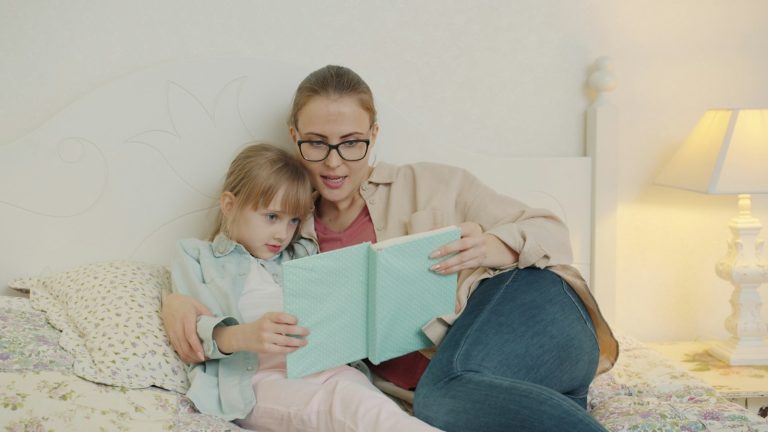
It is 7:40 p.m. The worksheet should have taken twenty minutes. It has taken an hour and ten, two rounds of tears and one slammed pencil. You have explained long division three different ways, and your voice is getting louder with each one.
Almost every parent of a school-age child knows some version of this evening. The research on homework offers a surprising kind of relief: in many cases, doing less, but doing it differently, works better than trying harder.
Why do homework battles happen?
Most homework battles are not really about the homework. Several pressures usually stack up at once:
- Depleted kids. Many children hold it together all day at school and fall apart at home, a pattern often called after-school restraint collapse. Homework lands right in that window.
- A struggle for control. When a parent hovers, a child can turn the task into a test of who is in charge.
- Work that is too hard, or too long. Frustration spikes when a child does not understand the material or the assignment is much larger than expected.
- Parent anxiety. Worry about grades and the future can make a single spelling sheet feel high stakes.
Naming which of these is driving the homework battles in your house is the first step, because each one has a different fix.
Does helping with homework actually help?
It depends on the type of help. Two research syntheses led by Duke psychologist Harris Cooper are the best starting point. The first, a 2006 review in the Review of Educational Research, found generally consistent evidence that homework helps achievement, with a stronger link in grades 7 to 12 than in kindergarten through grade 6.
The second focused on parents. In a 2008 synthesis by Patall, Cooper and Robinson, studies that trained parents to get involved found higher homework completion, fewer homework problems and possibly better performance among elementary students. But studies that simply correlated involvement with achievement found a mixed picture: positive links for elementary and high school students, a negative link in middle school, a negative link for math achievement, and the strongest positive link for parents setting rules around homework.
| Type of involvement | What research suggests | Try this |
|---|---|---|
| Setting rules and routines | Strongest positive link to achievement among the involvement types studied | A fixed homework time and place, with phones parked |
| Trained, structured involvement | In intervention studies, raised completion and reduced homework problems for elementary students | Learn the teacher’s expectations and use the same few prompts each night |
| Direct help with content | Mixed; correlational studies found negative links for math achievement and for middle schoolers | Ask guiding questions instead of showing the answer |
| Controlling help | Reviews suggest how parents help matters; pressure and hovering tend to backfire | Offer help when asked, and praise effort and strategy |
A separate review by Pomerantz, Moorman and Litwack (2007) made the same point in its subtitle: more is not always better. How parents get involved, including whether they support a child’s autonomy or try to control the work, shapes whether involvement helps at all.
What does autonomy-supportive homework help look like?
Self-determination theory, a well-supported model of motivation, holds that people stay engaged when they feel autonomous, competent and connected. Controlling help undercuts the first two. If you do the thinking, the child learns that they cannot. If you insist on your method, the work becomes yours.
Autonomy-supportive help sounds different. Instead of “Do it this way,” try “What did your teacher show you?” Instead of correcting each error, try “Check this row again; one answer is off.” Instead of “You are not getting up until it is done,” try “Do you want to start with math or reading?” Our guide to autonomy-supportive parenting explains the approach in more depth.
Ending homework battles this way is not hands-off parenting. Younger children especially need structure, and you still set the routine. The difference is that the work, and the credit, stay with your child.

Letting a child own the work, even imperfectly, builds competence. Photo: Courtney Kirkland / Unsplash.
Six calm ways to end homework battles
- Set a predictable routine. Same time, same place, phones away. Given the research on rule-setting, this is one of the highest-value things you can do.
- Refuel before work. A snack and a short break after school can head off a meltdown that has nothing to do with fractions.
- Be available, not attached. Stay nearby doing your own task, and let your child come to you with questions.
- Break it into chunks. Agree on a small piece, then a short break. Timers can make a long assignment feel finite.
- Calm yourself first. Children borrow their parents’ nervous systems. If you are escalating, step away for a minute. Our guide to co-regulation with your child explains why your calm matters.
- Let the teacher see the real picture. If your child cannot do the work alone, a perfect worksheet hides that. Sometimes the most helpful thing is to stop and send a note.
Allowing a forgotten assignment to have a school consequence can also teach more than a nightly rescue. Our piece on natural consequences parenting covers when that approach fits and when it does not.
When is the homework load itself the problem?
Sometimes homework battles are a reasonable reaction to an unreasonable amount of work. Cooper has recommended a “10-minute rule”: about 10 minutes per night in first grade, 20 in second, 30 in third, and so on, according to a Duke University summary of his guidance. For high school, he suggested roughly 90 minutes to two and a half hours.
Many students exceed that. In a survey of 4,317 students at 10 high-performing California high schools, students averaged about 3.1 hours of homework a night, and 56% named homework a primary source of stress, according to a Stanford summary of the study published in the Journal of Experimental Education. Students also reported headaches, exhaustion and sleep deprivation. Those schools are not typical, but the pattern is a useful warning sign.
If your child consistently spends far longer than the guideline while working steadily, track the time for a week and share it with the teacher. Cooper also suggests first checking whether study time is being used effectively, since distraction can inflate the clock.

Tracking how long homework really takes gives you useful data for teachers. Photo: Annie Spratt / Unsplash.
When should you screen for ADHD or a learning disability?
Persistent homework battles can be a sign that something else is going on. According to CDC data on ADHD, an estimated 11.7% of U.S. children aged 3 to 17 have a current ADHD diagnosis. Learning disabilities are also common: the National Center for Education Statistics reports that 15% of public school students received special education services in 2022-23, and specific learning disabilities were the most common category, at 32% of those students.
Consider an evaluation if your child:
- Understands material when you explain it but cannot start or finish alone, night after night.
- Reads, writes or does math well below grade level despite effort.
- Loses assignments and materials constantly, or seems unable to hold steps in mind.
- Shows strong distress, such as stomachaches or panic, about schoolwork.
Start with your pediatrician and your child’s teacher. You can also ask the school in writing for an educational evaluation; procedures and timelines vary by state. A diagnosis is not a label to fear. It can unlock support that makes homework battles far less frequent.
Homework battles: common questions
Should I let my child fail an assignment?
Occasionally, yes, especially for older children. A low grade on one worksheet can teach responsibility. Keep the teacher informed so a pattern does not go unnoticed.
How much should I help a young child with homework?
Set up the space, make sure they understand the directions, and stay nearby. Let them do the actual work, even if it is messy. If they cannot do it independently, tell the teacher.
What if my teenager refuses to do homework?
Move from enforcing to problem-solving. Ask what is getting in the way, and look for issues such as anxiety, sleep or a class that is over their head. If refusal is new and sudden, talk with the school counselor or your pediatrician.
Are homework battles a sign of bad parenting?
No. They are extremely common and usually reflect a mismatch between a child’s needs, the workload and the help offered. Small changes in routine and approach often make a big difference.
Step back so your child can step up
The research points in a consistent direction. Structure helps, controlling help often backfires, and too much homework is a real problem rather than a character flaw. Set the routine, offer support when asked, and keep your own calm. When homework battles continue despite that, treat them as information: about workload, attention or learning, and about what your child needs next.
This article is for general education and is not a substitute for advice from your child’s pediatrician, a licensed psychologist or your school’s evaluation team.
Written by
Elena Rostova
Elena Rostova is the byline used for articles published by Relationship 99. It is a pen name, not a licensed clinician. Articles here are built from published research in relationship science - including work by John Gottman, Arthur Aron and researchers in attachment theory - with the studies named in the text so readers can check them. How we research, source and review our articles is set out in full at relationship-99.com/editorial-standards. Relationship 99 is not a therapy service, and nothing here replaces advice from a qualified professional.