Gray divorce after 50 is the only kind of divorce still on the rise in America, and almost everything written about it focuses on the wrong risk. The articles warn about loneliness. The people actually living it will tell you the loneliness is survivable and the spreadsheet is not.
The short answer: gray divorce after 50 refers to the dissolution of a marriage in later life, a phenomenon named by sociologists Susan Brown and I-Fen Lin, whose research at Bowling Green State University found the rate among adults 50 and older doubled between 1990 and 2010. The defining feature is not emotional — it is financial. Research on gray divorce has found women’s household income falls by roughly 45% afterward, compared with about 21% for men, and unlike younger divorcés, neither party has the working years left to rebuild.
That asymmetry is the whole story, and it is the part most couples do not model before they decide.
What is gray divorce, and why is it increasing?
Brown and Lin coined the term in 2012. Their subsequent work, including analysis published in The Journals of Gerontology, documented that adults 50 and over now account for a substantial share of all US divorces — roughly a third — and that the 65-and-older group is the only age bracket where divorce rates have continued climbing while overall US divorce rates fall.
Several forces converge. The baby boom cohort brought higher remarriage rates into later life, and second marriages dissolve more readily than first ones. Women’s economic independence made staying for financial reasons less mandatory. Life expectancy stretched the runway: a 58-year-old contemplating another twenty-five years is doing very different math than a 58-year-old in 1970 contemplating twelve. And expectations of marriage itself shifted toward personal fulfillment rather than partnership as an economic and social unit.
What gray divorce usually is not is impulsive. In the accounts researchers collect, it is far more often a decision that was deferred for years — until the last child left, until a parent died, until retirement made the silence unavoidable.

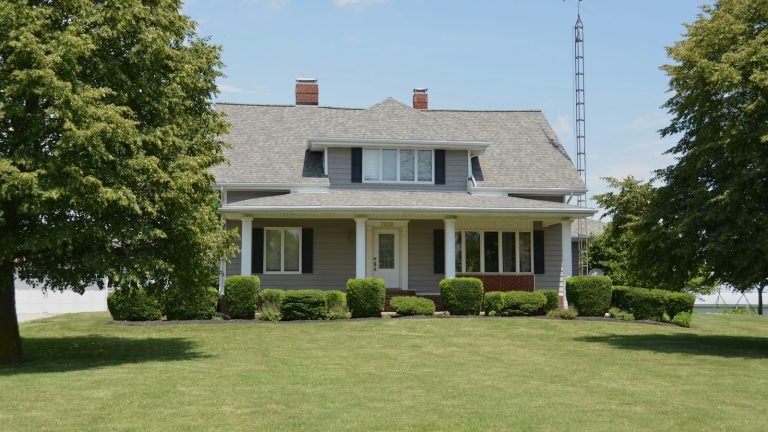
Gray divorce is rarely impulsive — more often a long-deferred decision. Photo: Ayrus Hill / Unsplash.
Why the financial risk is different after 50
A 35-year-old who divorces takes a serious financial hit and then has thirty working years to absorb it. A 62-year-old has almost none. That single difference reshapes every downstream consequence.
One household becomes two on the same assets. Retirement planning assumes shared fixed costs. Splitting a nest egg that was adequate for one household rarely produces two adequate ones — two rents or mortgages, two utility bills, two insurance premiums, drawn from the same total.
Retirement accounts do not divide casually. Dividing a 401(k) or pension requires a Qualified Domestic Relations Order, a separate court order distinct from the divorce decree. Getting it wrong — or never filing it — is one of the most common and most expensive errors in later-life divorce.
Social Security rules are specific and widely misunderstood. If the marriage lasted at least ten years and you have not remarried, you may be able to claim a spousal benefit based on your ex-spouse’s record. Many people assume divorce ends that eligibility. It does not, and the ten-year threshold has changed the timing of real divorces.
Health insurance becomes a cliff before 65. A spouse covered on the other’s employer plan loses it. Between the divorce and Medicare eligibility, that gap can cost more per month than a mortgage payment.
The house is usually the wrong asset to fight for. Keeping the family home often means trading away liquid retirement assets for something illiquid, taxed on sale, and expensive to maintain on one income. It is the most emotionally understandable and financially costly trade in gray divorce.
Our guide to financial recovery after divorce covers rebuilding, and collaborative divorce is worth reading if preserving assets rather than litigating them is the priority.
Who initiates gray divorce, and does that change anything?
Research indicates women initiate the majority of later-life divorces, though Susan Brown has cautioned against reading that as simple preference. Women more often carry the relational management work in a marriage, so they are more often the ones who conclude it is not working and take the administrative step of acting on it.
The pattern this produces is worth naming: the initiating spouse has usually been grieving the marriage privately for years and experiences the divorce as the end of a long process. The other spouse frequently experiences it as an event that arrived without warning. Two people can leave the same marriage on radically different timelines, which is why the emotional recoveries so often look asymmetrical. If that describes you, our piece on being blindsided by divorce speaks to it directly.

Recovery timelines after gray divorce are rarely symmetrical. Photo: atelierbyvineeth / Unsplash.
The part the research is more encouraging about
Set against the financial picture, the emotional findings are less grim than the coverage suggests. Studies of later-life divorce generally find that well-being drops sharply around the separation and then recovers substantially over the following years — for many people, to a level higher than the final years of the marriage. Divorce at 58 is not the end of a life. It is an expensive, disorienting middle.
What does predict a hard landing is isolation, and here the specific risk is social rather than romantic. Long marriages tend to produce shared friendships administered largely by one spouse, and those networks thin out fast after a split. Rebuilding them deliberately — not waiting for it to happen — is the single most protective thing people in this situation report doing. We wrote about the mechanics in losing friends after divorce.
Adult children are the other underestimated variable. Parents often assume grown children are unaffected because they are grown. Research on the delayed effects of parental divorce suggests otherwise; adult children frequently report significant disruption, and they get considerably less social permission to grieve it than a twelve-year-old would.
What to do before you decide
If you are weighing this, three steps are worth taking before any lawyer is involved.
Build the actual numbers. Not an estimate — a real two-household budget with health insurance, housing, and a genuine retirement drawdown projection for both people. A Certified Divorce Financial Analyst does this professionally. Many couples discover the plan they assumed was workable is not, and that information changes the conversation even if the decision does not change.
Distinguish the marriage from the phase. Retirement, an empty house, and a health scare in the same eighteen months will make almost any marriage feel unbearable. Some later-life marriages are genuinely over; others are in a transition that nobody prepared for. Discernment counseling exists precisely for couples where one person is leaning out and the other is not — see discernment counseling.
Get your own financial picture first. Know what is in every account, what the pension actually pays, what the mortgage balance is. In long marriages where one spouse handled the money, the other frequently enters negotiations without basic information — a disadvantage that compounds at exactly the moment it matters most.
More on later-life separation in our separation and divorce archive.
Frequently asked questions
What is considered a gray divorce?
A gray divorce is a divorce in which at least one spouse is 50 or older. The term was introduced by researchers Susan Brown and I-Fen Lin in 2012 to describe a demographic pattern that ran counter to falling divorce rates overall.
Can I collect Social Security on my ex-spouse’s record after divorce?
Often yes, if the marriage lasted at least ten years, you are 62 or older, and you have not remarried. Claiming on an ex-spouse’s record does not reduce their benefit and generally does not require their involvement. Confirm your specific eligibility directly with the Social Security Administration, since the rules have several conditions.
Is it better to keep the house or take retirement assets?
There is no universal answer, but many financial professionals caution against prioritizing the house after 50. A home is illiquid, carries ongoing costs, and may be taxed on sale, while retirement accounts are liquid and continue growing. Model both scenarios with a financial advisor before deciding — this is not legal or financial advice.
How long does it take to feel normal again after a gray divorce?
Most accounts and research describe an acute period of roughly one to two years followed by gradual recovery, with the sharpest improvements coming from rebuilding social connection and establishing a stable financial picture. Recovery is generally uneven rather than linear, and the spouse who did not initiate often starts the process later.
This article is general information, not legal or financial advice; I am not a lawyer or a financial advisor, and decisions about divorce, retirement assets, and benefits should be made with qualified professionals in your state. If you are experiencing severe distress, support is available — in the United States, the 988 Suicide and Crisis Lifeline can be reached by call or text.
Written by
Elena Rostova
Elena Rostova is the byline used for articles published by Relationship 99. It is a pen name, not a licensed clinician. Articles here are built from published research in relationship science - including work by John Gottman, Arthur Aron and researchers in attachment theory - with the studies named in the text so readers can check them. How we research, source and review our articles is set out in full at relationship-99.com/editorial-standards. Relationship 99 is not a therapy service, and nothing here replaces advice from a qualified professional.