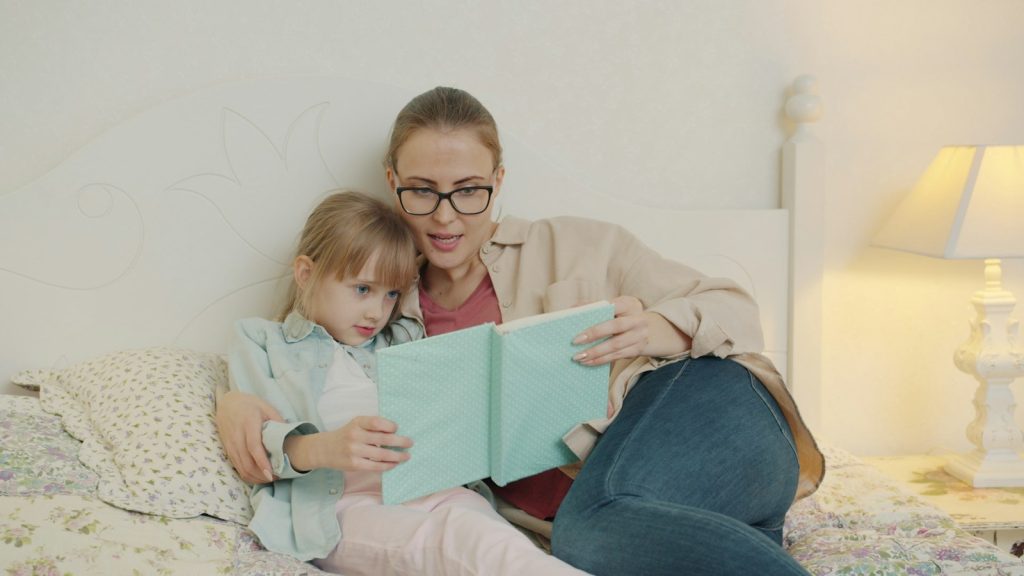
Bedtime battles are often a timing and structure problem rather than defiance. Research on young children’s body clocks shows that kids put to bed before their natural melatonin rise take longer to fall asleep and resist more. A consistent routine, a bedtime matched to real sleepiness, dim evening light, and calm, predictable limits resolve most nightly standoffs within a few weeks.
Key Takeaways
- About 1 in 3 U.S. children (34.9%) sleep less than recommended, and short sleep is less common among kids with a regular bedtime (27.5% vs. 38.6%).
- Many bedtime battles are a mismatch between the clock and the child’s biology: toddlers whose bedtime fell closer to their melatonin onset took longer to fall asleep and resisted bedtime more.
- Behavioral approaches work: a review of 52 treatment studies found 94% reported that behavioral interventions for bedtime problems were effective.
It is 8:05 p.m. You have read three books, refilled the water cup twice, and answered a philosophical question about whether fish sleep. Now there is a small person standing in the hallway announcing that they are “not even a little bit tired.” Again.
Bedtime battles can make even patient parents feel like they are losing a nightly negotiation. The usual advice is to be firmer. But the science of children’s sleep suggests a different first question: is your child actually ready to sleep when the lights go out? Often the answer is no, and no amount of firmness fixes a body clock that hasn’t caught up yet.
Why Do Bedtime Battles Happen?
Bedtime resistance is common. Researchers estimate that roughly 20% to 30% of young children have bedtime problems or night wakings, according to a review by the American Academy of Sleep Medicine task force. Most cases stem from a few overlapping causes:
- Timing. The child is sent to bed before their body is biologically ready to sleep.
- Inconsistency. The routine changes night to night, so every step becomes negotiable.
- Stimulation. Screens, bright light, or rough play push the body’s wind-down later.
- Connection-seeking. For a child who has missed a parent all day, bedtime is prime time for attention.
None of these are character flaws. They are signals, and each one points to a specific fix.
The Body-Clock Problem Behind Many Bedtime Battles
Here is the part most parenting advice misses. In a study of toddlers aged 30 to 36 months, LeBourgeois and colleagues (2013) measured each child’s dim-light melatonin onset, the evening point at which the body starts producing the hormone that signals sleep. On average it began around 7:40 p.m., roughly half an hour before lights-out.
The children whose bedtimes fell closer to that melatonin rise took longer to fall asleep and showed more bedtime resistance. The study was small, with just 14 toddlers, so it is best read as an important clue rather than a final answer. Still, it reframes a lot of bedtime battles: a child lying awake for 45 minutes may not be defying you. Their brain may simply not have flipped the switch yet.
Sleep researchers often describe the hour or two before natural sleepiness as a period when the body actively promotes alertness. Put a child to bed in that window and you get exactly what you would expect: chatter, wandering, and requests.

A bedtime matched to real sleepiness makes falling asleep easier. Photo: Annie Spratt / Unsplash.
How Much Sleep Does Your Child Need?
Before changing bedtime, it helps to know the target. The American Academy of Sleep Medicine recommends 11 to 14 hours per day (including naps) for ages 1 to 2, 10 to 13 hours for ages 3 to 5, and 9 to 12 hours for ages 6 to 12. Many children fall short. Using parent reports from nearly 100,000 children, the CDC found that 34.9% of U.S. children did not get the recommended amount.
The same CDC report found that 27.5% of children with a regular bedtime had short sleep, compared with 38.6% of children without one. The data are parent-reported and correlational, but they line up with what sleep clinicians see: predictability helps.
5 Evidence-Based Fixes for Bedtime Battles
1. Build a short, identical routine
A routine is the single best-supported tool. In a survey of 10,085 mothers across more than a dozen countries, Mindell and colleagues (2015) found a dose-dependent pattern: among preschoolers, reported sleep problems fell from 38.5% when a routine was never used to 14.9% when one was used every night. Keep it to three or four steps, such as bath, pajamas, books, and lights out, in the same order every night. (The study was correlational and industry-funded, so treat the exact numbers cautiously.)
2. Match bedtime to real sleepiness, then move it earlier
If your child routinely lies awake for 30 minutes or more, try “bedtime fading”: temporarily set bedtime to when they actually fall asleep, then move it earlier by about 15 minutes every few nights as they settle quickly. This turns bed back into a place for sleeping rather than arguing.
3. Dim the house an hour before bed
Bright light and screens in the evening can delay the body’s sleep signal. Lower the lights, swap tablets for books, and keep the last hour calm. Parents’ own phones count too; it is one of many places technoference in parenting shows up.
4. Try the bedtime pass
Give your child one card they can trade for a single post-bedtime request, such as a hug or a drink. Once it is used, requests are calmly ignored. In a small randomized trial of 19 children aged 3 to 6, Moore and colleagues (2007) found the pass reduced crying out and leaving the room, with gains still present three months later.
5. Front-load the connection
Many bedtime battles are really requests for closeness. Ten minutes of undivided attention before lights-out, without phones, often reduces the hallway encores that follow. Using declarative language (“I notice your body is getting wiggly”) can also lower power struggles.

Quiet reading is an easy anchor for a predictable routine. Photo: Ben Griffiths / Unsplash.
Do Behavioral Approaches to Bedtime Battles Actually Work?
Yes, for most children. The AASM review of 52 treatment studies found that 94% reported behavioral interventions were effective, and more than 80% of children treated showed clinically significant improvement that lasted three to six months. The best-supported approaches included parent education, consistent routines, bedtime fading, and graduated changes to how parents respond to protests.
Expect things to get briefly harder before they improve. When a well-practiced protest stops working, children often test it harder for a few nights. Staying calm and consistent through that bump is what makes the change stick. If the routine is wearing you down, it may also be worth reading about gentle parenting burnout.
What Tends to Make Bedtime Battles Worse
A few common responses accidentally keep the cycle going, even when they come from a loving place:
- Negotiating every request. When “one more book” sometimes works, children learn that persistence pays. Decide the limits in daylight and keep them.
- Using bed as a punishment. Sending a child to bed early after misbehavior teaches them that bed is a place for consequences, not rest.
- Escalating the volume. A raised voice raises arousal, which is the opposite of what a sleepy brain needs. A boring, quiet return to bed works better.
- Changing the plan nightly. Trying a new tactic every evening makes it impossible to tell what is working. Pick one approach and give it two weeks.
If bedtime has become tense for you, too, that is normal. Parents who are running on empty at 8 p.m. are more likely to cave or snap. Trading off nights with a partner, when possible, keeps bedtime battles from becoming a contest of endurance.
When Bedtime Battles Need a Professional Look
Talk to your pediatrician if your child snores loudly, gasps or pauses breathing in sleep, has frequent night terrors, seems exhausted during the day despite enough time in bed, or if bedtime battles persist after several weeks of consistent changes. These can signal sleep apnea, anxiety, or other issues that routines alone will not solve.
Frequently Asked Questions About Bedtime Battles
How long does it take to end bedtime battles?
Many families see improvement within one to three weeks of consistent changes. Expect a short spike in protest at the start; that usually means the new limits are being tested, not that they are failing.
Is an earlier bedtime always better?
No. An earlier bedtime only helps if your child is biologically ready to sleep. If they lie awake, a temporarily later bedtime that you then move earlier often works better.
Should I lie down with my child until they fall asleep?
It is a family choice, not a mistake. If you want to phase it out, move gradually, such as sitting by the bed, then by the door, over a couple of weeks.
Are bedtime battles a sign of a behavior problem?
Usually not. Most bedtime battles reflect timing, routine, or a need for connection rather than a broader behavioral issue.
Toward Calmer Nights
The nightly standoff often has less to do with willpower than with biology and predictability. Start by checking whether bedtime lines up with real sleepiness, build a short routine you repeat every night, dim the house, and offer connection before lights-out rather than after. Give changes two to three weeks before judging them. Most families find the hallway gets quieter sooner than they expected.
This article is for general education and is not a substitute for advice from your child’s pediatrician or a licensed sleep specialist.
Written by
Elena Rostova
Elena Rostova is the byline used for articles published by Relationship 99. It is a pen name, not a licensed clinician. Articles here are built from published research in relationship science - including work by John Gottman, Arthur Aron and researchers in attachment theory - with the studies named in the text so readers can check them. How we research, source and review our articles is set out in full at relationship-99.com/editorial-standards. Relationship 99 is not a therapy service, and nothing here replaces advice from a qualified professional.