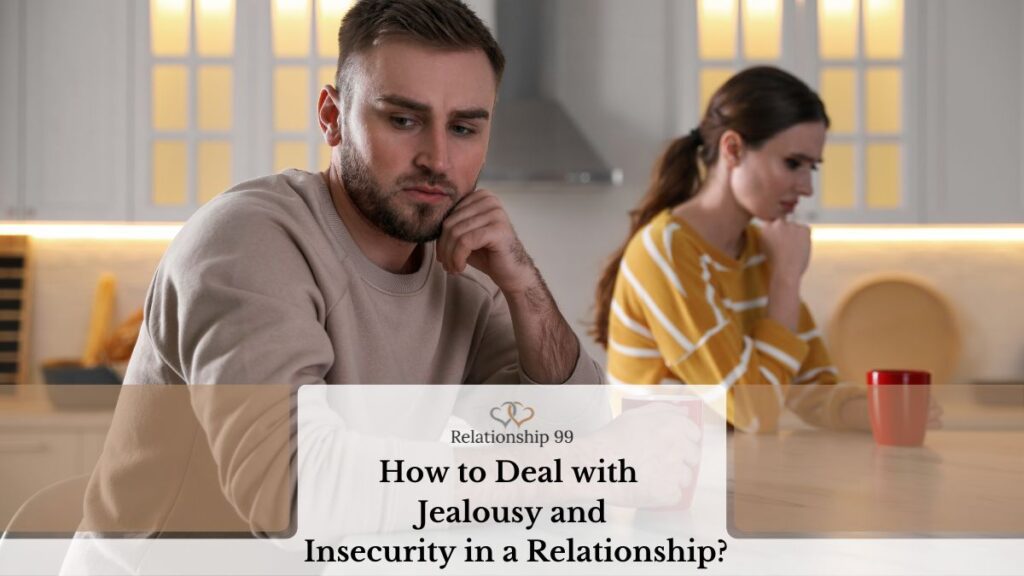
Learning how to deal with jealousy and insecurity in a relationship starts with an uncomfortable truth: the feeling is usually telling you something about yourself, not about your partner.
Relationships are not always smooth sailing. It is natural to have ups and downs, but sometimes, negative emotions like jealousy and insecurity can get the best of us. These feelings are common in relationships and can arise due to various reasons such as past experiences, low self-esteem, or lack of trust. However, if not addressed properly, they can cause harm to the relationship. In this article, we will discuss ways to deal with jealousy and insecurity in a relationship.
1.Recognize Your Triggers
The first step in dealing with jealousy and insecurity is to recognize your triggers. What situations or actions from your partner make you feel jealous or insecure? Is it when they talk to someone of the opposite sex? Or when they spend time without you? By identifying your triggers, you become more aware of what sets off these negative emotions within you. It also gives you the opportunity to communicate with your partner and explain why these situations make you feel a certain way.

Communicate Openly
Communication is key in any relationship, particularly when it comes to dealing with jealousy and insecurities. It’s important to have open and honest conversations with your partner about how you feel. This allows them to understand where you’re coming from and can help alleviate misunderstandings or misinterpretations.
When discussing your feelings, avoid placing blame on your partner or making accusations. Instead, use “I” statements to express how their actions make you feel. For example, instead of saying, “You always make me jealous when you talk to other women,” try saying, “I feel insecure when I see you talking to other women.”
3.Build Trust
Jealousy and insecurities often stem from a lack of trust in the relationship. It’s essential to work on building trust with your partner, especially if past experiences have left you feeling betrayed or hurt. Trust is built through consistent actions over time. Make an effort to keep your promises and be transparent with your partner. Avoid keeping secrets or hiding things from them, as this can further damage trust in the relationship.

Boost Your Self-Esteem
Insecurities are often rooted in low self-esteem. When we don’t feel good about ourselves, it’s easy to project those negative feelings onto our relationships. To combat this, focus on boosting your self-esteem by practicing self-love and self-care. Take care of your physical and mental well-being, engage in activities that make you happy, and surround yourself with positive influences.
5.Practice Self-Awareness
Along with recognizing triggers, it’s essential to practice self-awareness when dealing with jealousy and insecurities. This means being aware of your thoughts and emotions and understanding where they stem from. By becoming more self-aware, you can catch yourself before spiraling into negative thoughts and actions. If you find yourself feeling jealous or insecure, take a moment to assess the situation objectively. Ask yourself if there is any evidence to support your feelings or if they are based on past experiences or assumptions. Being self-aware can help prevent unnecessary conflicts in the relationship.

Seek Professional Help
If your jealousy and insecurities are becoming overwhelming and affecting your relationship, don’t be afraid to seek professional help. A therapist or counselor can help you with the tools and support needed to work through these emotions in a healthy and productive manner. They can also support you in identifying any underlying issues that may be contributing to your feelings of jealousy and insecurity.
7.Focus on the Positive
When dealing with jealousy and insecurities, it’s easy to get caught up in negative thoughts and feelings. To counteract this, make an effort to focus on the positive aspects of your relationship. Remind yourself of all the good times you’ve shared together, express gratitude for your partner, and practice forgiveness when necessary.
8.Create Boundaries
In some cases, setting boundaries can be helpful in managing jealousy and insecurities. It’s essential to have open discussions with your partner about what makes you feel uncomfortable and to come up with mutual boundaries that both parties can agree on. This could include limiting communication with certain people or avoiding certain situations. However, it’s important not to use boundaries as a way to control your partner or restrict their freedom. Boundaries should be mutually agreed upon and respected by both partners.
9.Give Each Other Space
In any relationship, it’s vital to have a healthy balance of time spent together and apart. If you find yourself feeling jealous or insecure when your partner is spending time without you, try giving each other some space. Use this time apart to focus on your own interests and hobbies, which will help boost your self-esteem and give you a break from any negative emotions.

Trust Your Partner
Ultimately, the key to dealing with jealousy and insecurities in a relationship is trust. Trust that your partner loves you and is committed to the relationship. Trust that they have your best interests at heart and wouldn’t intentionally hurt you. Choosing to trust your partner allows you to let go of any negative thoughts or doubts and focus on building a strong and healthy bond together.
Wrapping Up
Jealousy and insecurities are common human emotions that can affect any relationship. However, by recognizing triggers, communicating openly, building trust, practicing self-awareness, seeking professional help when needed, focusing on the positive aspects of the relationship, setting boundaries, giving each other space, and ultimately trusting your partner, these negative emotions can be managed and overcome. Remember, a strong and healthy relationship is built on love, trust, and open communication. So, make an effort to work on these aspects of your relationship and watch it thrive.
Key takeaways on handling jealousy and insecurity
- Treat the feeling as information, not as evidence. Jealousy is a signal to examine, not a verdict to act on.
- Name it to your partner before you act on it. Unspoken jealousy and insecurity turns into surveillance.
- Checking phones and tracking locations relieves anxiety for minutes and deepens it for months.
- Most chronic jealousy is anchored in self-worth, not in your partner’s behaviour.
- If the fear is tied to a real breach of trust, that is a repair problem, not a jealousy problem.
It helps to know where the line sits — see healthy vs unhealthy jealousy, and work on building trust and healthy boundaries alongside it. For research-backed guidance on trust and conflict between partners, The Gottman Institute is a solid reference.
FAQ about jealousy and insecurity in relationships
Is some jealousy normal?
Occasional pangs are ordinary and usually pass. It becomes a problem when it drives behaviour — checking, testing, accusing — or when it is constant rather than situational.
Should I tell my partner I feel jealous?
Yes, if you can say it as a feeling rather than an accusation. “I felt uneasy last night and I am working out why” opens a conversation. “Who were you texting?” closes one.
When should we get professional help?
When jealousy and insecurity is shaping daily decisions, when it survives repeated reassurance, or when it has started to look like monitoring. A therapist can separate old wounds from present-day facts.
Written by
Elena Rostova
Elena Rostova is the byline used for articles published by Relationship 99. It is a pen name, not a licensed clinician. Articles here are built from published research in relationship science - including work by John Gottman, Arthur Aron and researchers in attachment theory - with the studies named in the text so readers can check them. How we research, source and review our articles is set out in full at relationship-99.com/editorial-standards. Relationship 99 is not a therapy service, and nothing here replaces advice from a qualified professional.