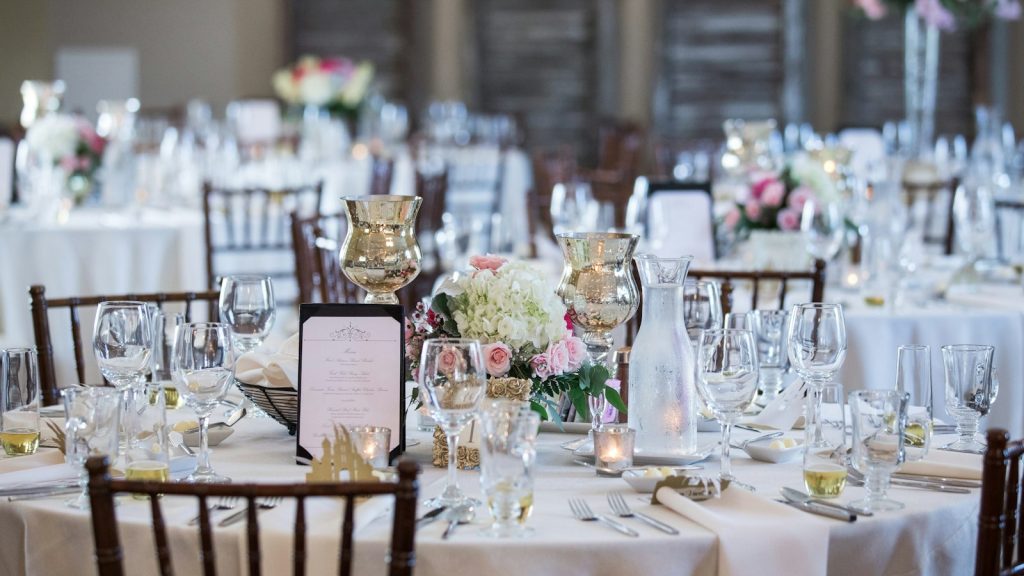
Expensive wedding spending does not buy a longer marriage, and one widely cited study found the opposite pattern. Surveying 3,151 ever-married Americans, economists Andrew Francis-Tan and Hugo Mialon found that women who spent $20,000 or more on their wedding had 1.6 times the divorce hazard of those who spent $5,000 to $10,000. The link is a correlation, not proof that cost causes divorce.
Key Takeaways
- In a survey of 3,151 ever-married U.S. adults, men who spent under $1,000 on their wedding had about half the divorce hazard of those who spent $5,000 to $10,000.
- An expensive wedding is a marker, not a proven cause: couples who spend less may differ in ways the researchers could not measure.
- Debt and money conflict are the likelier culprits, since wedding spending was tied to debt stress and financial disagreements predict divorce more strongly than other disagreements.
A common pattern looks like this. A couple sets a budget of $15,000. Then the venue they love is $9,000 alone, a parent offers money with opinions attached, and every vendor quote seems to start with the words wedding package. Eighteen months later, they have beautiful photos and a credit card balance neither wants to talk about.
The wedding industry has long suggested that spending more shows commitment. The research tells a different and more useful story about what actually protects a marriage.
What Did the Expensive Wedding Study Actually Find?
In 2014, Emory University economists Andrew Francis-Tan and Hugo Mialon ran an online survey of more than 3,000 ever-married adults in the United States, asking about ring and wedding costs, guest counts, honeymoons, and whether the marriage had ended. They weighted the sample to resemble the national population and used statistical models that controlled for income, age, education, religion, and other factors. The paper appeared in Economic Inquiry in 2015.
Their headline conclusion: marriage duration was either unrelated to or inversely associated with spending on the engagement ring and the wedding. In other words, they found no support for the idea that an expensive wedding predicts a longer marriage.
| What was spent or done | Compared with | Divorce hazard | Group |
|---|---|---|---|
| Wedding under $1,000 | $5,000 to $10,000 | About half | Men |
| Wedding $20,000 or more | $5,000 to $10,000 | 1.6 times higher | Women |
| Engagement ring $2,000 to $4,000 | $500 to $2,000 | 1.3 times higher | Men |
| Had a honeymoon, at any cost | No honeymoon | Lower | All respondents |
| Higher wedding attendance | Only the couple | Lower | All respondents |
The overall picture the authors drew: the weddings linked to the lowest divorce risk were relatively inexpensive but well attended. A big guest list and a honeymoon, regardless of what the honeymoon cost, went with longer marriages. A big price tag did not.
Why Would an Expensive Wedding Be Linked to Divorce?
The authors offered two kinds of explanation, and both are worth understanding.
The couple, not the cost. The first is that spending may simply reveal something about the couple. Partners who are comfortable with a small wedding may be better matched, less focused on outside approval, or more aligned on money from the start. In that case, the expensive wedding is a symptom of other differences rather than a cause of anything.
The debt. The second is financial strain. The researchers asked whether debt from wedding expenses had caused stress in the marriage. Among women, spending $2,000 to $4,000 on the engagement ring was tied to two to three times the odds of reporting that kind of stress. Across groups, spending under $1,000 on the wedding was tied to an 82% to 93% drop in the odds of wedding debt stress, compared with spending $5,000 to $10,000.
That fits a larger body of research on money and marriage. Using data on 4,574 couples from the National Survey of Families and Households, Jeffrey Dew and colleagues found that financial disagreements were stronger predictors of divorce than other common disagreement types, and their effect ran through harsher conflict tactics and lower satisfaction. Our guide to financial conflict in marriage explains how that pattern tends to unfold.

Ring spending showed the same pattern as wedding spending in the study. Photo: Jackie Tsang / Unsplash.
What the Study Cannot Tell You
Before you cancel the string quartet, take the limits seriously. This is one study, and it has real constraints:
- It is correlational. Nobody was randomly assigned a wedding budget, so it cannot show that spending more causes divorce.
- The sample was recruited online through Amazon Mechanical Turk. The authors weighted it to resemble census data, but it is not a national probability sample.
- Answers were retrospective. People reported past spending from memory, which can be imprecise.
- Controls changed the picture. Before adjusting for other factors, having no ring or a very cheap wedding actually looked riskier. The inverse pattern emerged only after accounting for income and other characteristics.
The authors themselves called for long-term studies that follow dating couples forward in time. Until then, the fair reading is this: an expensive wedding offers no protection, and stretching your finances to pay for one may carry real costs.
How Much Does a Wedding Cost Today?
By the study’s standard, the average wedding today would count as an expensive wedding, well above the $20,000 threshold. According to The Knot’s 2026 Real Weddings Study, the average wedding held in 2025 cost $34,200, with an average of 117 guests and about $292 per guest. That survey drew 10,474 couples from the company’s own members, so it is an industry snapshot rather than a government statistic, and it likely skews toward couples planning traditional weddings.
The gap between those averages and what many couples can comfortably afford is exactly where debt slips in. If paying for the day means borrowing, draining savings, or accepting money that comes with control attached, that cost follows you into the marriage.
3 Lessons That Matter More Than the Price Tag
- Stay out of debt. Agree on a number you can pay in cash, before you start touring venues. The debt-stress findings suggest this protects more than any single wedding detail. Our guide to talking about money before marriage walks through that conversation.
- Spend on people, not polish. Attendance and having a honeymoon, at any price, were linked to longer marriages. A backyard party with everyone you love may serve you better than a ballroom with half the guest list.
- Treat planning as practice. How you negotiate budgets, parents, and priorities now previews how you will handle money later. Our article on what wedding planning tells you about your marriage covers which planning fights are worth paying attention to.

A well-attended, affordable celebration fits the pattern linked to longer marriages. Photo: Grace Anne Bobadilla / Unsplash.
If you are still deciding when to get engaged at all, our piece on how long to date before getting engaged looks at timing and readiness. For major money decisions, such as taking on loans or combining finances, a licensed financial professional can help you weigh the tradeoffs.
How to Handle Family Pressure for an Expensive Wedding
Many couples do not choose an expensive wedding so much as drift into one. A parent offers to pay for a bigger venue, relatives expect an invitation, and each small yes adds up. Money from family can be a generous gift, but it often arrives with expectations about guests, location, or traditions.
- Decide your priorities as a couple first. Agree on a budget and your top three must-haves before discussing money with anyone else.
- Ask what comes with a contribution. A gift that buys a parent control over the guest list may cost more than it saves.
- Each partner talks to their own family. Delivering hard news to your own parents keeps your partner from becoming the villain.
- Decline the upgrade, not the person. You can thank a relative warmly while saying no to a bigger event you cannot sustain.
Holding that line together is good practice for the boundaries every marriage eventually needs with extended family, and it keeps the focus on the life you are building rather than on a single day.
Frequently Asked Questions
Does an expensive wedding cause divorce?
There is no evidence that it does. The best-known study found an association between higher spending and shorter marriages, but it could not rule out that couples who spend more differ in other ways. Debt stress is one plausible link.
Does the price of the engagement ring matter?
Not in the way marketing suggests. In the study, men who spent $2,000 to $4,000 on a ring had a 1.3 times higher divorce hazard than those who spent $500 to $2,000, and ring spending was tied to debt stress among women.
Is eloping better than an expensive wedding?
Not necessarily. Very small weddings with only the couple present were linked to a higher divorce hazard than well-attended ones. A modest wedding with your important people there fits the research better than either extreme.
How much should we spend on our wedding?
An amount you can pay without debt and that both of you genuinely agree on. The process of reaching that number together matters as much as the number itself.
Spend on the Marriage, Not Just the Day
An expensive wedding is not a curse, and a cheap one is not a guarantee. What the evidence does show is that spending big offers no protection, while debt and money conflict can do real damage. Choose a budget you can pay for, fill the room with people who will support your marriage, take some kind of honeymoon, and use the planning to practice the money conversations you will keep having for decades.
This article is for general education and is not a substitute for advice from a licensed financial professional or mental health professional. Financial and legal considerations vary by situation and state.
Written by
Elena Rostova
Elena Rostova is the byline used for articles published by Relationship 99. It is a pen name, not a licensed clinician. Articles here are built from published research in relationship science - including work by John Gottman, Arthur Aron and researchers in attachment theory - with the studies named in the text so readers can check them. How we research, source and review our articles is set out in full at relationship-99.com/editorial-standards. Relationship 99 is not a therapy service, and nothing here replaces advice from a qualified professional.