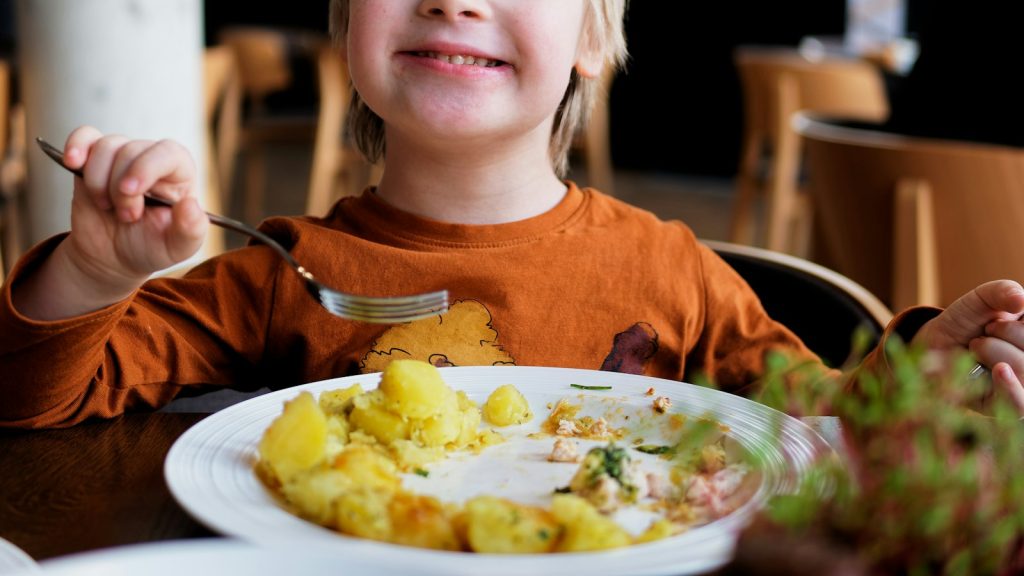
Picky eating is common and usually improves with time, but the most natural parent response, pushing for one more bite, tends to make it worse. In a lab experiment, preschoolers ate more and made fewer negative comments when they were not pressured. What works better is calm, repeated exposure: research on toddlers suggests a food may need to be offered on 8 to 10 or more days before acceptance rises.
Key Takeaways
- Picky eating usually responds better to calm routines and shared meals than to bribes, praise for bites or “clean your plate” rules.
- A 2019 systematic review of 21 studies found that offering a food once a day for 8 to 10 or more days is likely to increase acceptance in infants and toddlers.
- Weight loss, poor growth, gagging or fear around food, or a shrinking list of accepted foods are reasons to talk with your pediatrician about a feeding disorder such as ARFID.
It is 6:15 p.m. You made a dinner that took forty minutes, and your four-year-old has eaten three noodles and announced that the broccoli is “touching.” You hear yourself saying, “Just two more bites and you can have dessert,” and you already know how this ends.
If this is your nightly routine, you are in large company, and you are not failing. The good news is that the research on children’s eating points to a calmer approach that takes less effort at the table and tends to work better over months.
Why is picky eating so common?
Wariness about new foods is a normal stage of development. Many toddlers who happily ate purees at nine months become suspicious of anything green by age two. Researchers often link this to food neophobia, a fear of new foods that may once have protected young children from eating something harmful as they became mobile.
Growth also slows after infancy, so many toddlers simply need less food than parents expect. And eating is one of the few areas where a small child has real control. Refusing a food is a way to practice independence.
There is no single agreed definition of picky eating, which is one reason prevalence estimates vary so much. A 2015 review in the journal Appetite found a wide range of estimates across studies, largely because researchers measured it in different ways. What most studies agree on is that it is common in the preschool years and often eases with age.
Why does pressure backfire?
Pressure feels like it should work. In practice, it changes what a food means to a child. Broccoli stops being a vegetable and becomes a battle.
An experiment by Galloway and colleagues, published as “Finish your soup” in Appetite (2006), tested this directly. Preschoolers were served the same food on different occasions, sometimes with a request to finish it and sometimes without. Children ate significantly more when they were not pressured, and they made far fewer negative comments about the food.
Rewards are a softer form of pressure, and the evidence on them is weaker than many parents assume. In a randomized study of 49 London schoolchildren by Wardle and colleagues (2003), kids who got a sticker for eating red pepper did not do significantly better than a control group. Kids who were simply offered a taste every day, and told they could eat as much as they liked, increased both their liking and their intake.
Self-determination theory helps explain why. Children, like adults, resist being controlled. Approaches that respect their sense of choice, a core idea behind autonomy-supportive parenting, tend to produce more lasting change than approaches built on rewards or pressure.
What is the division of responsibility in feeding?
The most widely used framework for handling picky eating comes from dietitian and family therapist Ellyn Satter. Her division of responsibility splits mealtime jobs clearly:
- Parents decide what food is served, when meals and snacks happen, and where the family eats.
- Children decide whether to eat and how much to eat from what is offered.
This is not permission for kids to graze on crackers all day. Parents keep a lot of control: the menu, the schedule and the setting. What they give up is the fight over individual bites. That shift lowers tension, which in turn makes children more willing to experiment over time.

Children decide how much to eat; parents decide what is offered. Photo: NHN / Unsplash.
How many times should you offer a new food?
More than most parents expect. A 2019 systematic review in the American Journal of Clinical Nutrition examined 21 studies of infants and toddlers aged 4 to 24 months. It found moderate evidence that offering a food once a day for 8 to 10 or more days is likely to increase acceptance, and the effect tended to extend to similar foods in the same category.
Older children show the same pattern. In the Wardle study, eight daily tasting sessions with red pepper were enough to raise liking and intake among primary school students.
The practical lesson: a food refused three times has not failed. Exposure includes seeing, smelling, touching and serving a food, not only swallowing it. Many parents quit long before a child has had enough experiences to feel safe with something new.
Five calm strategies for picky eating at home
- Keep a predictable rhythm. Offer meals and snacks at regular times, with little grazing in between, so children come to the table hungry but not starving.
- Always include one safe food. Put something your child reliably eats, like bread, rice or fruit, on the table at every meal. Knowing they will not go hungry makes new foods less threatening.
- Serve tiny portions of new foods, often. One green bean next to familiar favorites is an exposure. A full serving can feel like a demand.
- Involve kids before the meal. Washing, stirring, choosing between two vegetables at the store and naming foods all count as positive exposure.
- Take the spotlight off the plate. Talk about the day, not about bites. Eat the same foods yourself and let your child see you enjoying them.
Shared meals help, but they do not need to be perfect. Our look at the family dinner benefits myth explains why the warmth at the table matters more than the frequency. If two parents handle picky eating differently, agree on one approach, since mixed messages tend to stretch out the struggle. Our guide to parenting as a team can help.

Cooking together counts as exposure, even if the food never gets eaten. Photo: Vitaly Gariev / Unsplash.
When is it more than picky eating?
Most picky eating is a phase. Some children, however, have a feeding disorder called avoidant/restrictive food intake disorder (ARFID), a diagnosis added to the DSM-5 in 2013. ARFID is not about body image. It involves restricting food because of sensory sensitivity, fear of choking or vomiting, or low interest in eating, to the point that it affects growth, nutrition or daily life.
How common it is remains uncertain. In a Swiss screening study of 1,444 children aged 8 to 13, Kurz and colleagues (2015) found that 3.2% self-reported features of ARFID. That was a questionnaire, not a clinical diagnosis, so it likely includes some children who would not meet full criteria.
| Area | Typical picky eating | Worth a pediatrician visit |
|---|---|---|
| Accepted foods | A limited but fairly stable list across food groups | A very short list that keeps shrinking |
| Growth | Growing along their usual curve | Weight loss, falling off the growth curve or slowed growth |
| Reaction to new foods | Refuses, complains or ignores | Gags, panics, vomits or shows intense fear |
| Daily life | Mealtimes are annoying but manageable | Avoids parties, school lunches or trips because of food |
| Nutrition | Overall diet is adequate across a week | Signs of nutritional deficiency or reliance on supplements or formula |
Children who are very sensitive to texture, smell or noise may have a harder time with new foods. If that sounds like your child, our guide to raising a highly sensitive child may help. Your pediatrician can check growth, rule out medical causes such as reflux or swallowing problems, and refer you to a feeding therapist, dietitian or psychologist if needed.
Picky eating: common questions
Is picky eating just a phase?
For most children, yes. It often peaks in the toddler and preschool years and eases with age and experience. Keep offering variety without pressure, and check in with your pediatrician if you see warning signs.
Should I cook a separate meal for my picky eater?
Generally, no. Short-order cooking can narrow a child’s diet over time. Instead, serve family meals that include at least one food your child usually accepts.
Is it okay to hide vegetables in other foods?
It can add nutrients, but it does not teach children to accept the vegetable itself. If you do it, also serve the visible version regularly so the exposure still happens.
Does picky eating mean my child needs a vitamin?
Not necessarily. Many picky eaters get enough nutrients over the course of a week. Ask your pediatrician before starting supplements, especially if you are worried about iron or growth.
Play the long game at the table
Picky eating rarely changes in a single meal, but it often changes over months when the pressure comes off. Keep your part of the job: offer varied food at predictable times, include something safe, and let your child decide how much to eat. Serve new foods again and again without commentary. And trust your pediatrician, not a dinner-table standoff, to tell you when something more is going on.
This article is for general education and is not a substitute for advice from your child’s pediatrician or another licensed health professional.
Written by
Elena Rostova
Elena Rostova is the byline used for articles published by Relationship 99. It is a pen name, not a licensed clinician. Articles here are built from published research in relationship science - including work by John Gottman, Arthur Aron and researchers in attachment theory - with the studies named in the text so readers can check them. How we research, source and review our articles is set out in full at relationship-99.com/editorial-standards. Relationship 99 is not a therapy service, and nothing here replaces advice from a qualified professional.