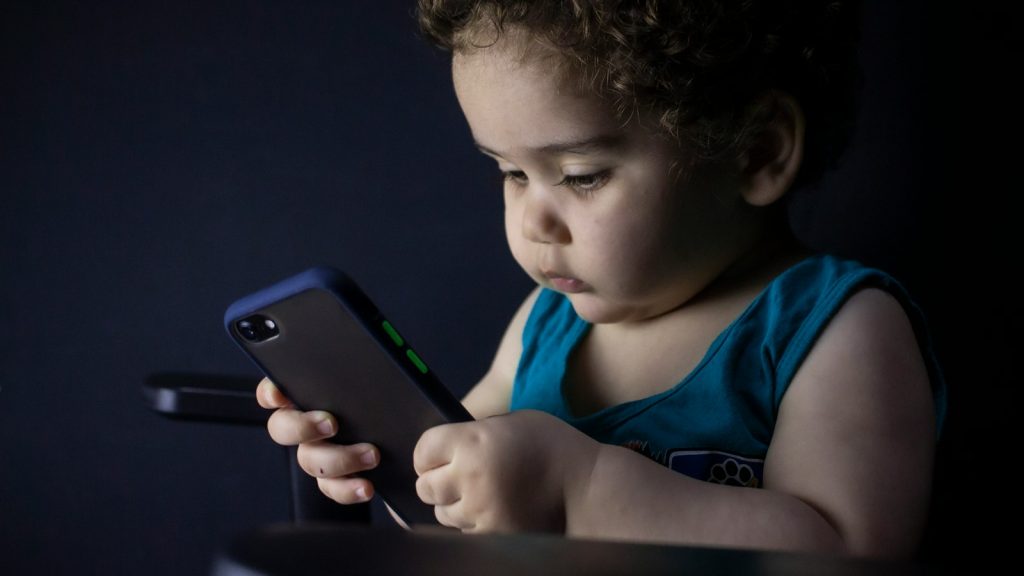
First smartphone decisions are usually framed around age, but the strongest evidence points elsewhere. A five-year Stanford study found that the age children got a phone was not linked to their grades, sleep, or depressive symptoms. What predicts a smoother start is readiness: whether your child can follow rules, repair mistakes, and grow into access in steps you set together.
Key Takeaways
- In a 2025 Pew Research Center survey of 3,054 U.S. parents, about six in ten said their 11- or 12-year-old already had their own smartphone.
- The American Academy of Pediatrics does not name a single right age; it points to readiness signs such as following existing tech rules and handling everyday responsibilities.
- A first smartphone works best as a staged process: limited features first, apps added one at a time, a written family agreement, and the phone charging outside the bedroom.
Picture a scene many parents know. A fifth grader announces that “literally everyone” has a phone, a group chat is happening without them, and the bus stop has become a row of glowing screens. The pressure is real, and so is the worry about what a phone might open up.
The good news is that you do not have to win a debate about the perfect birthday. You can make a better decision by changing the question from “How old?” to “Ready for what, exactly?” This guide walks through what the data shows and how to build a first smartphone plan in stages.
What Age Do Most Kids Get a First Smartphone?
Most American kids now get their own phone somewhere between 10 and 13, and ownership climbs fast in the tween years. In a 2025 Pew Research Center survey of 3,054 parents of children 12 and younger, 23% said their child had their own smartphone. That share was about three in ten among 8- to 10-year-olds and about six in ten among 11- and 12-year-olds.
Parents’ own views lag behind that reality. In the same survey, 68% said a child should be at least 12 before having a smartphone of their own, and 46% said the harms of smartphones for kids outweigh the benefits. Only 12% said the benefits win.
Other data tell a similar story. The 2019 Common Sense census, a nationally representative survey of more than 1,600 8- to 18-year-olds, found that 53% of kids had their own smartphone by age 11 and 69% by age 12. By the teen years the device is nearly universal: Pew’s 2024 teen survey found that 95% of 13- to 17-year-olds have or have access to a smartphone.
So if your 11-year-old says many classmates have phones, they are probably not exaggerating. That is useful context, but it is not the same thing as a reason.
Does the Age of a First Smartphone Actually Matter?
On average, the timing of a first smartphone seems to matter less than parents fear, though the research has real limits. The clearest long-term evidence comes from a Stanford study published in Child Development that followed more than 250 low-income Latino children in Northern California for five years, from ages 7 to 11 at the start to 11 to 15 at the end.
Children got their first phone at 11.6 years old on average. Across grades, sleep, and depressive symptoms, the researchers found no meaningful link between owning a phone, or the age it arrived, and how kids were doing.
Three caveats matter. First, this was one community, not a national sample. Second, parents in the study were managing their children’s phone use, so the results describe phones with guardrails, not unrestricted access. Third, the authors called their findings population averages and said they did not show that phones have no effect. Some children will struggle more than others.
The practical lesson: a specific birthday is a weak decision rule. The setup around the phone, and the particular child holding it, deserve more of your attention.
What Readiness Looks Like Before a First Smartphone
Readiness shows up in everyday behavior long before a phone enters the picture. The American Academy of Pediatrics does not name one right age. Its guidance points instead to signs like these:
- Your child handles current responsibilities, such as homework, without constant reminders.
- They follow the tech rules you already have for tablets, game consoles, or a shared family computer.
- They can apologize and repair after hurting someone’s feelings, a skill that matters a lot in group chats.
- You, the parent, have the time and willingness to coach them through the first months.
That last point is easy to overlook. A phone is less like a gift and more like a learner’s permit. Self-determination theory, a well-studied model of motivation, suggests kids internalize rules best when they feel some autonomy and competence rather than pure control. In practice, that means explaining the reasons behind limits and letting your child earn more freedom as they show they can handle it. Our guide to autonomy-supportive parenting goes deeper on this balance.
Ask yourself one honest question: when your child makes a mistake online, will they tell you? If the answer is “probably not,” building that trust is the first readiness task.

Exploring a new phone side by side builds the trust kids need to come to you when something goes wrong. Photo: Vitaly Gariev / Unsplash.
Should the Phone and Social Media Be the Same Decision?
No. One of the most useful moves in the AAP’s guidance is treating the phone and social media as separate decisions, and judging each app on its own. A first smartphone can be a calling, texting, maps, and music device for months before any social platform appears on it.
Many major platforms set 13 as their minimum age in their terms of service, partly because of the federal children’s privacy law known as COPPA. Turning 13 is a floor for eligibility, not a signal of readiness. A child who handles texting grandparents well may not yet be ready for a feed designed to keep them scrolling.
Splitting the decisions also lowers the stakes of saying yes to the device. You can agree to the phone while keeping app approvals as a separate, ongoing conversation.
A Graduated Path to Your Child’s First Smartphone
Graduated access means expanding what the phone can do in planned steps, each tied to something your child has shown rather than to a date on the calendar. Families move at different speeds, and some will skip a stage. Here is one way to structure it.
| Stage | What the child gets | What earns the next step | Parent’s role |
|---|---|---|---|
| 1. Shared device | Calls and texts to family from a household phone or tablet | Follows existing screen-time rules | Sets all limits |
| 2. Basic phone or smartwatch | Calls and texts to approved contacts | Keeps it charged, answers when you call, sticks to agreed times | Approves contacts |
| 3. Locked-down smartphone | Texting, maps, music, camera; no app store or open browser without permission | Charges outside the bedroom unprompted; tells you about upsetting messages | Reviews settings; open check-ins |
| 4. Selected apps | One new app at a time, reviewed together | Handles chat conflict kindly; respects time limits | Approves each app; checks in every few weeks |
| 5. Growing autonomy | Fewer restrictions, more self-management | Protects own sleep and schoolwork; asks for help | Coach rather than gatekeeper |
Each stage should come with a clear conversation about what earns the next one. Kids accept limits more readily when they can see the path forward.
How Do You Write a Phone Agreement That Actually Works?
A written phone agreement works best when your child helps write it. Rules a child negotiated are rules they are more likely to remember, and to defend to friends. The AAP’s free Family Media Plan tool is a good starting template because it covers the whole household, not just the new phone owner.
Strong agreements usually cover a few core areas:
- Where the phone sleeps. A charging spot outside the bedroom, agreed before the first night.
- Phone-free times. Meals, homework blocks, and the hour before bed are common choices.
- Contacts and downloads. Who can reach your child, and how new apps get approved.
- Check-ins. Whether and how you will look at messages, stated openly in advance rather than done in secret.
- What happens after a slip. A response linked to the problem, such as a step back down the ladder for a week.
That last item works best when it follows the logic of natural and logical consequences: the response connects to the behavior and is temporary, not a punishment that shuts down the conversation.
The rule with the strongest evidence behind it is the bedroom one. A 2016 meta-analysis in JAMA Pediatrics pooled 20 studies covering 125,198 children and found that bedtime use of a portable device was linked to roughly double the odds of inadequate sleep (odds ratio 2.17). Even having a device in the room at night without using it was tied to higher odds of short sleep. The studies were cross-sectional, so they cannot prove cause, but the pattern was consistent.
Finally, the agreement applies to adults, too. Kids notice when a parent’s phone comes to dinner. If that hits close to home, our piece on technoference and kids looks at how parents’ device habits shape children’s.

Late-night scrolling is where many phone problems start, which is why charging outside the bedroom is worth setting on day one. Photo: Sanket Mishra / Unsplash.
Frequently Asked Questions About a First Smartphone
What is a good age for a first smartphone?
There is no single research-backed age. Most U.S. kids get one between about 10 and 13, and the Stanford study found the timing itself was not linked to grades, sleep, or mood. Readiness and setup matter more than the birthday.
Is a flip phone or smartwatch a better first step?
For many families, yes. The AAP lists a basic phone for calls and texts, a smartwatch, or a smartphone with apps and features locked down as reasonable options for kids who need contact but are not ready for full access. They let a child practice responsibility with lower stakes.
Should I read my child’s text messages?
Many families agree to occasional check-ins, especially early on, and the AAP notes that some parents keep the password for this reason. The key is transparency: tell your child in advance what you will look at and why. Secret monitoring tends to erode the trust that makes kids report problems.
What if my child’s first smartphone experience goes badly?
Treat it as information, not failure. Step back one stage, talk about what happened, and agree on what earning the step back looks like. If phone use is tied to worsening mood, sleep, or withdrawal from friends, talk with your pediatrician.
The Real Question Behind a First Smartphone
The question is never only “Is my kid old enough?” It is “Is my kid ready for this specific level of access, and am I ready to coach them through it?” Framed that way, a first smartphone becomes a series of small, reversible decisions instead of one high-stakes verdict.
Start with readiness, separate the device from the apps, protect sleep, and let freedom grow as trust grows. That approach respects both the real risks and your child’s growing need for independence, a balance our guide on allowing independence while keeping your teen close explores further.
This article is for general education and is not a substitute for advice from a licensed pediatrician or mental health professional.
Written by
Elena Rostova
Elena Rostova is the byline used for articles published by Relationship 99. It is a pen name, not a licensed clinician. Articles here are built from published research in relationship science - including work by John Gottman, Arthur Aron and researchers in attachment theory - with the studies named in the text so readers can check them. How we research, source and review our articles is set out in full at relationship-99.com/editorial-standards. Relationship 99 is not a therapy service, and nothing here replaces advice from a qualified professional.