Emotional permanence is the ability to keep feeling securely loved even when your partner is not physically present, not actively reassuring you, or briefly upset with you. When it is missing, a quiet evening apart or an unanswered text can feel like the whole relationship has evaporated. This is not neediness or a character flaw; it is usually a learned attachment pattern, and it can be rebuilt.
Key Takeaways
- Emotional permanence, a close cousin of the clinical term object constancy, is the felt sense that a bond stays intact across distance, silence, and conflict.
- Its absence tracks closely with anxious attachment; in Hazan and Shaver’s foundational research, roughly one in five adults described themselves in anxious-attachment terms.
- The most effective repair is not more contact but more predictable responsiveness: perceived partner responsiveness has been shown to measurably lower attachment anxiety.
A client once described it perfectly: “The second he walks out the door, it’s like the love gets deleted. I know he loves me. I just can’t feel it until he’s back in the room.” She was not insecure about everything in her life; she ran a team of thirty people. But in her closest relationship, the felt connection had no staying power. That gap between knowing you are loved and feeling it when you are alone is the exact territory of object constancy.
What Is Emotional Permanence?
Emotional permanence is the internal capacity to hold onto the warmth of a relationship when the other person is out of sight. It grows out of a developmental milestone that psychoanalyst Margaret Mahler called object constancy: the toddler’s slow discovery that the parent who walked into the next room is the same loving parent who will walk back, and that a moment of anger does not erase the bond. Adults who developed this securely carry a stable inner image of their partner that survives absence. Adults who did not can feel, at a gut level, that the relationship blinks out the instant the other person leaves.
It helps to be precise, because emotional permanence is easy to confuse with a famous but different idea. Object permanence, from Jean Piaget, is about physical things: the infant learning that a toy still exists when hidden under a blanket. It is about relationships and feelings, and it develops much later and far less reliably. You can have flawless object permanence and still lose all sense of a loved one the moment they stop texting back.
| Object permanence | Emotional permanence (object constancy) | |
|---|---|---|
| What it holds | Objects still exist when hidden | Love still exists when unfelt |
| Origin | Piaget, infancy (~8 months) | Mahler, toddlerhood and beyond |
| When it fails | Rare in healthy adults | Common under stress or insecure attachment |
| Feels like | “It’s gone” (a game) | “They’re gone forever” (a threat) |
| Concepts: Piaget (object permanence) and Mahler (object constancy / emotional permanence). | ||
Why Some People Lose Emotional Permanence
The strongest predictor is attachment history. When early caregivers were warm but wildly inconsistent, a child learns that closeness is real but unreliable, and the nervous system adapts by staying on high alert for signs the bond is disappearing. Decades later, that shows up as anxious attachment. In Cindy Hazan and Phillip Shaver’s landmark survey work, adult attachment styles appeared in roughly the same proportions found in infants, with about 56% secure, 25% avoidant, and 19% anxious. For that anxious minority, weak object constancy is often the core wound.
Situational factors matter too. Acute stress, sleep deprivation, grief, and hormonal shifts can all thin out anyone’s sense of connection temporarily. And a genuinely unpredictable partner, one who is loving one day and remote the next, can erode this capacity even in someone who normally has plenty of it. This is not only an individual trait; it is built and rebuilt inside the specific relationship you are in, especially with an emotionally unavailable partner.

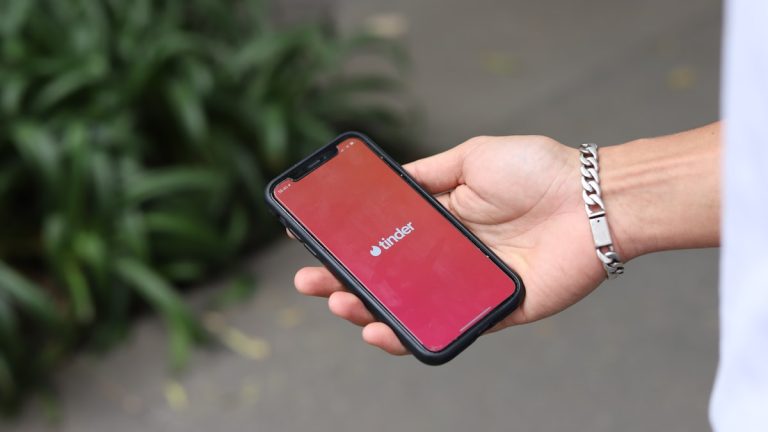
When emotional permanence is thin, absence can feel like abandonment. Photo: @jrkorpa / Unsplash.
4 Signs Your Emotional Permanence Is Shaky
This pattern has a recognizable fingerprint. First, absence feels like danger: a partner traveling for work triggers not just missing them but a low dread that the relationship is ending. Second, one cool text can capsize your whole read on the relationship, overriding weeks of evidence. Third, you seek reassurance in loops, needing it re-established constantly because the last reassurance did not stick. Fourth, conflict feels catastrophic, as if a single argument deletes all the love that came before it, closely tied to your attachment style in dating.
Recognizing these as attachment patterns, rather than as proof your relationship is doomed, is itself stabilizing. The feelings are real, but they are reports from an old alarm system, not accurate news about your partner’s commitment.
How to Rebuild Emotional Permanence
The counterintuitive part: the fix is rarely more contact. Constant texting can actually feed the anxiety, and research finds that a higher volume of daily texting correlates with more anxious and avoidant relationship behavior, not less. What builds this stability is predictability. A partner whose warmth is reliable, even if not constant, teaches the nervous system that the bond persists. Perceived responsiveness, the sense that your partner notices and cares, has been shown to lower partner-specific attachment anxiety over time.
On your own side, a few practices help. Use transitional reminders, a saved voice note or a photo, to make the felt bond tangible when you are alone. Name the feeling out loud (“my emotional permanence is low right now, so absence feels like loss”) to separate the old alarm from present reality. Build predictable rituals of connection, like a standing morning text, so reassurance is scheduled rather than begged for. And when the panic spikes, self-soothe first and seek reassurance second, so contact confirms security instead of chasing it. None of these are quick fixes, and progress is rarely linear; you will have steadier weeks and shakier ones. What matters is the trend, not any single hard night, and the trend bends toward security when reassurance becomes reliable rather than dramatic. Couples who pair these habits with honest conversation, sometimes prompted by a clear define-the-relationship conversation, tend to stabilize the bond fastest.

Predictable warmth, more than constant contact, rebuilds emotional permanence. Photo: @priscilladupreez / Unsplash.
Emotional Permanence in New and Long-Distance Relationships
Two situations test emotional permanence hardest: brand-new relationships and long-distance ones. Early on, there is not yet enough shared history for the bond to feel solid, so absence reads as ambiguity, and the mind fills the silence with worst-case stories. This is why the first few weeks of dating can feel disproportionately turbulent for someone with an anxious-avoidant relationship dynamic: there is real attachment but no track record for it to rest on yet.
Distance raises the same challenge in slow motion. Without the everyday micro-reassurances of shared space, a shared meal, a hand on the shoulder, a glance across the room, the felt sense of connection has to survive on memory and intention alone. The couples who manage it well do not simply talk more; they make their care legible, rhythmic, and visible. A predictable good-morning message, a standing video call, a shared calendar of the next time they will meet, all give the anxious nervous system concrete evidence that the relationship continues in the gaps. The goal is not to eliminate the ache of missing someone, which is healthy, but to keep that ache from tipping into the conviction that the bond has vanished. Handled patiently, distance can even build emotional permanence, because every reunion after a safe separation is another proof that love outlasts absence.
Frequently Asked Questions
Is emotional permanence the same as object permanence?
No. Object permanence, from Piaget, is knowing physical objects still exist when out of sight, and most people master it in infancy. Emotional permanence, rooted in Mahler’s object constancy, is the harder, later skill of feeling a relationship is still intact when the person is absent or upset.
Is weak emotional permanence a sign of a personality disorder?
Not by itself. Difficulty here appears across the spectrum of anxious attachment and is extremely common. It is a more central feature in some conditions, such as borderline personality disorder, but experiencing it does not mean you have one. If it is severe and pervasive, a therapist can help you sort that out.
Can you build emotional permanence as an adult?
Yes. Attachment patterns are learned, which means they can be revised. Consistent, responsive relationships, whether with a partner, a close friend, or a therapist, gradually update the internal model. It is slow, but this capacity genuinely strengthens with repeated experiences of a bond surviving distance and repair.
How do I explain emotional permanence to my partner?
Keep it simple and non-blaming: “When you’re gone, I sometimes lose the felt sense that we’re okay, even though I know we are. Predictable check-ins help me more than big gestures.” Most partners find this far easier to respond to than vague reassurance-seeking.
This article is educational and not a substitute for professional care. If weak emotional permanence is rooted in early trauma or is causing significant distress, a licensed therapist trained in attachment or emotionally focused approaches can help.
Written by
Elena Rostova
Elena Rostova is the byline used for articles published by Relationship 99. It is a pen name, not a licensed clinician. Articles here are built from published research in relationship science - including work by John Gottman, Arthur Aron and researchers in attachment theory - with the studies named in the text so readers can check them. How we research, source and review our articles is set out in full at relationship-99.com/editorial-standards. Relationship 99 is not a therapy service, and nothing here replaces advice from a qualified professional.