Do opposites attract? It’s one of the few pieces of relationship folklore that has been tested at genuinely enormous scale — and the answer that came back is not the one the saying predicts.
The short answer: No. A 2023 analysis in Nature Human Behaviour examined more than 130 traits across millions of couples spanning over a century and found partners resembled each other on roughly 82–89% of the traits measured. Meaningful opposite-attraction showed up for about 3%. What we actually do is choose people who are strikingly like us — and then experience the small remaining differences as enormous.
Which raises a better question than the one the cliché asks: if we pair up with people so similar to us, why does it so often feel like we’re with someone from another planet?
Do opposites attract? What the largest study found
The 2023 paper by Tanya Horwitz, Katie Balbona, Katie Paulich and Matthew Keller at the University of Colorado Boulder did two things at once: a meta-analysis of 22 traits drawn from about 30 prior studies covering roughly 23,000 couples, and a fresh analysis of 133 traits in the UK Biobank.
Similarity dominated almost everywhere. The strongest correlations between partners appeared in political and religious attitudes, education level, and measures of cognitive ability. Substance-use behaviours clustered tightly too — drinkers partner with drinkers, smokers with smokers, abstainers with abstainers — which is one of the more consequential findings buried in the data, given how much a shared or unshared relationship with alcohol shapes a life together.
Personality, interestingly, was the weakest category. Partner correlations for the Big Five traits ranged from about .08 for extraversion up to roughly .21 for openness — positive, statistically real, but modest. So the similarity that binds couples is less about temperament than about worldview and circumstance: what you believe, how you were educated, what you do on a Friday night.
The authors were careful to note the correlations are moderate and shouldn’t be overstated. But the direction is unambiguous, and it has been unambiguous for a hundred years.

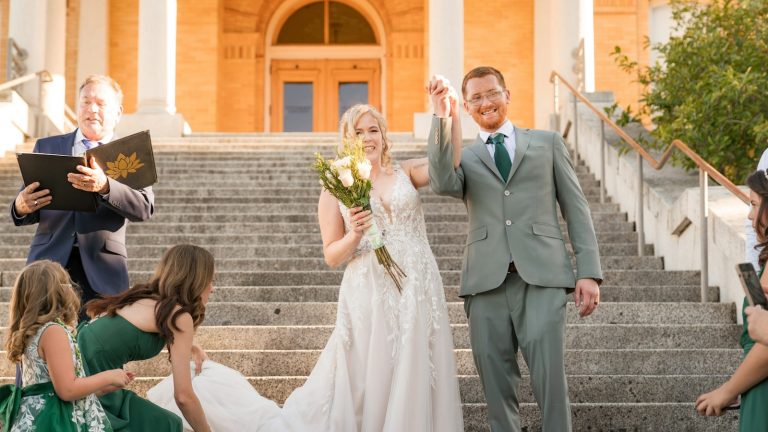
Across 130+ traits, couples resemble each other far more than chance would predict. Photo: Priscilla Du Preez / Unsplash.
So why does my partner feel like my opposite?
Because similarity is the floor, not the experience. Once you and someone else agree about politics, money, children, and how to spend a Sunday, those agreements become invisible — they stop being features and start being the weather. What remains salient is the narrow band where you differ.
Two people who match on 88% of measurable traits will spend most of their arguments inside the other 12%, and that 12% will feel like the whole relationship. This is why couples in genuinely well-matched partnerships describe themselves as opposites with total sincerity. They’re not wrong about the difference. They’re just not counting the agreements.
There’s a second mechanism worth naming: differences that are structural rather than dispositional. One of you became the planner because someone had to, not because you’re constitutionally organized. Roles get assigned early in a relationship and then harden into apparent personality — and the resulting “opposites” were manufactured by the partnership itself.
This also explains a phenomenon most long-term couples will recognize: the differences that feel most defining tend to shift over the years. The thing you fought about at twenty-five is not the thing you fight about at forty, even though neither of you has fundamentally changed. What changed is which slice of the 12% happened to be load-bearing at the time — and load-bearing usually means whichever difference the current stage of life is pressing on. Small children press on the sleep and tidiness gap. Middle age presses on the money and ambition gap. Same couple, same similarity, different visible fault line.
Where difference genuinely helps — and where it doesn’t
The research doesn’t say difference is bad. It says difference is rarer than we think, and it matters enormously which difference you’ve got. A rough division:
- Differences in skill are usually assets. One of you is good with numbers, the other with people. This is division of labour, and it makes a household more capable than either of you alone.
- Differences in pace are manageable. Fast decider and slow deliberator, extrovert and introvert. These cause friction but are negotiable, because neither position implies the other is wrong.
- Differences in values are the expensive ones. What money is for. Whether to have children. What you owe your parents. What honesty requires. These rarely converge, and the research suggests they’re also the traits on which we’re most similar to begin with — meaning a values gap is genuinely unusual, and worth taking seriously rather than assuming it will resolve.
This is the practical payoff of the finding. “Opposites attract” gets deployed as reassurance when someone notices a values mismatch early — we’re different, that’s what makes it interesting. The data suggests the opposite reading: because value similarity is the norm, a real values gap is a signal, not a spice. It belongs on your list of actual dealbreakers rather than in the column of charming contrasts.

Skill differences tend to help. Values differences tend to compound. Photo: GESPHOTOSS / Unsplash.
What this means if you’re dating now
Three adjustments follow from the evidence, none of which are “find someone identical to you.”
Stop auditioning for difference. A common dating-app instinct is to seek someone who’ll expand your world — a different scene, different taste, different politics. Novelty is genuinely attractive early. But the traits that predict long-run compatibility are precisely the boring ones the study found most correlated: education, attitudes, substance use, how you spend money. Nobody puts those in a profile because they don’t photograph well.
Test the values questions before you’re attached. Not on the first date. But by the point where you’re deciding whether this is a relationship, you should know what they think about children, debt, extended family obligations, and what constitutes cheating. These are the differences that don’t soften.
Take a mismatch on the boring stuff seriously. If one of you drinks four nights a week and the other doesn’t drink at all, that’s not a quirky contrast — it’s one of the traits couples cluster on most tightly, and being an exception to that pattern usually means ongoing negotiation rather than a one-time adjustment.
None of this means similarity guarantees anything. Two people can share every measured trait and still handle conflict terribly, and how you fight predicts far more than what you have in common. Similarity gets you in the door; the rest is a separate skill — which is why the green flags worth watching for tend to be behavioural rather than demographic.
Do opposites attract? Where the evidence comes from
Do opposites attract is one of the most-tested claims in relationship science, and the trait-correlation data keeps pointing the same way. The American Psychological Association hosts accessible summaries of the personality and assortative-mating literature behind these findings.
Frequently asked questions
Is it true that opposites attract?
No, not as a general rule. The 2023 Nature Human Behaviour analysis of over 130 traits found partners were similar on roughly 82–89% of them, with genuine opposite-attraction appearing in only about 3% — and even then weakly. Similarity, not complementarity, is the dominant pattern in human pairing.
Which traits do couples match on most?
Political and religious attitudes, educational attainment, cognitive ability, and substance-use behaviours showed the strongest partner correlations. Personality traits showed the weakest — correlations for the Big Five ranged from about .08 to .21, meaning temperament matches far less tightly than worldview does.
Can a relationship work if you’re very different?
Yes, depending on the domain. Differences in skills, hobbies, and social energy are usually workable and sometimes advantageous. Differences in core values — money, children, family obligation, honesty — are the ones that tend to persist and compound, so they’re worth surfacing early rather than assuming compromise will arrive later.
Why do people believe opposites attract if the research says otherwise?
Partly because differences are more noticeable than similarities: shared views fade into background while disagreements stay vivid. And partly because early attraction really can be driven by novelty — the difference that draws you in at three weeks is simply not the thing that determines whether you’re compatible at three years.
More on choosing well and knowing what to look for in our Dating & Engaged archive.
Written by
Elena Rostova
Elena Rostova is the byline used for articles published by Relationship 99. It is a pen name, not a licensed clinician. Articles here are built from published research in relationship science - including work by John Gottman, Arthur Aron and researchers in attachment theory - with the studies named in the text so readers can check them. How we research, source and review our articles is set out in full at relationship-99.com/editorial-standards. Relationship 99 is not a therapy service, and nothing here replaces advice from a qualified professional.