The default parent is the one the household runs on—the parent the kids call for by name, the one who holds the permission slips, the shoe sizes, the birthday-party RSVPs, and the exact temperature at which the toddler will refuse dinner. Being the default parent isn’t about who loves the children more; it’s about who carries the invisible job of noticing, tracking, and remembering everything. And that job is far more exhausting than it looks from the outside.
The term “default parent” was popularized in 2014 by writer M. Blazoned in a widely shared essay, and it stuck because it named something millions of parents felt but couldn’t articulate: not the doing of tasks, but the endless mental background hum of being the one ultimately responsible. This post looks at what the default-parent role really costs, why it lands where it does, and how couples can rebalance it before it curdles into burnout.
What does “default parent” actually mean?
The default parent is the fallback for everything child- and home-related—the person whose brain is running the family’s operating system whether or not they are the one physically present. If the school nurse calls, they call the default parent first. If a snack is running low, the default parent already knew before the pantry was empty. The other parent may be loving, involved, and fully willing to help—but “help” is the key word. Helping implies someone else owns the plan.
Sociologist Allison Daminger gave this hidden work a precise name: cognitive labor. In her research published in the American Sociological Review (2019), based on interviews with 35 couples, she broke household management into four steps: anticipating needs, identifying options, making decisions, and monitoring the results. Crucially, Daminger found that mothers disproportionately shouldered the two most mentally taxing and open-ended parts—anticipating what’s coming and monitoring whether it got handled—which are exactly the parts that never clock out.

The default parent is on call even during the hard moments—especially during the hard moments. Photo: Unsplash.
Why is being the default parent so tiring?
The fatigue comes less from the tasks and more from the vigilance. Physical chores end when they’re done; cognitive labor never fully switches off. The default parent is mentally scanning the horizon during dinner, at work, and at 2 a.m.—did the field-trip form get signed, is there a clean uniform for tomorrow, when was the last dose of medicine. This is why a default parent can feel wrung out after a day where, on paper, they “didn’t do that much.”
There’s an emotional tax too. Because this labor is invisible even to the person carrying it, it is easy for the other partner to underestimate—which turns it into a frequent, quietly recurring source of conflict. Daminger’s work highlights exactly this: the load is heavy, largely unseen, and therefore rarely credited. It overlaps with the broader phenomenon we explore in the mental load, and it’s a common thread in couples who describe feeling more like co-workers than partners.
How do you end up as the default parent?
Rarely by choice—usually by drift. A few forces tend to install one parent as default:
The maternity-leave head start
When one parent spends the early weeks solo-learning the baby’s cues, feeding rhythm, and pediatrician’s name, they accumulate a knowledge lead that never gets handed back. Competence compounds: the more you know, the more efficient it is for you to keep doing it.
Gatekeeping and self-installation
Sometimes the default parent unintentionally guards the role—redoing the diaper, correcting the outfit, insisting on their system—which teaches the other parent to step back. We dig into this dynamic in our piece on maternal gatekeeping. Rebalancing often requires the default parent to tolerate a different, imperfect way of doing things.
The “just tell me what to do” trap
An offer to help that requires the default parent to assign, explain, and follow up isn’t relief—it’s more management. As long as one parent holds the master list and the other awaits instructions, the default role stays firmly in place.
How can couples share the default-parent load more evenly?
The fix for an unequal default-parent load is to transfer ownership of entire domains, not to hand out individual tasks. Owning a domain means holding the anticipating and monitoring for it—not just executing a chore when asked. When both parents each fully own several areas of family life, neither one has to be the single fallback for everything.
Divide by domain, not by task
Instead of “can you handle bath tonight,” try “bedtime is yours”—the routine, the clean pajamas, the noticing when the toothpaste runs out. Whole-domain ownership moves the mental load, because remembering becomes part of the job.
Make the invisible visible
You cannot split a load no one can see. Sit down together and actually list the cognitive work—appointments, forms, gift-buying, meal planning, the emotional check-ins. Seeing the full inventory on paper is often the moment the non-default parent realizes just how long the list is.
Let the other parent’s system stand
If you take a domain back the instant it isn’t done your way, you re-teach everyone that you are still in charge of it. Barring safety issues, let your co-parent run their domains their way. A differently packed lunch is a small price for genuinely shared responsibility.
Protect a genuine off-switch
The default parent needs real time where someone else is truly the fallback—phone off, no “text me if you need anything.” That trust is how a co-parent builds their own competence, and how the default parent finally gets to rest. It’s also part of the broader good-enough parenting mindset that lowers the pressure on everyone.

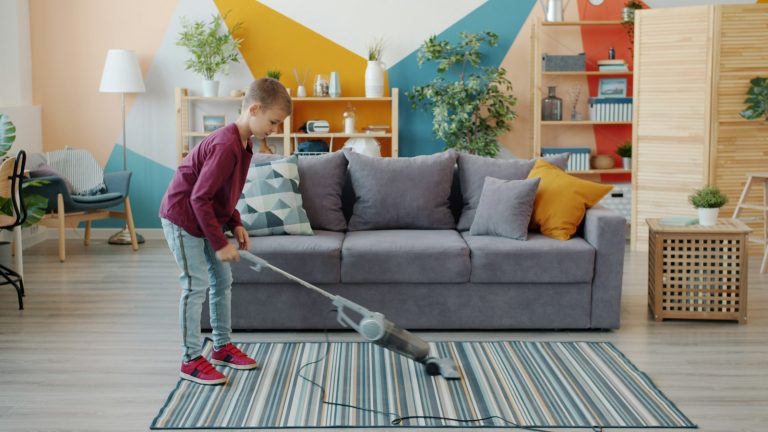
When each parent fully owns a routine, neither has to carry the whole family in their head. Photo: Unsplash.
Rebalancing the default-parent role isn’t only fairer—it protects the partnership underneath the parenting. For more on keeping family life sustainable, browse our Family Life & Parenting archive.
Rebalancing is easier when both partners treat the mental load as shared work rather than one person’s helpfulness. Research-backed tools from the Gottman Institute on appreciation and shared responsibility can help a couple move away from a single default parent and toward a genuine partnership.
Frequently asked questions about being the default parent
Is being the default parent always a bad thing?
Not inherently—someone often naturally holds more of the family knowledge, and that can work when it’s chosen and appreciated. It becomes a problem when the role is involuntary, unacknowledged, and never gets a break. The goal isn’t perfect 50/50 accounting; it’s making sure the load is seen, valued, and shared enough to be sustainable.
Can dads be the default parent?
Absolutely. While research shows the role most often falls to mothers, plenty of fathers are the family’s fallback—especially in different work arrangements or single-dad households. The dynamics and the solutions are the same regardless of gender: transfer whole domains and make the invisible labor visible.
My partner says “just ask me and I’ll help.” Why isn’t that enough?
Because “just ask” keeps you as the manager who has to remember, assign, and supervise every task—which is the exhausting part. True relief comes when your partner owns a domain outright, including noticing what needs doing without being prompted. Helping on request is generous, but it doesn’t move the mental load off your shoulders.
How do we start rebalancing without a huge fight?
Begin with a calm, blame-free inventory of everything you each currently track, then pick one or two domains for the other parent to fully own. Expect a messy adjustment period and resist the urge to take those domains back. Small, consistent shifts—repeated over weeks—rebalance a household far more durably than one dramatic conversation.
If carrying the default-parent role has left you feeling chronically depleted, resentful, or hopeless, that’s worth taking seriously. Talking with your partner, a family therapist, or your doctor can help—parental burnout is real and treatable.
Written by
Elena Rostova
Elena Rostova is the byline used for articles published by Relationship 99. It is a pen name, not a licensed clinician. Articles here are built from published research in relationship science - including work by John Gottman, Arthur Aron and researchers in attachment theory - with the studies named in the text so readers can check them. How we research, source and review our articles is set out in full at relationship-99.com/editorial-standards. Relationship 99 is not a therapy service, and nothing here replaces advice from a qualified professional.