Sibling fights are not primarily a discipline problem. They are a child’s first laboratory for conflict, and how much you should step in depends almost entirely on age. Under about eight, “let them work it out” usually means the bigger or louder child wins. Older children need more room. In both cases the useful role is coach, not judge.
Sibling fights are the background noise of family life — the shriek from the next room, the escalating negotiation over who had the blue cup, the sudden silence that is somehow worse. Most parents default to one of two strategies: referee everything, or announce that they are staying out of it. The research suggests both defaults are wrong, and in fairly specific ways.

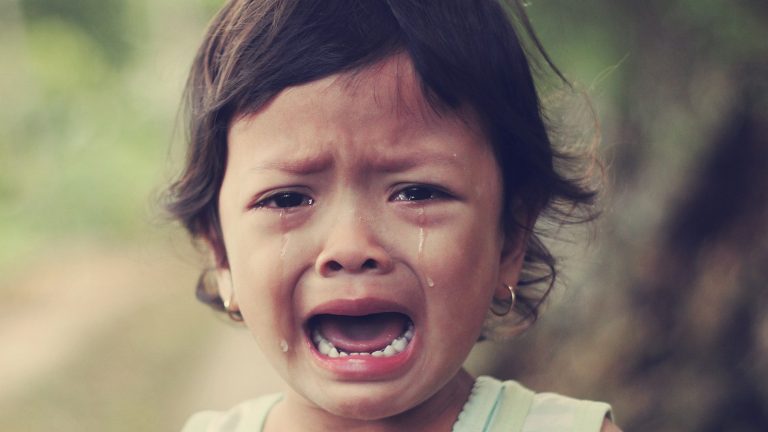
Young siblings in the same household argue far more often than most parents realize — the frequency is not the problem. Photo: Nathan Dumlao / Unsplash.
How often are sibling fights normal?
Sibling fights happen far more often than parents expect. Observational studies of young siblings at home have clocked conflicts in the range of several per hour for preschool-aged pairs — findings from researchers including Judy Dunn and Laurie Kramer have repeatedly documented rates that stun parents who assume their household is uniquely combative.
This matters because a lot of parental distress comes from a frequency expectation, not a behavior problem. If you believe siblings who love each other should rarely fight, every skirmish reads as evidence something has gone wrong. It has not. Frequency is the least diagnostic thing about sibling conflict. What the fights are about, and how they end, tells you far more.
Do sibling fights resolve if you let them work it out?
Sibling fights do not resolve themselves for young children, and this is one of the clearer findings in the field. Laurie Kramer, who spent decades at the University of Illinois and later Northeastern studying sibling relationships, has been direct about it: ignoring sibling conflict is not the most effective strategy for children under roughly eight, because young kids lack the perspective-taking and negotiation skills the hands-off approach presumes they have.
Left alone, a four-year-old and a seven-year-old do not negotiate. They run a power contest, and the same child wins repeatedly. What gets learned in that room is not conflict resolution. It is that force works, or that giving in is the fastest way to make it stop — and both lessons travel into adulthood.
The hands-off approach becomes more reasonable as children age into it, particularly once both siblings have the verbal and emotional skills to make it a real negotiation rather than a rout. Even then, “stay out of it” works best as a deliberate policy the children know about, not as parental exhaustion dressed up as philosophy.
Why does refereeing sibling fights make things worse?
Refereeing sibling fights teaches children to compete for the parent rather than to resolve with each other. When the way to win is to be first to the adult with the most compelling account, siblings learn to build cases, monitor each other for infractions, and perform victimhood. Parents in this pattern often describe feeling like the household’s permanent small-claims court, which is exactly what they have become.
The related trap is the fairness audit — the attempt to determine who started it. Ninety percent of the time the answer is unknowable, the investigation takes fifteen minutes, and it hands both children an incentive to lie. Kramer’s guidance points elsewhere: act as a mediator rather than a referee, make sure both children are actually heard, and resist jumping to conclusions about fault.
What does coaching sibling fights look like in practice?
Concretely, and in the order that tends to work:
- Stop the action, not the argument. Separate bodies if needed. Do not start problem-solving while anyone is screaming — nobody learns anything at that arousal level.
- Get both accounts, out loud, with the other listening. This is the actual intervention. Being required to hear your sibling’s version is the perspective-taking exercise.
- Name each child’s want, neutrally. “You want to finish your turn. You want to know when your turn starts.” Almost every sibling fight compresses into two competing legitimate wants, and stating them defuses more than it seems like it should.
- Hand the problem back. “That is a real problem. What are two ways you could solve it?” Then wait, uncomfortably, while they produce something. The solution will be worse than yours. It will also be theirs.
- Skip the verdict. No ruling on who was right. If a rule was genuinely broken, address that separately and privately, not as the outcome of the dispute.
Kramer’s preventive program for four- to eight-year-olds, More Fun with Sisters and Brothers, was built on exactly this logic: teach children specific social and emotional skills, and train parents to coach rather than adjudicate while the children practice. The skills are learnable. They are simply not automatic.

The goal is not fewer fights. It is fights that end with both children still in the room. Photo: Annie Spratt / Unsplash.
When are sibling fights no longer normal?
With sibling fights, this is the line that matters most, and it is underappreciated. Corinna Jenkins Tucker and colleagues published research in Pediatrics reporting that children who experienced sibling aggression showed mental health distress comparable to that associated with peer bullying — a finding that pushed back hard on the cultural habit of dismissing sibling aggression as harmless roughhousing.
The markers that separate ordinary conflict from something that needs adult intervention as a safety matter:
- It is one-directional. The same child is always the target and never the aggressor.
- There is a real power imbalance in age, size, or social standing, and it is being used.
- It is aimed at identity, not the dispute — humiliation, contempt, and mockery rather than argument.
- The target changes. Avoiding rooms, dreading school breaks, hiding possessions, reluctance to be alone at home.
That pattern is not a conflict to be mediated. It is closer to what happens between the adults in a home when contempt takes hold — and, as with contempt in a relationship, the fix is not better negotiation skills. It requires the adults to intervene directly and to keep intervening.
Frequently asked questions
Should parents intervene in sibling fights?
For children under about eight, yes — but as a coach rather than a judge. Research by Laurie Kramer found that ignoring conflicts is not effective for young children, who lack the perspective-taking skills that “work it out yourselves” assumes. Older children can be given more room, provided that both have the skills to negotiate rather than overpower.
How do I stop taking sides between my kids?
Stop trying to establish who started it. Instead, state each child’s want neutrally, require each to hear the other’s account, and hand the problem back for them to solve. Refusing to issue a verdict removes the incentive to compete for your judgment, which is what drives much of the tattling.
Is sibling rivalry normal or a sign of a problem?
Frequent conflict is normal and poorly correlated with the long-term quality of the relationship. The concerning pattern is one-directional aggression with a real power imbalance, aimed at humiliation, where one child shows signs of fear or avoidance. That is sibling bullying, not rivalry, and it warrants direct adult intervention.
Do siblings who fight a lot get along as adults?
Often, yes. Researchers consistently find that warmth and conflict are largely independent dimensions of the sibling bond — pairs can be high on both. The stronger predictor of adult closeness is whether there was genuine affection and shared positive experience alongside the arguing, not whether the arguing was rare.
The reframe
The aim is not a house without sibling fights. It is a pair of children who can be furious with each other at 4 p.m. and share a couch at 6 — and who have, somewhere in there, practiced the thing almost no one is formally taught: how to want incompatible things from someone you are not allowed to walk away from.
That is, more or less, the skill every long-term relationship eventually requires. Siblings just get to start early.
For related reading, see why siblings turn out so different and our piece on rupture and repair in parenting, or browse the full Family Life and Parenting archive.
This article is general information and not a substitute for professional assessment. If one child in your home is being frightened or physically harmed by another, please speak with your pediatrician or a licensed family therapist.
Written by
Elena Rostova
Elena Rostova is the byline used for articles published by Relationship 99. It is a pen name, not a licensed clinician. Articles here are built from published research in relationship science - including work by John Gottman, Arthur Aron and researchers in attachment theory - with the studies named in the text so readers can check them. How we research, source and review our articles is set out in full at relationship-99.com/editorial-standards. Relationship 99 is not a therapy service, and nothing here replaces advice from a qualified professional.