Sharenting — the everyday habit of parents sharing their children’s lives on social media — feels completely harmless in the moment. A birthday photo, a hilarious potty-training story, the first-day-of-school sign held up on the porch. You’re proud, your family is far away, and this is simply how we stay connected now. But every post is also a small, permanent deposit into a digital record your child never opened and cannot close.
The short answer: sharenting is the act of parents documenting their kids online, and the real cost isn’t embarrassment — it’s that you’re building an identity and a searchable history for a person who can’t consent to it. You don’t have to quit social media to parent well. You do need to share on purpose rather than on reflex.
What is sharenting, and why does it matter?
Sharenting — a blend of “sharing” and “parenting” — describes the routine posting of children’s photos, videos, and stories by their own parents. The word entered mainstream dictionaries around 2016, but the behavior is now nearly universal. One widely cited UK survey estimated that the average child appears in roughly 1,000 to 1,500 online images before the age of five — a digital footprint established years before they can spell their own name, let alone weigh in.
It matters because that footprint is durable, searchable, and out of the child’s hands. A funny anecdote about a meltdown or a toilet mishap is charming to your followers today; it may be exactly what a classmate screenshots in eight years. The audience you imagine — grandparents and close friends — is rarely the only audience a post actually reaches.

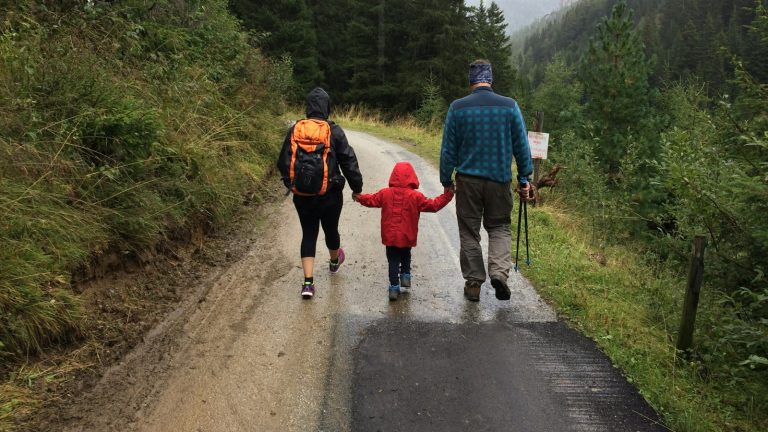
Most sharenting comes from love and pride — which is exactly why it’s so easy to do on autopilot. Photo: Tim Gouw / Unsplash.
What does the research say about children’s privacy?
Legal scholar Stacey Steinberg, a law professor at the University of Florida, has written some of the most influential work on this question. In her 2017 paper “Sharenting: Children’s Privacy in the Age of Social Media,” she frames a genuine tension: parents have a right to share their own experiences, and children have a competing right to privacy and to author their own identity. Normally parents are the gatekeepers of a child’s privacy — but in sharenting, the parent is simultaneously the gatekeeper and the one doing the disclosing, which removes the usual check.
Steinberg’s recommendation isn’t to stop entirely; it’s to shift from unconscious sharing to intentional sharing — considering the child’s current and future interests before posting. Other researchers have raised concrete downstream risks: images repurposed without consent, location details that reveal a child’s school or routine, and the long-term identity data that accumulates before a child can meaningfully object.
What are the real risks of oversharing?
The risks fall into three practical buckets. There’s safety and security: photos often carry metadata or visible cues — a uniform, a street sign, a repeated location — that can map a child’s daily life. There’s the child’s future autonomy: today’s viral toddler moment becomes tomorrow’s search result during a first job hunt or a middle-school friendship. And there’s the relationship cost of the phone itself — when documenting the moment competes with being in it, kids notice. That divided attention has a name we explore in our piece on phubbing, and it applies to parents as much as partners.
None of this means your child will be harmed by a single photo. It means the aggregate — thousands of images, stories, and details across a decade — adds up to something no one deliberately chose.

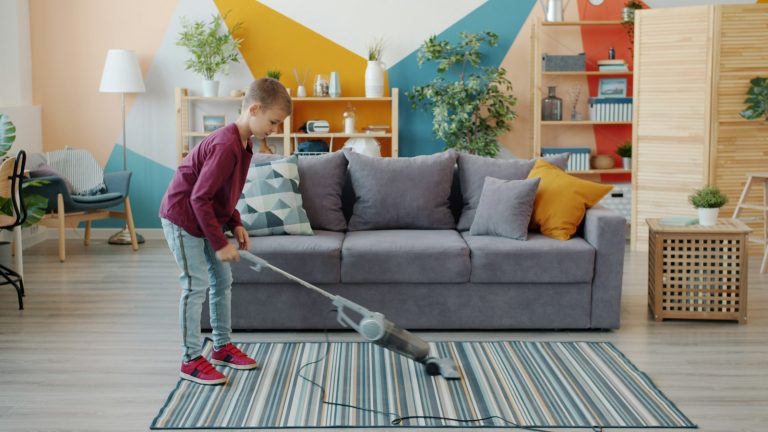
The footprint you build now becomes the identity they inherit later. Photo: Andrey K / Unsplash.
How can you share more safely without disappearing?
You don’t have to become a privacy hardliner to be thoughtful. A few habits do most of the work. Ask the “future teenager” test before posting: would your child, at fifteen, be okay with this? Skip anything involving nudity, the bathroom, big emotional breakdowns, or medical details — the content most likely to embarrass later. Strip location cues and avoid tagging schools or regular spots. Tighten your audience to people you actually know, and remember that private accounts still get screenshotted. And once your child is old enough — often around four or five — start asking permission, which models consent and gives them a voice in their own story.
This is really an extension of good-enough parenting: not flawless caution, but reasonable, loving judgment applied consistently. If co-parents or grandparents share differently than you’d like, treat it as a boundary conversation rather than a fight — the same attunement that powers co-regulation with kids works with the adults in your family, too. For more on raising kids in a connected world, our family life and parenting section digs deeper.
For age-based guidance on children and social media, organizations like Common Sense Media offer practical frameworks — a useful complement to any family’s approach to sharenting.
Frequently asked questions
Is sharenting actually harmful, or is this an overreaction?
A single photo is unlikely to harm anyone. The concern is cumulative: thousands of images and personal details published over years create a permanent, searchable identity your child never consented to. Intentional sharing addresses that without requiring you to post nothing.
At what age should I ask my child’s permission before posting?
Many experts suggest starting around four or five, when children can understand the basic idea. Even a simple “Can I share this photo with Grandma?” teaches consent and gives kids a say in how they’re represented.
What kinds of posts should I avoid entirely?
Steer clear of nudity or bath photos, bathroom moments, images of severe distress, medical information, and anything revealing a child’s school, address, or daily routine. These carry the highest risk of embarrassment or misuse.
My family lives far away — how do I share without oversharing?
Use private channels built for it: a family group chat, a shared photo album, or a locked-down account limited to people you know personally. That keeps loved ones in the loop while keeping the content off the open, searchable web.
This article is general information, not legal advice. If you have specific concerns about a child’s images being shared or misused, consider consulting a qualified attorney in your area.
Written by
Elena Rostova
Elena Rostova is the byline used for articles published by Relationship 99. It is a pen name, not a licensed clinician. Articles here are built from published research in relationship science - including work by John Gottman, Arthur Aron and researchers in attachment theory - with the studies named in the text so readers can check them. How we research, source and review our articles is set out in full at relationship-99.com/editorial-standards. Relationship 99 is not a therapy service, and nothing here replaces advice from a qualified professional.