Caring for aging parents puts real strain on a marriage, but the hours themselves are rarely what does the damage. Research suggests the bigger threat is a growing sense that the work is unfair, between spouses and among siblings. Couples who decide together, divide tasks openly, and protect some time that is just theirs tend to weather long caregiving years far better.
Key Takeaways
- About 63 million Americans, nearly 1 in 4 adults, are family caregivers, up 20 million since 2015, according to the AARP and National Alliance for Caregiving 2025 report.
- In a 15-year study of 716 married adults, people who had been caring for aging parents longer were less happy in their marriages and reported more unfairness in marital roles than newer caregivers.
- Sibling tension over parent care rises when one sibling does most of the work and when siblings sense favoritism about who should care, so dividing the load explicitly protects both your marriage and your family.
It usually starts with a phone call. A fall, a diagnosis, a neighbor mentioning that Dad left the stove on again. Within a few months, one spouse is driving to appointments twice a week, sorting pill boxes, and fielding calls from a sibling three states away who has opinions but not availability.
The other spouse wants to help and also misses their partner. Neither of you signed up for this, and both of you are doing your best. That is precisely why it needs a plan.
How common is caring for aging parents?
Caring for aging parents is now a mainstream stage of adult life, not an exception. The Caregiving in the U.S. 2025 report from AARP and the National Alliance for Caregiving, based on a survey of 6,858 caregivers, found that about 63 million Americans provide ongoing care. Nearly 1 in 4 caregivers provide 40 or more hours a week, nearly half have experienced at least one major financial impact, and 6 in 10 are also employed.
Government time-use data tell a similar story. In 2023 and 2024, the Bureau of Labor Statistics counted 38.2 million unpaid eldercare providers, and 47% of them were caring for a parent. On days they provided care, they spent an average of 3.9 hours doing it.
Many people are also still raising kids. A Pew Research Center survey from September 2025 found that 54% of Americans in their 40s have a parent 65 or older and are raising a minor child or supporting an adult child. If that double squeeze describes you, our guide to the sandwich generation covers it in depth. This article focuses on the parent-care piece and how it plays out between spouses.
| Finding | Source | What it means for a couple |
|---|---|---|
| 63 million family caregivers; nearly 1 in 4 give 40+ hours a week | AARP and NAC, 2025 | Care can become a second job; plan for time, not just tasks |
| 47% of eldercare providers care for a parent; 3.9 hours on care days | BLS, 2023 to 2024 | Those hours come out of evenings and weekends you used to share |
| Longer-term parent caregivers reported lower marital happiness and more role inequity | Bookwala, 2009 (716 married adults) | Fairness needs revisiting as care stretches into years |
| Caregiving and perceived favoritism linked to sibling tension | Suitor et al., 2014 (450 adult children) | Sibling conflict often spills into the marriage |
Why does parent care strain a marriage?
Parent care strains a marriage mostly through fairness and time, not love. The clearest long-term evidence comes from psychologist Jamila Bookwala, who followed 716 married adults over roughly 15 years in a national U.S. survey. Adults who had been caring for a parent for longer reported lower marital happiness than those who had only recently started, and they reported more inequity in marital roles than non-caregivers.
That last point is the heart of it. When one spouse quietly absorbs more household work so the other can drive to Mom’s, or when the caregiving spouse feels their partner does not understand the toll, a sense of unfairness builds. The study could not measure how much care people gave, and the caregivers were fairly young, so it does not prove caregiving causes unhappiness. But it points to where couples should pay attention.
Three dynamics show up again and again:
- The disappearing partner. The caregiving spouse has less time and energy left for the marriage, and the other spouse feels like an afterthought.
- Invisible work. Appointments are visible; researching Medicare plans, refilling prescriptions, and worrying at 2 a.m. are not. This is the mental load in another form.
- Stress that comes home. A hard visit or a tense call with a sibling often lands on whoever is nearest. Researchers call this stress spillover.

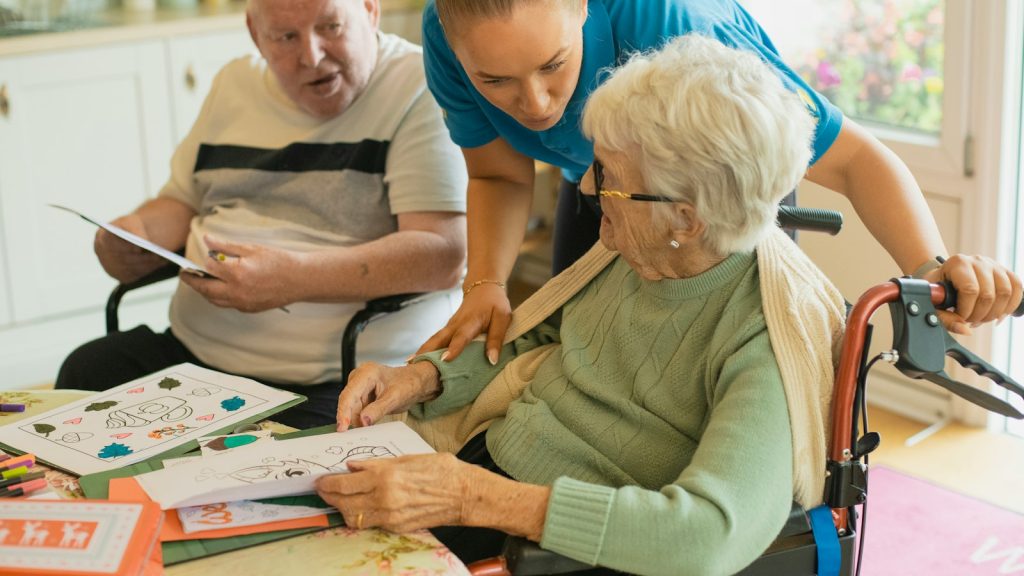
Parent care is an act of love that still needs a fair plan. Photo: Danie Franco / Unsplash.
What about when it’s your spouse’s parent?
Caring for aging parents who are your in-laws adds another layer. Many in-law spouses help generously, but their motivation is often loyalty to their partner more than to the parent, and that can feel thin when the care stretches on for years.
A few principles help. The adult child should usually lead decisions about their own parent and handle the hardest conversations with siblings. The in-law spouse’s contribution should be chosen, not assumed, and openly appreciated. And the in-law spouse gets a real vote on anything that changes your shared home, money, or time, such as a parent moving in.
How should siblings share caring for aging parents?
Siblings should share caring for aging parents by dividing it explicitly rather than letting it default to whoever lives closest or feels most guilty. In a study of 450 adult children in 214 families, J. Jill Suitor, Karl Pillemer, and colleagues found that both providing care and perceiving that a mother favored one child as a future caregiver were linked to sibling tension after the mother’s health crises. Tension was highest when both were present.
Equal is not always possible, but fair is. A sibling who lives far away can take on bill paying, insurance calls, research, or funding respite care. A sibling who cannot give money can give time. What breaks families, and marriages along with them, is one person carrying it all while others offer only advice.
5 steps to share parent care fairly
These steps work whether you are just starting out or several years into caring for aging parents.
1. Map the actual work
List every task for a typical month: rides, meals, medications, bills, house upkeep, calls with doctors, emotional check-ins. Seeing it on paper turns a vague sense of overload into something you can divide.
2. Decide as a couple first
Before talking with siblings, agree with your spouse on what you can realistically offer, what you will not do, and what would need to change in your household. Present a united front rather than negotiating your marriage in front of your family.
3. Hold a family meeting with a written plan
Invite all siblings, in person or by video, and assign tasks by name. Write it down and share it. Plan to revisit it every few months, because needs change.
4. Put money and limits in writing
Agree on who pays for what, whether a caregiving sibling will be compensated, and what your household can afford. Legal documents such as powers of attorney and health care directives matter here. Rules vary by state, so consult an elder law attorney or financial professional.
5. Schedule relief and protected couple time
Book respite care, adult day programs, or sibling coverage in advance, and put at least one couple-only block on the calendar each week. Treat it as part of the care plan, because a depleted caregiver cannot help anyone.

Put relief and couple time on the calendar before you need it. Photo: Emiliana Hall / Unsplash.
When is it time to get outside help?
It is time for outside help when caregiving is consistently crowding out sleep, work, health, or the marriage itself, or when one of you is quietly building resentment. Watch for signs like dreading every visit, frequent irritability with your spouse, or feeling you have no life outside of caring for aging parents.
Your local Area Agency on Aging can point you to respite and in-home services; the federal Eldercare Locator is at 1-800-677-1116. A licensed therapist can help with caregiver stress, and a couples therapist can help you renegotiate roles. When a parent has dementia, grief can begin long before a death, something psychologist Pauline Boss calls ambiguous loss. Naming it often helps both spouses be gentler with each other.
Caring for aging parents: FAQ
Should an aging parent move in with us?
Only if both spouses genuinely agree after talking through space, privacy, money, care needs, and an exit plan if it stops working. A move-in that one partner tolerates rather than chooses is a common source of long-term marital strain.
Is it fair for me to resent my spouse for caring for aging parents?
Feeling resentful is common and does not make you a bad person. Usually it signals that your own needs have gone unspoken. Raise it as a need (“I miss us”) rather than a complaint about their parent.
What if my siblings won’t help?
Make specific, small asks in writing, such as covering one weekend a month or paying for a respite service. If they still decline, set limits on what you can do and look into community resources rather than absorbing everything yourself.
Should a caregiving sibling be paid?
Some families agree to compensate the primary caregiver from a parent’s funds, which can feel fairer. Because this can affect taxes, inheritance, and benefit eligibility, get advice from an elder law attorney first.
Fairness is what keeps both families intact
Caring for aging parents is one of the most meaningful things adult children do, and also one of the most draining. The research points to a clear lesson: the marriage suffers less from the hours themselves than from the sense that the burden is unfairly shared and unseen.
Make the work visible, decide as a team, divide it openly with siblings, and guard a little time that belongs only to the two of you. Your parents benefit from that, too.
This article is for general education and is not a substitute for advice from a licensed mental health professional, elder law attorney, or financial professional. Rules on powers of attorney, caregiver pay, and benefits vary by state.
Written by
Elena Rostova
Elena Rostova is the byline used for articles published by Relationship 99. It is a pen name, not a licensed clinician. Articles here are built from published research in relationship science - including work by John Gottman, Arthur Aron and researchers in attachment theory - with the studies named in the text so readers can check them. How we research, source and review our articles is set out in full at relationship-99.com/editorial-standards. Relationship 99 is not a therapy service, and nothing here replaces advice from a qualified professional.