If your spouse drinks too much, the first question is whether you are seeing a rough patch or a real pattern. A rough patch is temporary and tends to ease when stress does. A problem shows up as regular heavy drinking, failed attempts to cut back, and real consequences. Surprisingly, calm, structured support works better than confrontation at getting a reluctant partner into treatment.
Key Takeaways
- In a randomized trial, 64% of family members trained in the CRAFT approach got a reluctant drinker into treatment, compared with 30% using a confrontational intervention and 13% using Al-Anon facilitation.
- If your spouse drinks too much, look at the pattern over months: how much, how often, and whether drinking keeps causing problems they promise to fix.
- Your own support matters regardless of what your spouse does, and safety always comes first if drinking involves violence, threats or drunk driving.
Maybe it started during a stressful stretch at work. A glass of wine became most of a bottle, then most nights. You have mentioned it, and you got a shrug, a joke or a fight. Now you lie awake wondering whether your spouse drinks too much or whether you are overreacting.
Both instincts are understandable. This guide offers a clearer way to judge what you are seeing and an evidence-based way to respond that protects both your marriage and you.
How do you know if your spouse drinks too much?
Start with numbers, because they cut through arguments about what is “normal.” The National Institute on Alcohol Abuse and Alcoholism (NIAAA) defines heavy drinking as follows:
- For men: five or more drinks on any day, or 15 or more per week.
- For women: four or more drinks on any day, or eight or more per week.
- Binge drinking: drinking that brings blood alcohol to 0.08%, typically five or more drinks for men or four or more for women in about two hours.
A standard drink contains about 14 grams of pure alcohol: roughly 12 ounces of regular beer, 5 ounces of wine or 1.5 ounces of spirits. Home pours are often much larger, so “two glasses” can easily be four standard drinks.
Heavy drinking is common, and so is the disorder it can lead to. According to NIAAA’s summary of the 2024 National Survey on Drug Use and Health, 27.9 million people ages 12 and older had alcohol use disorder in the past year. Only 7.6% of them received alcohol treatment.
Is it a rough patch or a drinking problem?
A rough patch tends to be time-limited and tied to a clear stressor. If your spouse drinks too much only during a hard stretch and cuts back when life calms down, that fits a rough patch. A problem tends to persist and to cost something. NIAAA’s guide to understanding alcohol use disorder lists 11 criteria from the DSM-5. Meeting two or three suggests mild AUD, four or five moderate, and six or more severe.
You cannot diagnose your spouse, and you should not try. But some questions from that list are things a partner can observe:
- Do they often drink more, or for longer, than they planned?
- Have they tried to cut back and not managed it?
- Has drinking caused problems at home or work that keep recurring?
- Do they keep drinking even though it causes trouble in the relationship?
- Have they given up activities they used to enjoy?
- Do they seem shaky, irritable or sweaty when they have not had a drink?

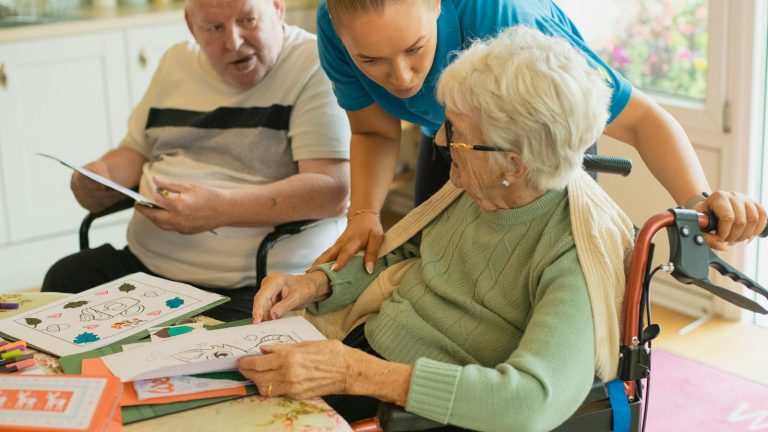
Partners often spend months unsure whether they are overreacting. Photo: Kelly Sikkema / Unsplash.
The gap between your habits matters, too. Researchers Gregory Homish and Kenneth Leonard followed 634 newlywed couples and found that discrepancies in heavy drinking between spouses predicted declining marital satisfaction over the first two years. Even before drinking becomes a disorder, a big mismatch can strain the marriage.
Why does confronting a spouse who drinks too much often backfire?
Confrontation tends to trigger defensiveness, and defensiveness tends to lock in the drinking. When a spouse who drinks too much feels attacked, the conversation often turns into the familiar cycle of one partner pushing and the other pulling away. Our article on the demand-withdraw pattern explains why that loop is so hard to break.
The classic surprise “intervention” has a practical problem as well. In a randomized trial led by William Miller, 70% of the family members prepared for a confrontational Johnson-style intervention decided not to go through with it. Among those who did, most succeeded, but few families were willing to take that step.
What is CRAFT, and why does it work better?
If your spouse drinks too much and refuses help, CRAFT is worth knowing about. Short for Community Reinforcement and Family Training, it teaches the partner or relative of a drinker to change the home environment in ways that make sobriety more rewarding and drinking less so. It focuses on positive communication, not ultimatums.
In the same trial, Miller, Robert Meyers and J. Scott Tonigan randomly assigned 130 concerned family members to one of three 12-hour counseling programs. CRAFT was far more effective at engaging initially unmotivated problem drinkers in treatment:
Two details are worth knowing. First, engagement rates in that trial were higher when the concerned person was a parent than when it was a spouse, so partners may need more patience. Second, family members in all three programs reported similar improvements in their own functioning and relationship quality. Getting support helps you even if your partner does not change right away.
On average, treatment engagement in the trial happened after four to six sessions. CRAFT is usually delivered by a trained therapist, and there are also self-help books based on the method.
5 steps to take when your spouse drinks too much
These steps draw on the principles behind CRAFT. They are not a substitute for working with a professional, but they are a solid place to start.
- Observe the pattern calmly. Note when, how much and what triggers drinking, such as stress, certain friends or certain times of day. Patterns reveal where change is possible.
- Talk when they are sober. Choose a calm moment. Use specific “I” statements: “I felt scared when you drove after the party.” Avoid labels like “alcoholic,” which tend to end the conversation.
- Reward sober time and stop cushioning drinking. Make alcohol-free time warm and enjoyable. When drinking causes a problem, let them deal with it rather than covering for them. Our piece on overfunctioning and underfunctioning in marriage describes how partners often slide into rescuing.
- Watch for a window to suggest help. People are often most open after a bad consequence or when they express regret. Have specific options ready, such as a doctor’s appointment or a treatment program.
- Get support for yourself. A therapist trained in CRAFT, a support group or a trusted friend can help you stay steady; our guide to venting about your spouse covers how to confide safely. The SAMHSA National Helpline (1-800-662-4357) is free, confidential and open 24/7 for treatment referrals.

Calm, specific conversations during sober moments are more likely to be heard. Photo: Priscilla Du Preez / Unsplash.
One medical caution: if your spouse drinks heavily every day, they should not stop suddenly without talking to a doctor. NIAAA notes that alcohol withdrawal can be life-threatening for people with severe AUD.
When does a spouse’s drinking become a safety issue?
When a spouse drinks too much, it becomes a safety issue if drinking involves violence, threats, driving under the influence, or leaving children unsupervised. In those situations, your safety and your children’s safety take priority over the marriage or any treatment plan.
- If you are in immediate danger, call 911.
- For confidential help planning for safety, contact the National Domestic Violence Hotline at 1-800-799-7233.
- If your spouse talks about suicide or self-harm, call or text 988 to reach the 988 Suicide & Crisis Lifeline.
CRAFT and similar approaches are designed for relationships where it is safe to stay engaged. They are not meant to keep anyone in a dangerous situation. Long-term strain can also leave deep resentment, which our guide to resentment in marriage addresses.
Spouse drinks too much: FAQ
What should I do if my spouse drinks too much but says it’s fine?
Denial is common. Keep the focus on specific behaviors and how they affect you, not on labels. Positive approaches such as CRAFT were designed precisely for partners who are not yet ready to accept help.
Should I give my spouse an ultimatum about drinking?
Ultimatums can backfire if you are not prepared to follow through. Clear boundaries, such as refusing to ride with them after drinking, tend to work better than threats. A therapist can help you decide which boundaries you can truly keep.
Does Al-Anon help if my spouse drinks too much?
In Miller’s trial, Al-Anon facilitation was less effective than CRAFT at getting drinkers into treatment. However, family members in all three programs reported similar gains in their own well-being, so support groups can still help you cope.
Can a marriage recover from a drinking problem?
Many do. NIAAA describes alcohol use disorder as treatable, and many people recover, although setbacks are common. Couples-based treatments exist, and recovery often goes better when both partners have support.
Your steadiness is the strongest tool you have
If your spouse drinks too much, you cannot force change, but you can influence it. Learn the real numbers, watch the pattern rather than single nights, and favor calm, specific conversations over confrontation. Approaches like CRAFT show that family members can make a measurable difference.
Just as important, take care of yourself and keep safety non-negotiable. Whatever your spouse decides, getting support makes you steadier, and that helps everyone in the household.
This article is for general education and is not a substitute for advice from a licensed medical or mental health professional. For treatment referrals, call the SAMHSA National Helpline at 1-800-662-4357. If you are in danger, call 911 or the National Domestic Violence Hotline at 1-800-799-7233. In a mental health crisis, call or text 988.
Written by
Elena Rostova
Elena Rostova is the byline used for articles published by Relationship 99. It is a pen name, not a licensed clinician. Articles here are built from published research in relationship science - including work by John Gottman, Arthur Aron and researchers in attachment theory - with the studies named in the text so readers can check them. How we research, source and review our articles is set out in full at relationship-99.com/editorial-standards. Relationship 99 is not a therapy service, and nothing here replaces advice from a qualified professional.