Helping kids adjust to two homes depends far less on the custody schedule and far more on keeping children out of the middle of adult conflict. Research on divorce consistently shows that most children adapt to living in two households; what predicts whether they struggle is not the number of homes but how much tension, loyalty pressure, and instability they absorb along the way.
Key Takeaways
- Helping kids adjust to two homes is rarely about the homes themselves: analyses of divorce research suggest roughly three-quarters or more of children show no lasting clinical-level problems.
- What harms children is chronic conflict and feeling “caught” between parents; a meta-analysis of 49 studies and over 23,000 people links interparental conflict to that trapped feeling.
- Shared parenting can work even when parents disagree: a review of 40 studies found children in shared-time arrangements often did better, provided they were shielded from the conflict itself.
The night before the first exchange, most parents worry about the wrong things: matching bedspreads, identical snacks, whether the child will miss the family home. Those details are not nothing, but they are not what decides how a child weathers two households. A child can adjust beautifully to a modest second bedroom and struggle badly in a lavish one, and the difference usually comes down to what happens between the parents, not inside the houses. That reframe sits at the center of helping kids adjust to two homes.

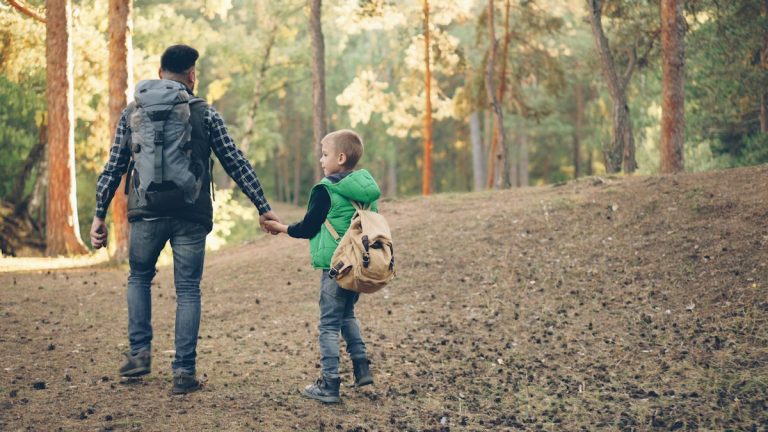
What happens between parents matters more than what is inside the houses. Photo: Vitaly Gariev / Unsplash.
Why helping kids adjust to two homes starts with conflict, not logistics
It is tempting to treat the transition as a scheduling puzzle: who has which nights, how the drop-offs work, which house holds the soccer cleats. Logistics matter, but they are the surface. Decades of research point to a single variable that outweighs almost everything else in children’s adjustment after separation, and it is the level of conflict they are exposed to. Helping kids adjust to two homes is, first and foremost, a project of lowering the conflict they see and hear.
This is oddly good news, because you cannot always control the schedule, the distance, or your ex. But you can often control how much of the adult tension reaches your child, and that is the lever that moves the most.
What children actually need: emotional security
Psychologists E. Mark Cummings and Patrick Davies built a well-supported framework called emotional security theory. In their research on interparental conflict, what shapes children’s adjustment is not whether parents disagree but whether those disagreements leave the child feeling that their world is stable and safe. A child who watches conflict get resolved stays emotionally secure; a child surrounded by hostile, unresolved conflict does not. This is why helping kids adjust to two homes is really about safety, not scheduling.
Applied to divorce, this means helping kids adjust to two homes is largely about protecting their sense that both parents still have them, that the ground is not going to keep shifting. Predictability, warmth, and visible follow-through on promises rebuild the security that the separation shook.
The real danger: feeling caught in the middle
There is a specific, measurable way divorce harms kids: making them feel caught between their parents. A recent meta-analysis of 49 studies covering more than 23,000 people found that interparental conflict was reliably linked to children feeling trapped between the two sides. Kids get put in the middle in ordinary-seeming ways: carrying messages, hearing one parent criticized, being asked how the other household spends money, or sensing they must comfort a hurting parent. Removing those pressures is some of the most important work in helping kids adjust to two homes.
So much of helping kids adjust to two homes is simply refusing to make the child a courier, a confidant, or a referee. When the two homes are emotionally separate for the adults but freely connected for the child, the loyalty bind loosens and the adjustment gets far easier.
Do two homes harm children? What the research says
Parents often carry deep guilt that two homes will damage their kids for life. The evidence is more reassuring. Sociologist Paul Amato’s large meta-analysis of children of divorce found real but modest average effects, and most children did not show clinical-level problems. And a review of 40 studies by Linda Nielsen found that children in shared-parenting arrangements frequently fared better across health and wellbeing measures, even when parental conflict was high, as long as the children themselves were kept out of it.
The takeaway is not that divorce is painless, but that two homes done well is not a sentence. Helping kids adjust to two homes succeeds far more often than frightened parents expect, especially when the adults keep their conflict to themselves. Guilt is understandable, but it should not push parents into choices, such as avoiding shared time purely to spare their own feelings, that the evidence does not actually support.
What helps kids adjust to two homes
The differences between a smooth adjustment and a hard one are surprisingly concrete. The table below sorts the moves that settle a child from the ones that quietly make things harder.
| Helps a child settle | Makes adjustment harder |
|---|---|
| Keeping adult conflict away from the child. | Venting about the other parent to them. |
| A predictable schedule and routines. | Constant last-minute changes. |
| Similar basic rules in both homes. | Wildly different rules and no coordination. |
| Letting the child love both parents freely. | Making them choose sides or report back. |
| Duplicating essentials at each house. | Forcing them to haul everything each time. |
If parents cannot manage friendly contact, a lower-contact structure can still work. Approaches like parallel parenting let high-conflict parents raise a child in two homes without constant clashes, which protects the child even when the adults cannot get along. The point is that helping kids adjust to two homes does not require a friendly divorce; it requires a contained one, where whatever conflict remains stays strictly between the adults. Plenty of children thrive with parents who are barely on speaking terms, because those parents were disciplined about keeping the child out of the crossfire.
Making the handoff and the two houses easier
Exchanges are where stress concentrates, so smooth them deliberately. Keep handoffs brief, neutral, and free of arguments; a tense drop-off can color a child’s whole first evening in the other home. Give transitions a predictable rhythm and, where possible, a little decompression time rather than rushing straight into activities. Small, consistent rituals do a surprising amount of the work of helping kids adjust to two homes.
Inside each house, let the child have a real sense of belonging: a drawer that is theirs, some duplicated basics, a say in small decorating choices. Coordinating the broad strokes of routine, roughly consistent bedtimes and homework expectations, keeps co-parenting from feeling like two different worlds. And how you first framed the separation still echoes here; the reassurances you offered when you told them about the divorce need to keep showing up in your actions, week after week.
Common questions about helping kids adjust to two homes
How long does it take a child to adjust to two homes? Many children settle into a new routine within several months, though it varies with age and conflict level. A predictable schedule speeds it up; ongoing tension between parents slows it down.
Is it better to keep one main home for stability? Not necessarily. Research finds many children do well with shared time. Stability comes more from low conflict and predictable routines than from a single address.
My child cries at every exchange. Is that a bad sign? Usually not. Transition tears are common and often fade once the child settles. If distress is intense and lasting, or tied to a specific home, talk with a child therapist.
What is the single most important thing in helping kids adjust to two homes? Keep your child out of the adult conflict. Do not use them as a messenger, a spy, or a shoulder to cry on about the other parent.
Two homes, one secure childhood
No child asks for two bedrooms, two toothbrushes, and a life measured in exchange days. But the research is steady and quietly hopeful: children are not broken by two homes, they are strained by conflict, instability, and being made to carry adult feelings. Helping kids adjust to two homes is mostly the discipline of shielding them from all three. Give them predictable routines, permission to love both parents, and a firm wall between them and the disagreements, and two homes can hold a childhood that is not just okay, but genuinely secure.

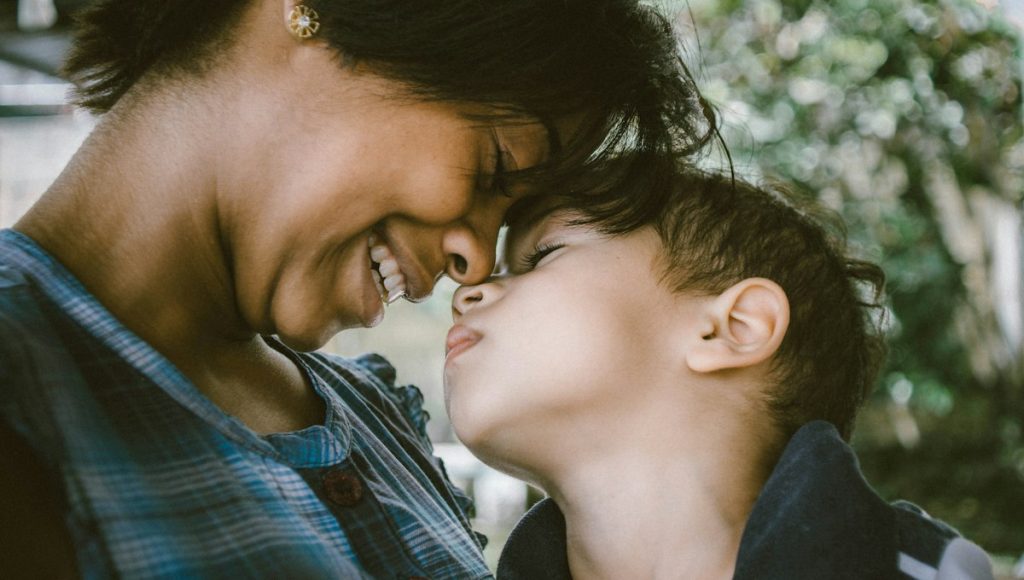
Security comes from low conflict and steady routines, not a single address. Photo: Xavier Mouton Photographie / Unsplash.
This article is general information, not legal or clinical advice. If conflict in your situation involves abuse, coercion, or fear for your safety, contact the National Domestic Violence Hotline at 1-800-799-7233; if your child is struggling, a family therapist can help.
Written by
Elena Rostova
Elena Rostova is the byline used for articles published by Relationship 99. It is a pen name, not a licensed clinician. Articles here are built from published research in relationship science - including work by John Gottman, Arthur Aron and researchers in attachment theory - with the studies named in the text so readers can check them. How we research, source and review our articles is set out in full at relationship-99.com/editorial-standards. Relationship 99 is not a therapy service, and nothing here replaces advice from a qualified professional.